Uzbekistan Things to See
Written by a Cura travel advisor · Checked
Short answer
Discover the best things to see in Uzbekistan, with opening hours, entry fees, locations, ticket links and practical tips for planning your trip.
Quick Takeaways
- Best places for a first trip: Samarkand, Bukhara, Tashkent and Khiva.
- Don't miss: Registan Square, Shah-i-Zinda, Poi Kalyan and Khiva's Itchan Kala.
- Best cultural experiences: Explore local bazaars, traditional craft shops and historic old towns.
- Best nature escape: Chimgan Mountains and Charvak Reservoir near Tashkent.
- How much time do you need? Allow 7 days for three main cities or around 9 days for the classic four-city route.
- Best time to visit: April–May and September–October.
Uzbekistan is the kind of destination where one photograph can make you want to book a flight. Blue-tiled mosques, ancient madrasas, historic bazaars and Silk Road cities give the country a character unlike anywhere else.
But when planning a trip, the challenge is deciding which places deserve your time. Should you spend another day in Samarkand, travel all the way to Khiva, or leave the historic cities behind for the mountains?
If I were planning my first trip to Uzbekistan, I would prioritise places that offer different experiences—not simply tick every monument off a list.
This guide covers the best things to see in Uzbekistan, with visitor information for each attraction, including opening hours, entry fees, weekly closures, ticket booking options and the time needed to explore.
Best Things to See in Uzbekistan
1. Registan Square, Samarkand
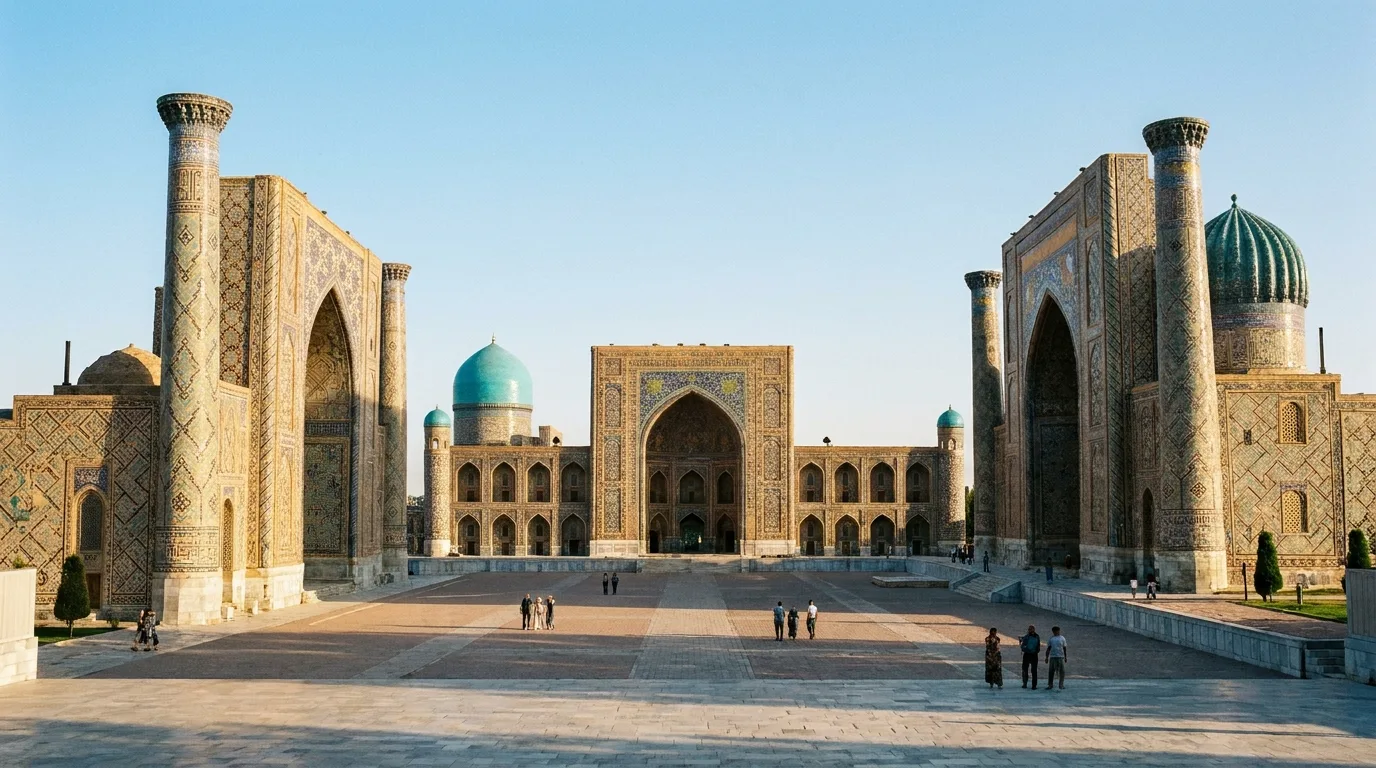
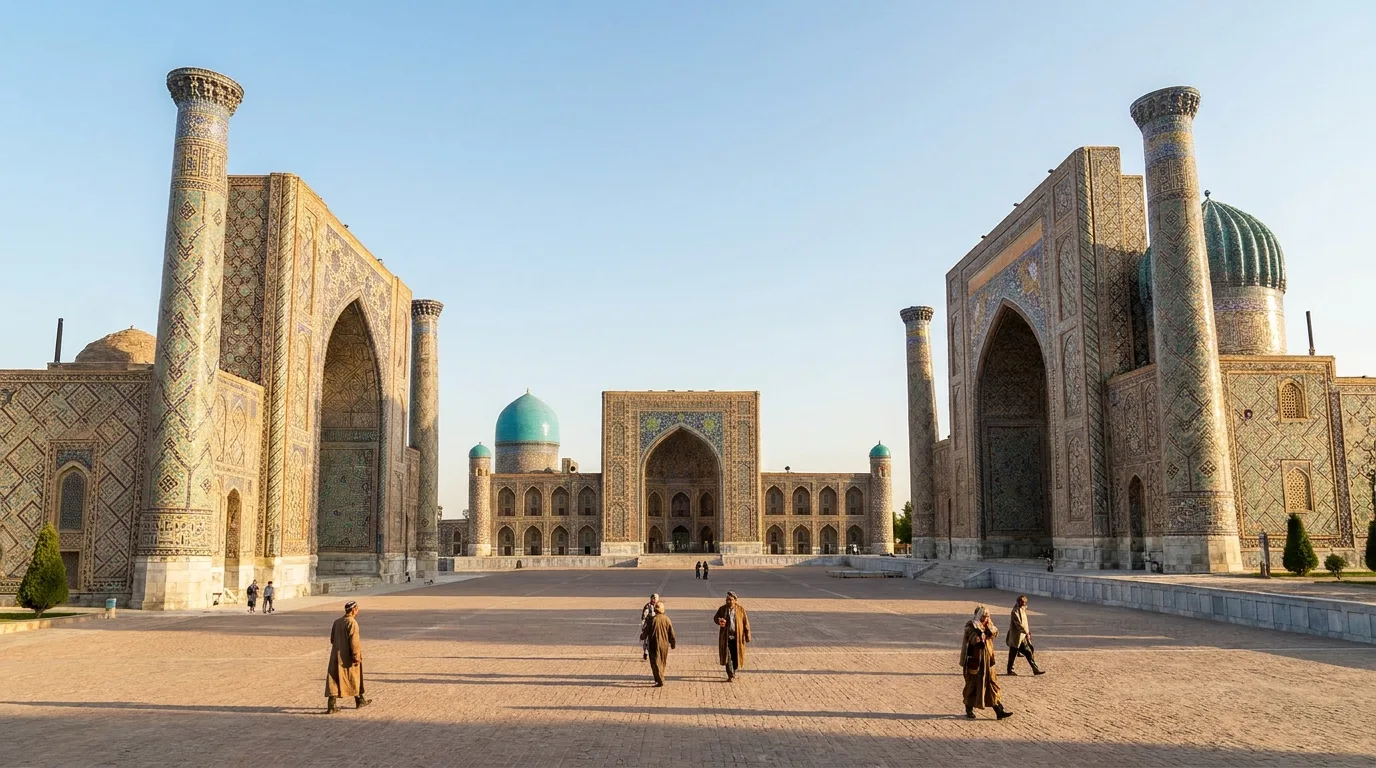
Registan Square is the place I would put at the top of an Uzbekistan itinerary. Located in Samarkand, it is framed by three monumental madrasas: Ulugh Beg, Sher-Dor and Tilya-Kori. Their intricate tilework, geometric patterns and imposing entrances make it one of the country's most recognisable landmarks.
Visitor information
- Location: Registan Square, central Samarkand.
- Opening hours: Published hours are approximately 7 AM–midnight during the main season and 8 AM–10 PM during winter; seasonal schedules can change.
- Closed days: Listed as open daily.
- Entry fee: Approximately 100,000 UZS for foreign visitors, based on an October 2026 listing.
- Tickets: Check the official Registan ticket website for online booking.
- Time needed: 2–3 hours, especially if you want to explore the madrasas and return for evening illumination.
Source: Samarkand attraction guide — Registan.
Is it worth your time?
Absolutely. The scale of the buildings and the detail in their decoration deserve more than a quick photo stop. Visit during daylight to appreciate the architecture, then return in the evening if the square is illuminated and access is available.
My planning tip: If you want to see several major monuments in one day, start elsewhere in the morning and save Registan for the late afternoon. Check the current evening show schedule before planning around it.
2. Shah-i-Zinda, Samarkand
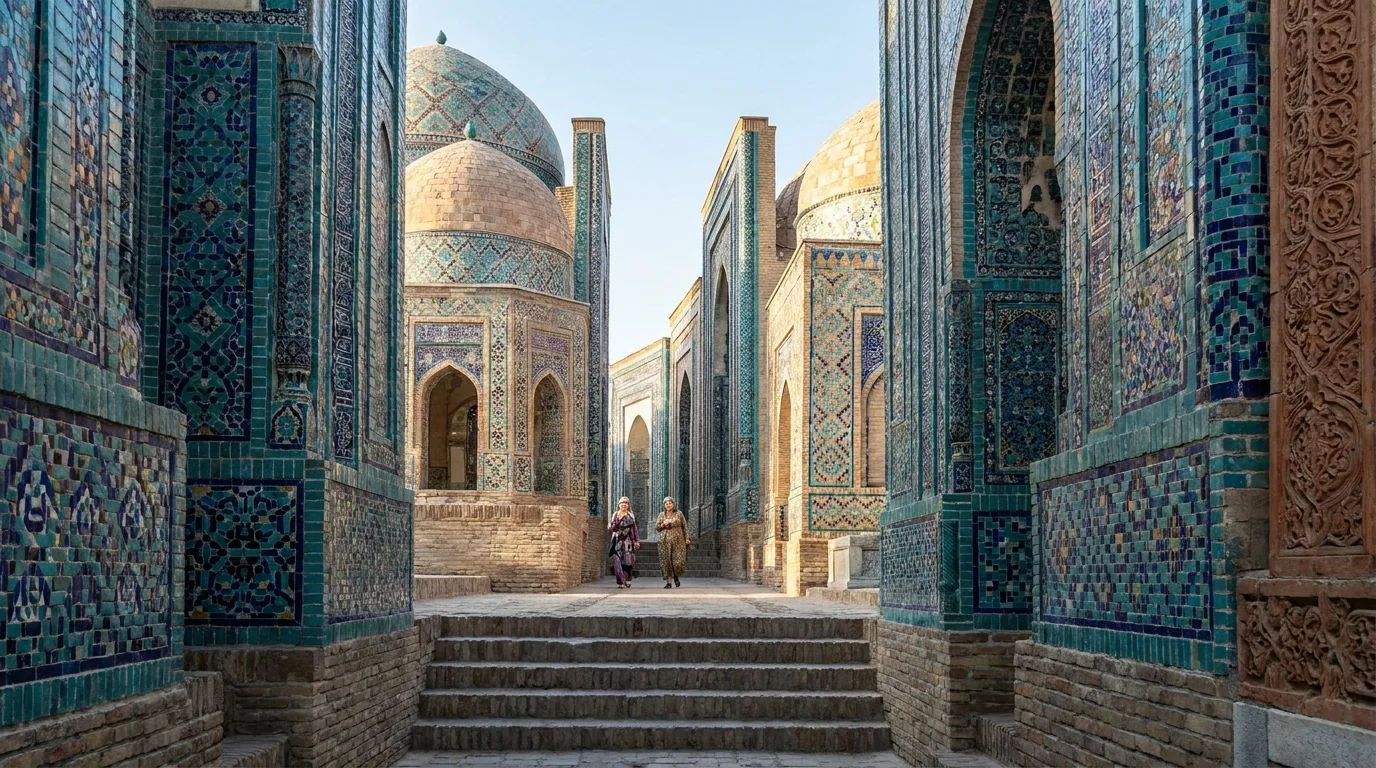
Shah-i-Zinda is a historic avenue of mausoleums known for its elaborate ceramic decoration. It offers a more intimate architectural experience than the grand scale of Registan Square.
As you walk through the complex, look closely at the turquoise tiles, carved entrances and decorative patterns.
Visitor information
- Location: Shohi Zinda Street, on the southern slope of Afrasiab Hill, Samarkand.
- Opening hours: Approximately 7 AM–10 PM; confirm locally as hours may vary.
- Closed days: Listed as open daily; check for special religious or maintenance closures.
- Entry fee: Approximately 50,000–80,000 UZS for foreign visitors in recent listings.
- Tickets: Buy at the entrance; confirm current online ticket availability before your visit.
- Time needed: 1–1.5 hours.
Source: Samarkand attraction guide — Shah-i-Zinda.
Is it worth your time?
If you enjoy architecture and photography, Shah-i-Zinda may become one of your favourite stops in Samarkand. It also provides a different perspective on the city's history from the monumental madrasas.
My planning tip: Arrive early for softer light and fewer crowds. This is an active pilgrimage site, so dress modestly and keep noise levels low.
3. Gur-e-Amir Mausoleum, Samarkand
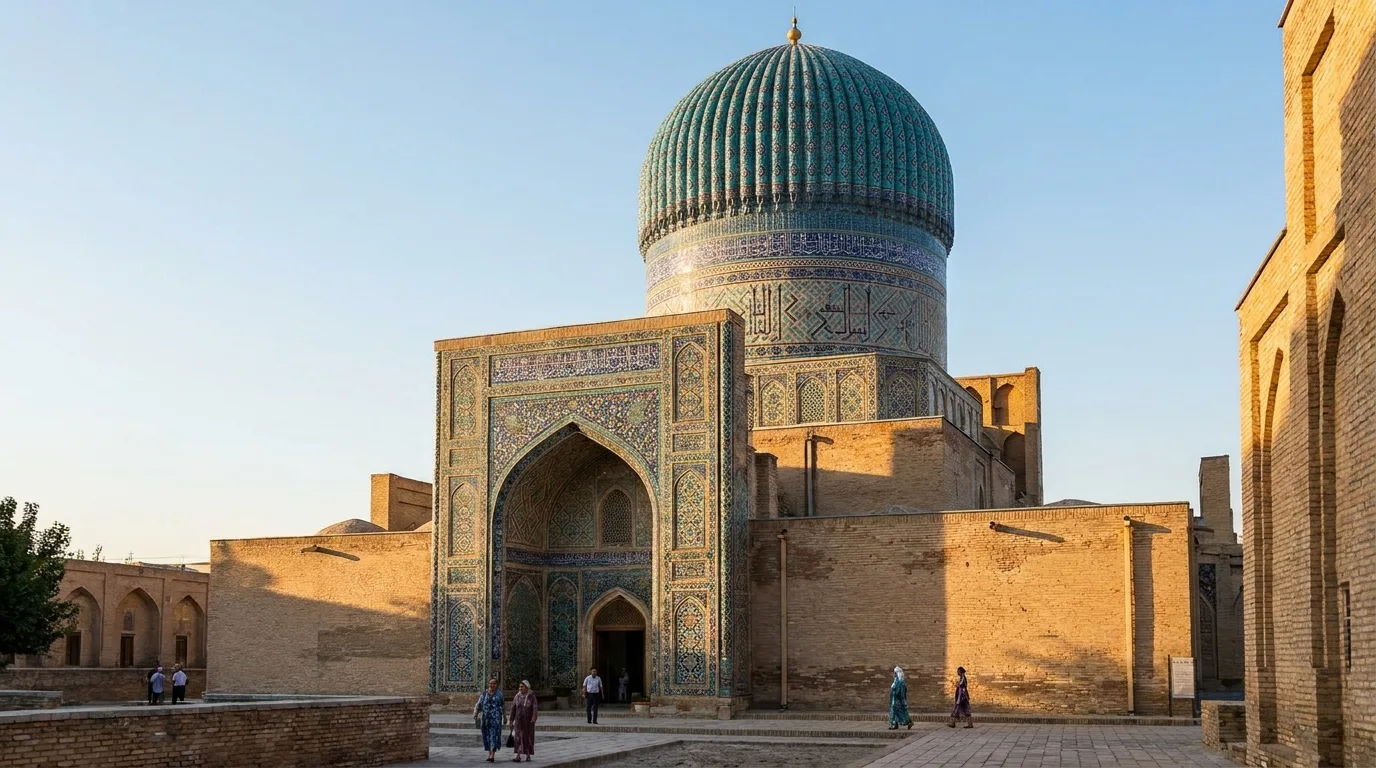
Gur-e-Amir is the mausoleum associated with Amir Timur, the ruler whose empire helped shape Samarkand's architectural legacy. The building is known for its turquoise dome and richly decorated interior.
Visitor information
- Location: Gur-e-Amir neighbourhood, approximately 900 metres southwest of Registan Square.
- Opening hours: Recent local listings report daily access, with evening visits available. Confirm the exact opening and closing time locally.
- Closed days: Listed as open daily; special closures may apply.
- Entry fee: Approximately 75,000 UZS for foreign visitors in recent listings.
- Tickets: Check at the entrance; a confirmed official online ticket portal was not identified.
- Time needed: 45–60 minutes.
Source: Samarkand attraction guide — Gur-e-Amir.
Is it worth your time?
Yes, especially if you are interested in the history behind Samarkand's monumental buildings. It complements Registan and Shah-i-Zinda rather than repeating the same experience.
My planning tip: Combine Gur-e-Amir with Registan on the same day. Dress respectfully because the mausoleum is also a place of pilgrimage.
4. Bibi-Khanym Mosque, Samarkand
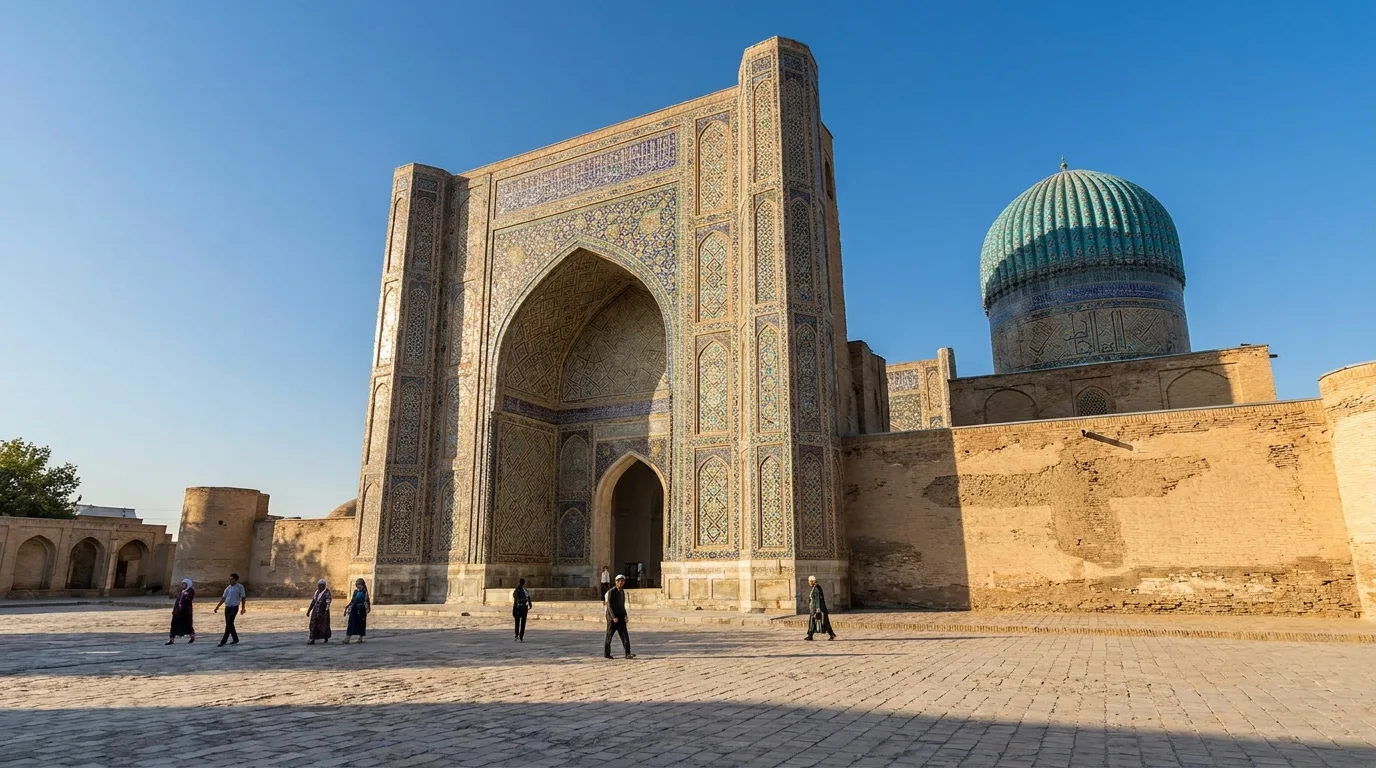
Bibi-Khanym Mosque is one of Samarkand's major architectural landmarks. Its monumental entrance and large scale make it a natural addition to a walking route around the historic centre.
Visitor information
- Location: Near Siab Bazaar, in the historic centre of Samarkand.
- Opening hours: Recent sources report daytime access, with the city announcing extended hours at selected heritage attractions. Confirm the current schedule locally.
- Closed days: No regular weekly closure was verified; check for temporary restrictions.
- Entry fee: Approximately 65,000–75,000 UZS for foreign visitors in recent listings.
- Tickets: Check the ticket office at the entrance; confirm online options locally.
- Time needed: 30–60 minutes.
Sources: Samarkand attraction guide and Uzbekistan Tourism Committee's September 2026 update.
Is it worth your time?
The mosque adds another dimension to Samarkand's architectural heritage and is particularly convenient to visit alongside the nearby market.
My planning tip: Combine the mosque with Siab Bazaar so you can explore the architecture, browse local products and take a food break without travelling across the city.
5. Siab Bazaar, Samarkand
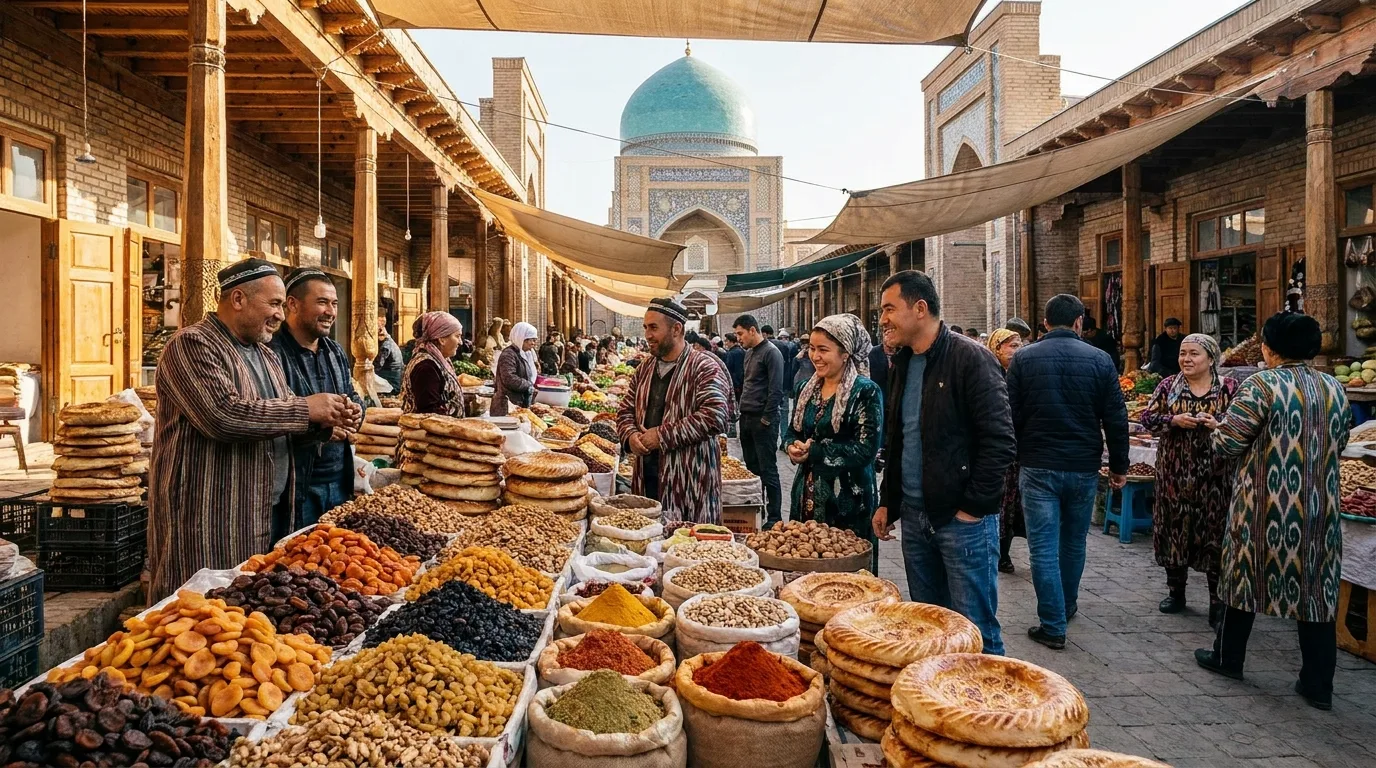
Siab Bazaar is a good place to experience the everyday rhythm of Samarkand. Market stalls sell dried fruits, nuts, bread, spices and local products, making it an excellent stop for edible souvenirs.
Visitor information
- Location: Next to Bibi-Khanym Mosque, in central Samarkand.
- Opening hours: Commonly reported around 6 AM–7 PM; the Tourism Committee reported in September 2026 that the bazaar's hours had been extended until midnight. Verify which sections remain open late.
- Closed days: A regular weekly closing day was not verified; ask locally before planning a visit on a particular day.
- Entry fee: Free.
- Tickets: Not required.
- Time needed: 45–90 minutes.
Sources: Siab Bazaar visitor guide and Tourism Committee update.
Is it worth your time?
Yes. After several historic buildings, a market gives your itinerary a different pace. It lets you experience the destination beyond its famous monuments.
My planning tip: Go in the morning for a lively market experience and a better selection of food. Carry some local currency for smaller purchases.
6. Poi Kalyan Complex, Bukhara
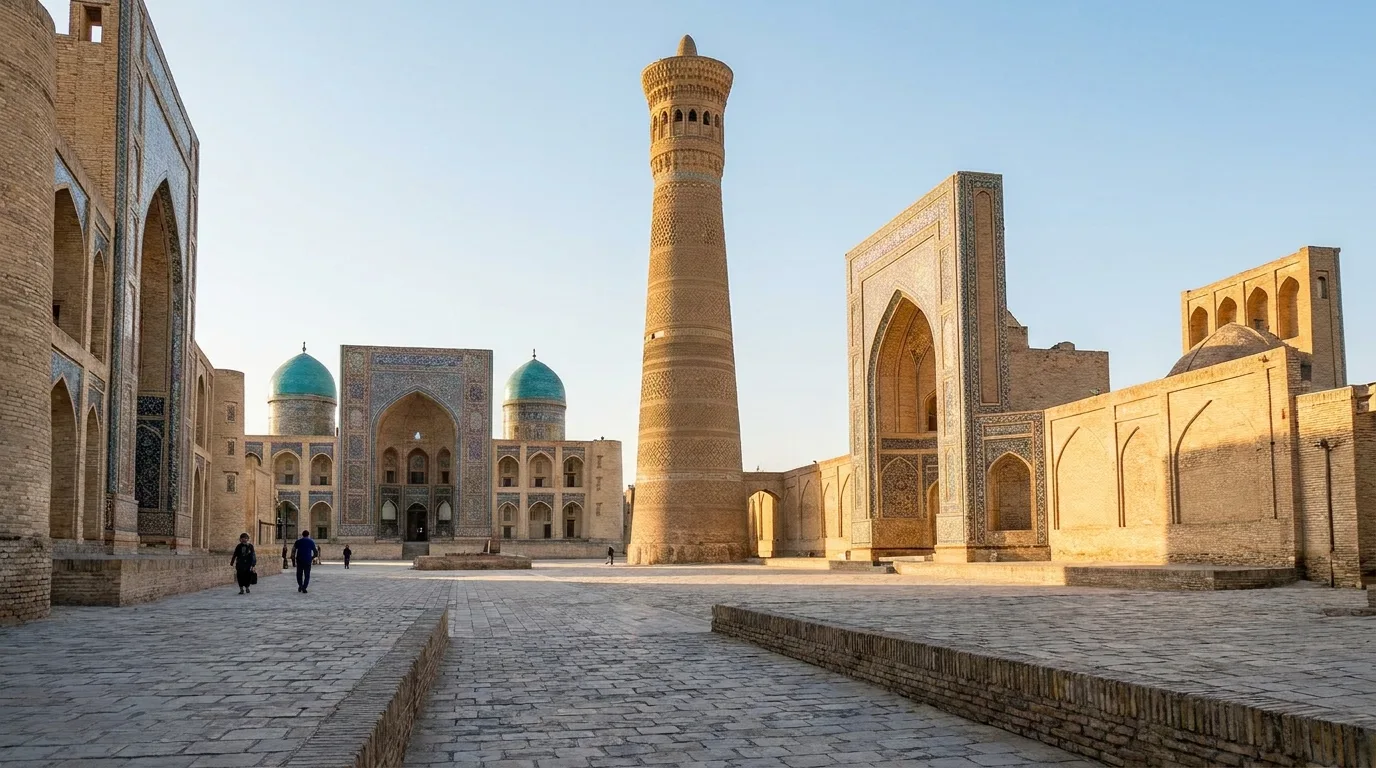
Bukhara is one of the most rewarding cities in Uzbekistan for travellers who enjoy historic neighbourhoods. At the heart of its architectural heritage is the Poi Kalyan complex, featuring the Kalon Minaret, Kalon Mosque and Miri-Arab Madrasa.
Visitor information
- Location: Khodja Nurobod Street, historic centre of Bukhara.
- Opening hours: A local visitor listing reports approximately 9 AM–6 PM for the complex; individual buildings may have different access arrangements.
- Closed days: No regular weekly closure was verified; religious sites may have access restrictions during prayers.
- Entry fee: A local listing reports approximately 30,000 UZS for the complex, but fees can differ by building and ticket type.
- Tickets: Check at the entrance to the specific building you want to enter. A single ticket should not be assumed to cover every part of the complex.
- Time needed: 1–2 hours.
Source: Poi Kalyan visitor information.
Is it worth your time?
The minaret, mosque and madrasa create one of Bukhara's most memorable architectural settings. The surrounding streets are also ideal for exploring on foot.
My planning tip: Visit in the late afternoon and allow time to walk around the neighbouring old streets. Some religious interiors may not be open to general visitors, so check access at the entrance.
7. Lyabi-Hauz, Bukhara
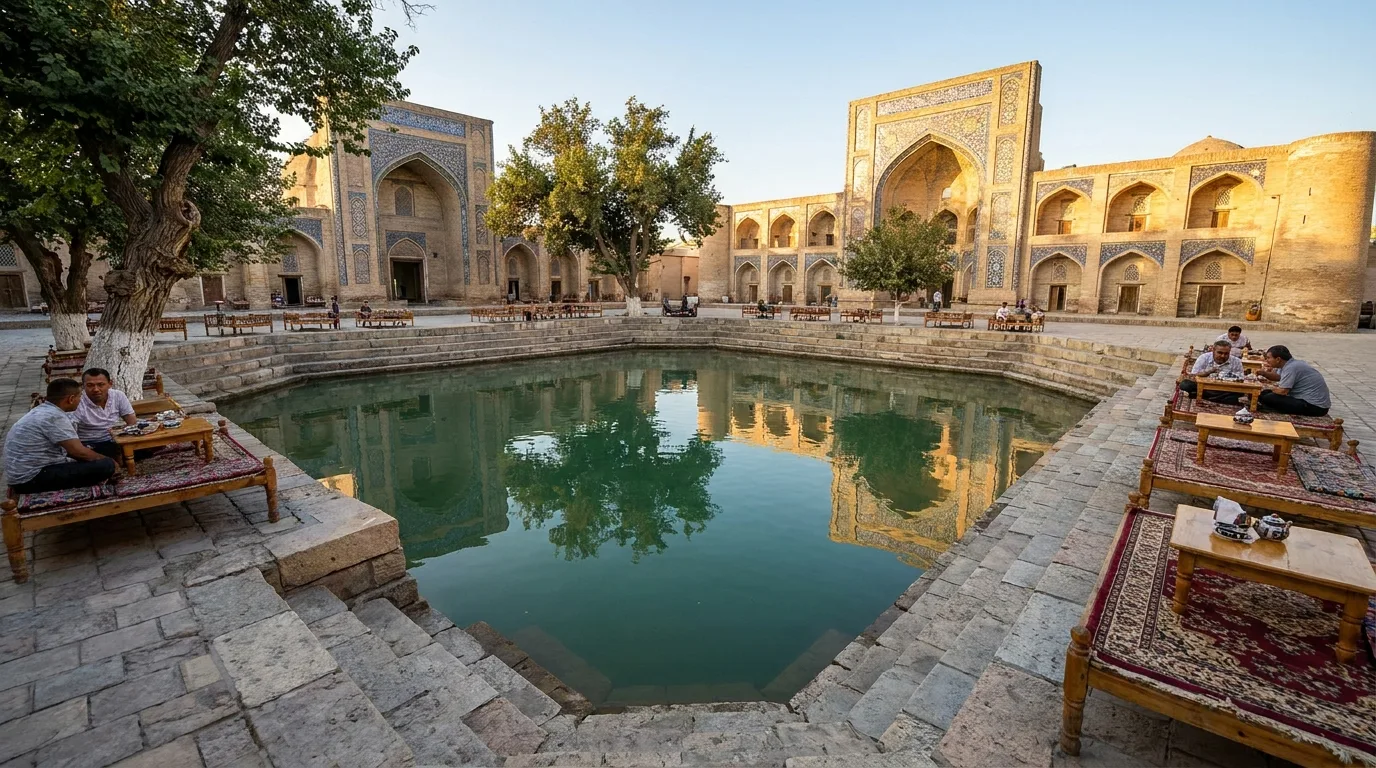
Lyabi-Hauz is a historic square centred around a pool and surrounded by traditional buildings, cafés and pedestrian areas. It is a lovely place to slow down after a day of visiting monuments.
Visitor information
- Location: Bahouddin Naqshbandi Street, historic centre of Bukhara.
- Opening hours: The public square is generally accessible throughout the day and evening.
- Closed days: No regular weekly closure for the square; nearby restaurants and museums have their own schedules.
- Entry fee: Free for the public square; individual museums or buildings may charge separately.
- Tickets: Not required to visit the square itself.
- Time needed: 45–90 minutes, or longer if you stop for a meal.
Source: Lyabi-Hauz visitor information.
Is it worth your time?
Yes, particularly if you want a relaxed evening rather than another formal sightseeing stop. The square offers a chance to experience Bukhara's atmosphere at a slower pace.
My planning tip: Visit in the late afternoon or evening and combine your walk with dinner. Check restaurant menus in advance if you have dietary restrictions.
8. Ark Fortress, Bukhara
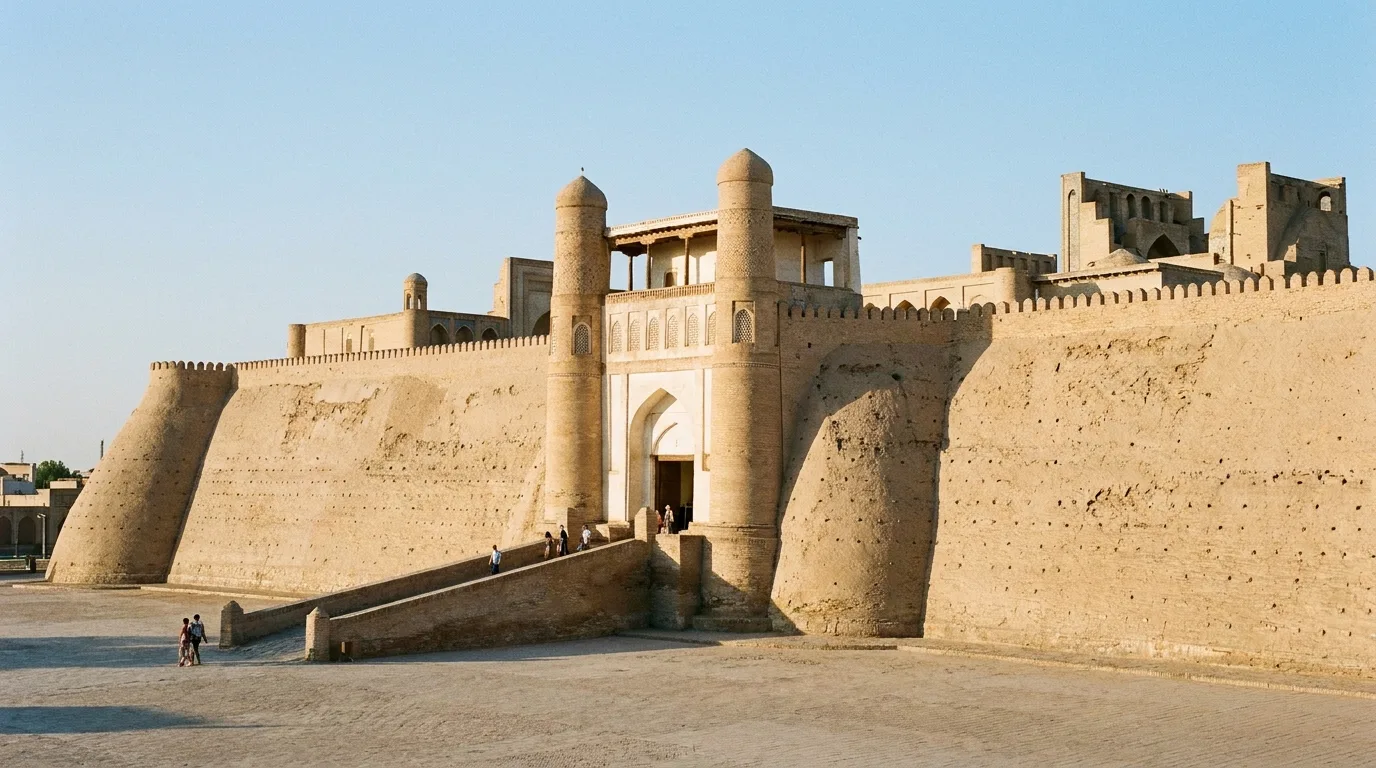
Ark Fortress is a historic citadel that served as a seat of power in Bukhara. Inside, visitors can explore museum spaces and learn about the city's political and cultural history.
Visitor information
- Location: Afrosiyob Street, historic centre of Bukhara.
- Opening hours: Generally reported as 9 AM–6 PM. Some museum information lists seasonal variations.
- Closed days: Conflicting listings exist: the Bukhara Museum-Preserve's visitor information reports Wednesday closure, while other listings show daily opening. Confirm the weekly schedule before visiting.
- Entry fee: Approximately 60,000 UZS for foreign visitors in a recent local listing; older museum information lists different prices.
- Tickets: Buy at the entrance. The official Bukhara State Museum-Preserve website provides museum information.
- Time needed: 1–2 hours.
Sources: Bukhara Museum-Preserve visitor information and Ark Fortress visitor guide.
Is it worth your time?
It adds a different dimension to Bukhara beyond mosques and madrasas. If you are interested in how historic cities were governed and defended, it is worth including.
My planning tip: Check the opening day before building your itinerary around the fortress. Combine it with nearby historic sights to avoid unnecessary travel.
9. Bukhara's Historic Trading Domes
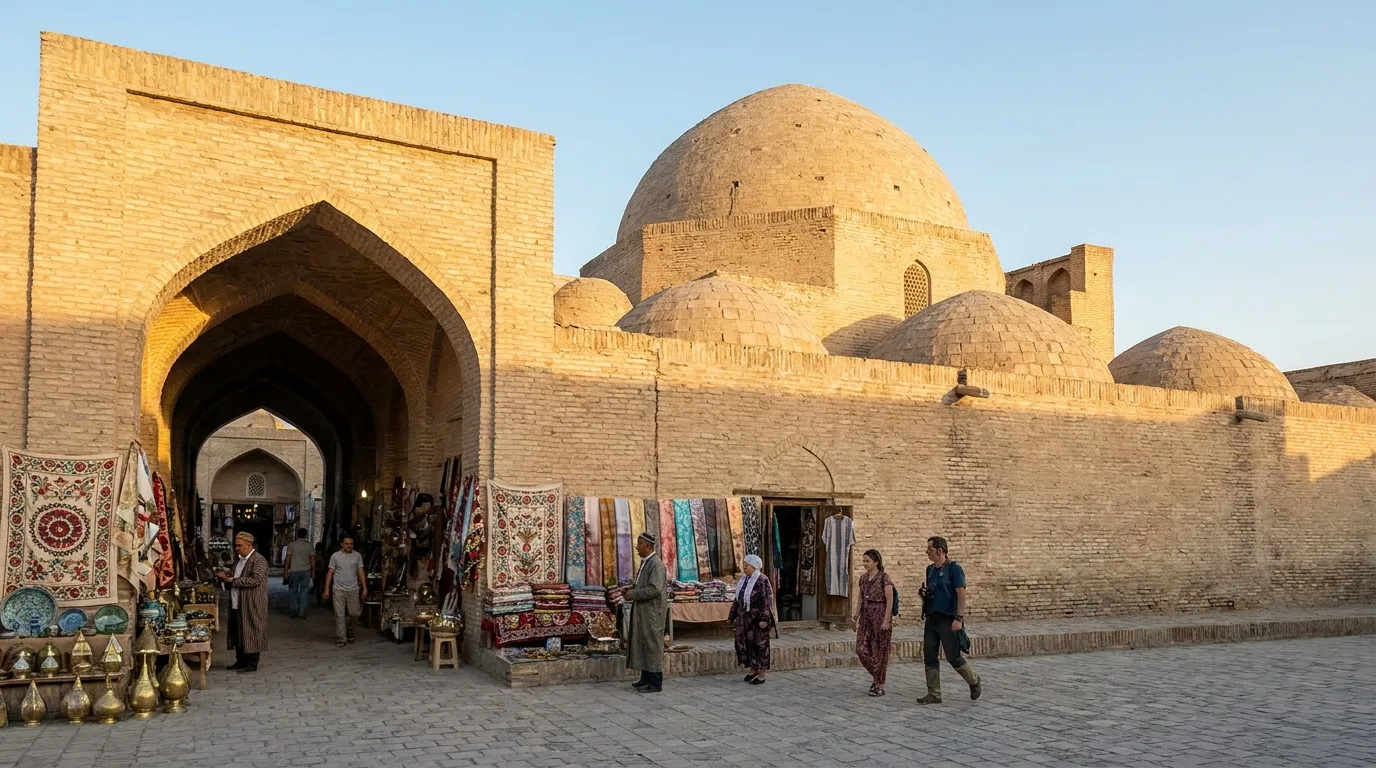
Bukhara's traditional covered trading domes once served merchants and craftspeople along important trade routes. Today, they house shops selling textiles, handicrafts, jewellery and souvenirs.
Visitor information
- Location: Historic centre of Bukhara, within walking distance of Poi Kalyan and other major sights.
- Opening hours: Shop hours vary; many tourist-facing shops operate during the day, often around 9 AM–6 PM.
- Closed days: No single weekly closure applies to all the trading domes; individual shops may close on different days.
- Entry fee: Free to walk through the public trading areas; museums or specific buildings may charge separately.
- Tickets: Not required for the public shopping areas.
- Time needed: 45–90 minutes.
Is it worth your time?
They connect Bukhara's architecture with its commercial history. You can see how traditional trading spaces continue to be used while browsing local crafts.
My planning tip: Compare prices and craftsmanship before buying souvenirs, particularly textiles and handmade items. Confirm whether a piece is locally made if that matters to you.
10. Itchan Kala, Khiva
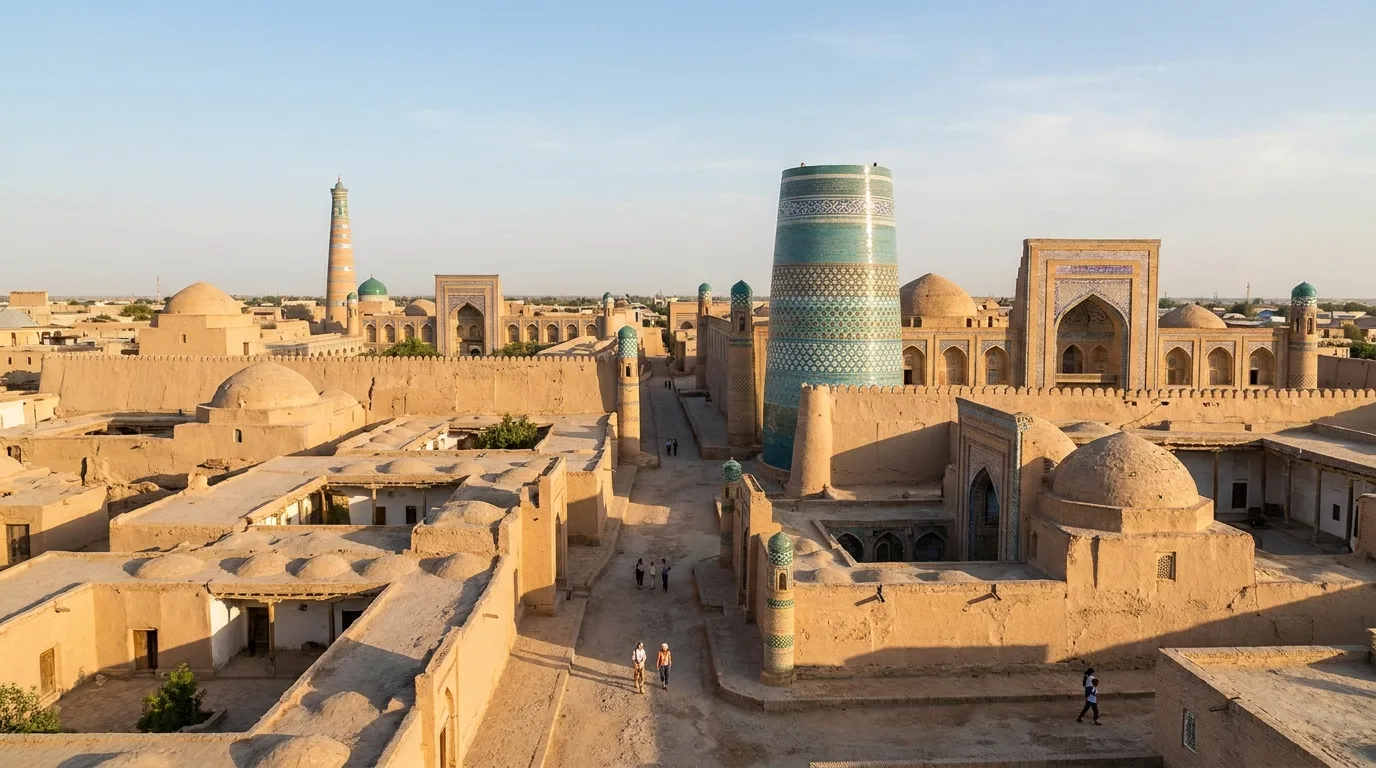
If Samarkand is known for monumental squares, Khiva offers a different experience: a historic walled city where narrow streets, minarets, madrasas and courtyards create a more enclosed atmosphere.
Visitor information
- Location: The inner walled city of Khiva, Khorezm Region.
- Opening hours: Local 2026 visitor guides report that the gates are generally open around 8 AM–8 PM, with museum interiors often closing earlier.
- Closed days: The public historic area does not have a standard weekly closure listed; individual museums and monuments may vary.
- Entry fee: A 2026 local guide reports a combined ticket of approximately 250,000 UZS for foreign visitors, with a lower-priced option for exterior access. Confirm the current price and what is included.
- Tickets: Ticket offices are reported at the main gates. Check the official Uzbekistan tourism portal for destination information; confirm current ticket arrangements locally.
- Time needed: At least half a day; ideally one full day.
Sources: Khiva visitor guide and Uzbekistan Travel — Khiva.
Is it worth your time?
Yes. Rather than visiting one large square and moving on, you can spend hours wandering through a compact historic centre and discovering buildings along the way.
My planning tip: Stay overnight in or near the old town if your schedule allows. This gives you time to explore before the busiest part of the day and enjoy the atmosphere after day-trippers leave.
11. Islam Khoja Minaret, Khiva
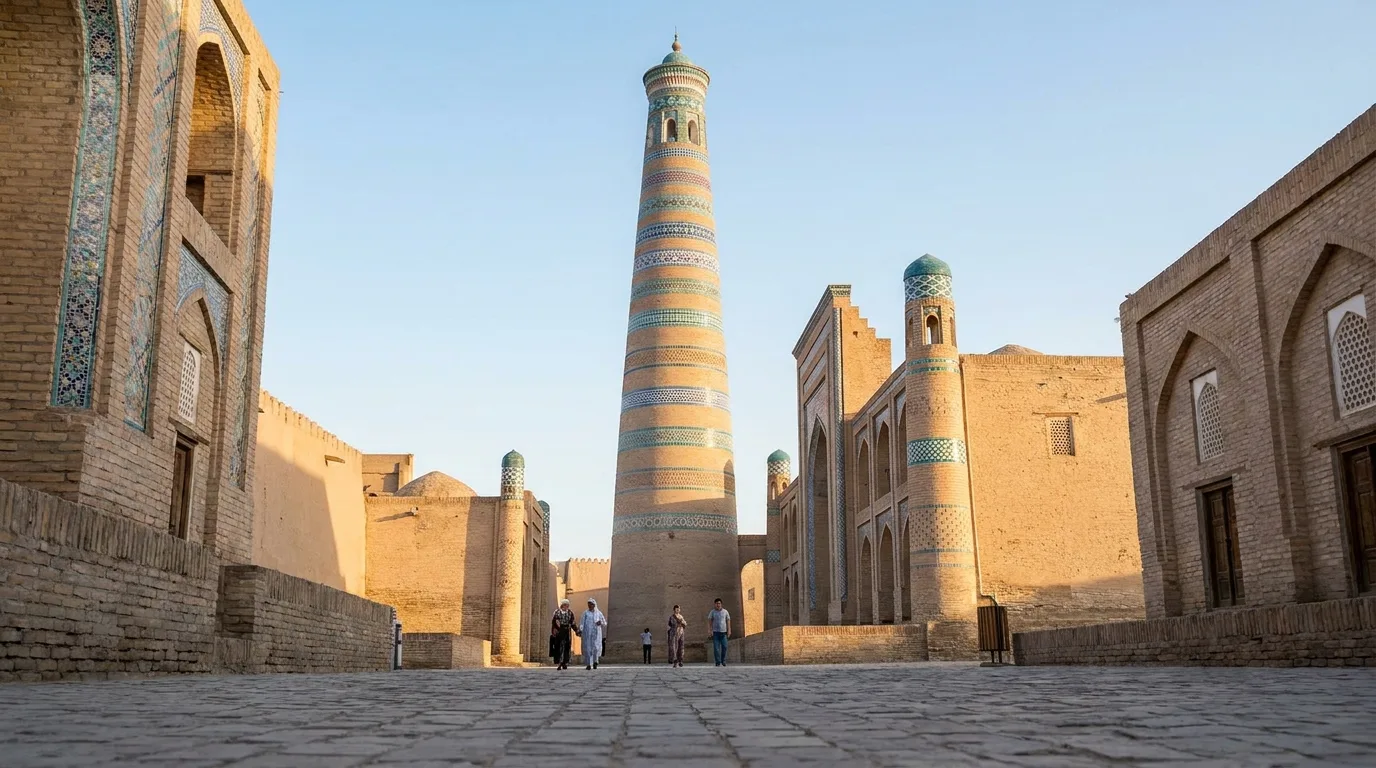
The Islam Khoja Minaret is one of Khiva's best-known landmarks and a prominent feature of the city's skyline. If access is available, climbing it can provide views over the rooftops and courtyards of Itchan Kala.
Visitor information
- Location: Islam Khoja complex, inside Itchan Kala, Khiva.
- Opening hours: A local guide reports approximately 8 AM–5:45 PM; entry may stop before sunset.
- Closed days: No regular weekly closure was verified. Access can change due to weather, maintenance or operational restrictions.
- Entry fee: Approximately 100,000 UZS for the climb, reported separately from the combined Itchan Kala ticket.
- Tickets: Check at the minaret entrance; confirm whether the climb is included in any ticket you purchase.
- Time needed: 45–60 minutes, including the climb.
Sources: Uzbekistan Travel — Islam Khoja Minaret and local visitor guide.
Is it worth your time?
It offers a different perspective on Khiva: instead of looking up at its architecture from the streets, you can see how the historic city fits together from above.
My planning tip: The staircase is steep and narrow. Check access arrangements and consider your comfort with climbing before buying a ticket.
12. Chorsu Bazaar, Tashkent
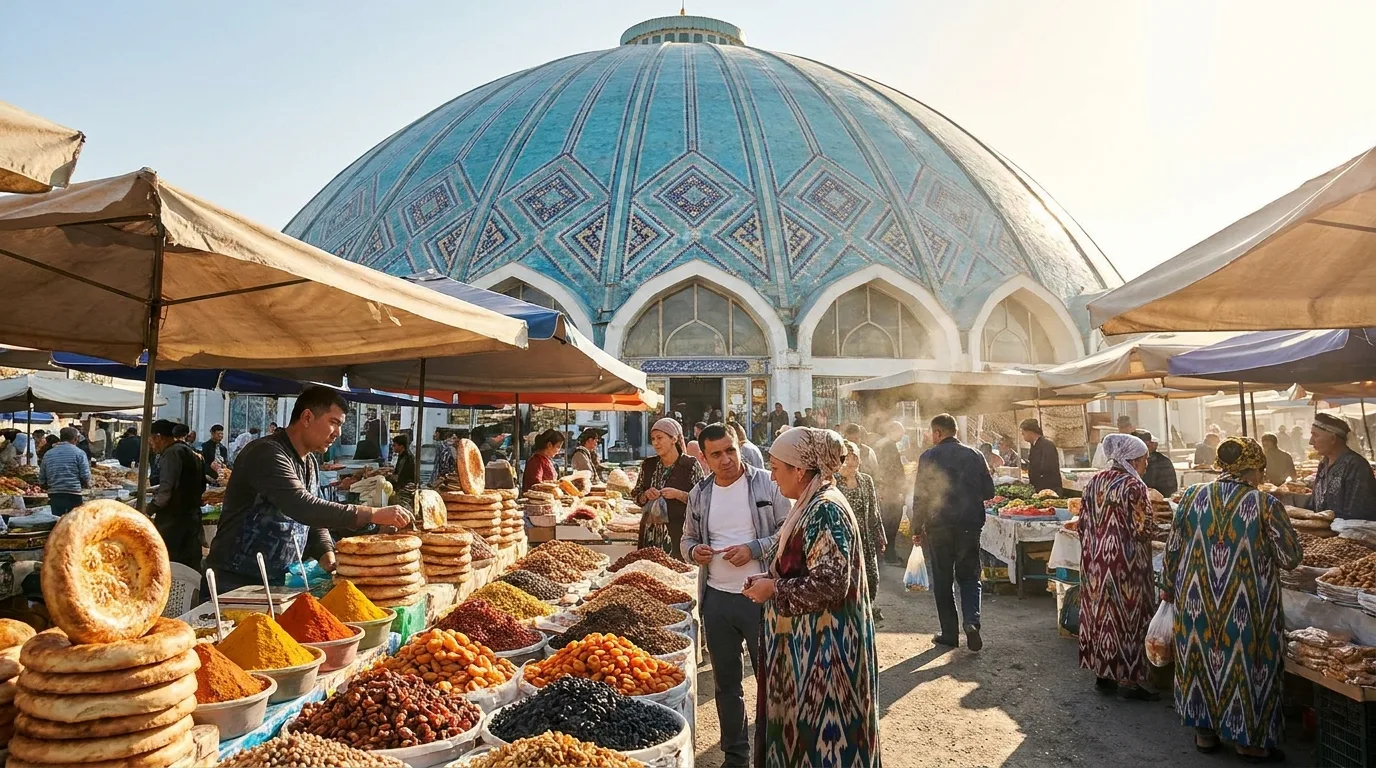
Chorsu Bazaar is one of the best places to experience everyday life in Tashkent. Under its distinctive domes, you will find produce, spices, bread, dried fruits and other local goods.
Visitor information
- Location: Janon Street, Eski Shahar (Old City), Olmazor District, Tashkent.
- Opening hours: The official Visit Tashkent listing reports 9 AM–6 PM.
- Closed days: A regular weekly closure was not listed on the official attraction page; verify locally before planning a visit.
- Entry fee: Free.
- Tickets: Not required.
- Time needed: 1–1.5 hours.
Source: Visit Tashkent — Chorsu Bazaar.
Is it worth your time?
It brings local food and commerce into your trip, balancing the historic monuments you will see in Samarkand, Bukhara and Khiva.
My planning tip: Combine Chorsu Bazaar with the Khast Imam complex on the same day. Visit earlier if you want a lively market experience, and carry cash for small purchases.
13. Khast Imam Complex, Tashkent
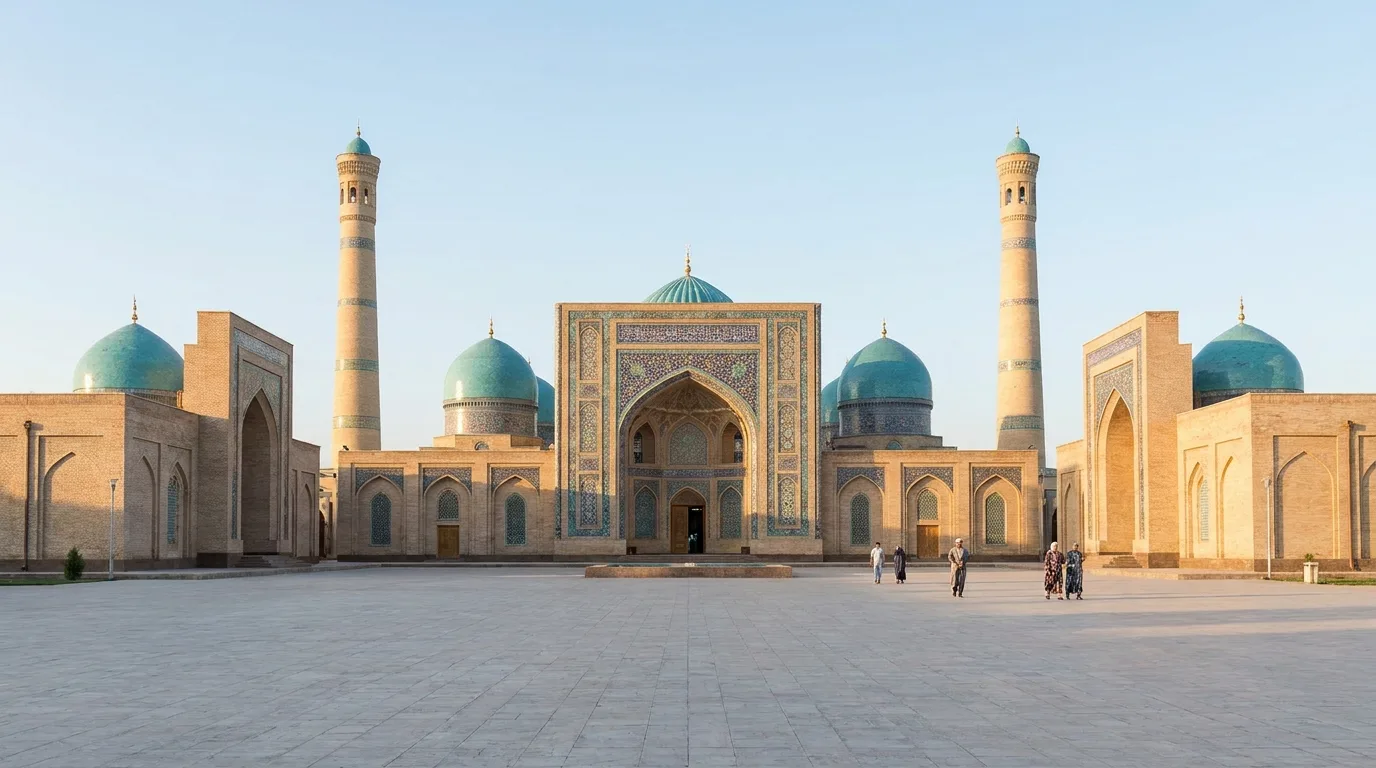
The Khast Imam complex is one of Tashkent's important religious and architectural sites. It includes mosques, madrasas and institutions associated with Islamic scholarship.
Visitor information
- Location: Old City area of Tashkent.
- Opening hours: Individual buildings may have different visiting hours; a reliable, current unified schedule was not available.
- Closed days: No single weekly closure was verified for the entire complex. Access may be restricted during prayers or at individual institutions.
- Entry fee: Public courtyard access and individual interiors may be treated differently; confirm fees at the entrance.
- Tickets: Ask at the individual site or official visitor information point. A single complex-wide online ticket was not verified.
- Time needed: 1–1.5 hours.
Is it worth your time?
It offers historical and cultural context before or after your visit to Uzbekistan's more monumental Silk Road cities. The architecture and religious setting provide a different experience from Tashkent's modern avenues and metro stations.
My planning tip: Visit with Chorsu Bazaar as part of an old-city route. Dress respectfully and follow local instructions about access to religious spaces.
14. Tashkent Metro
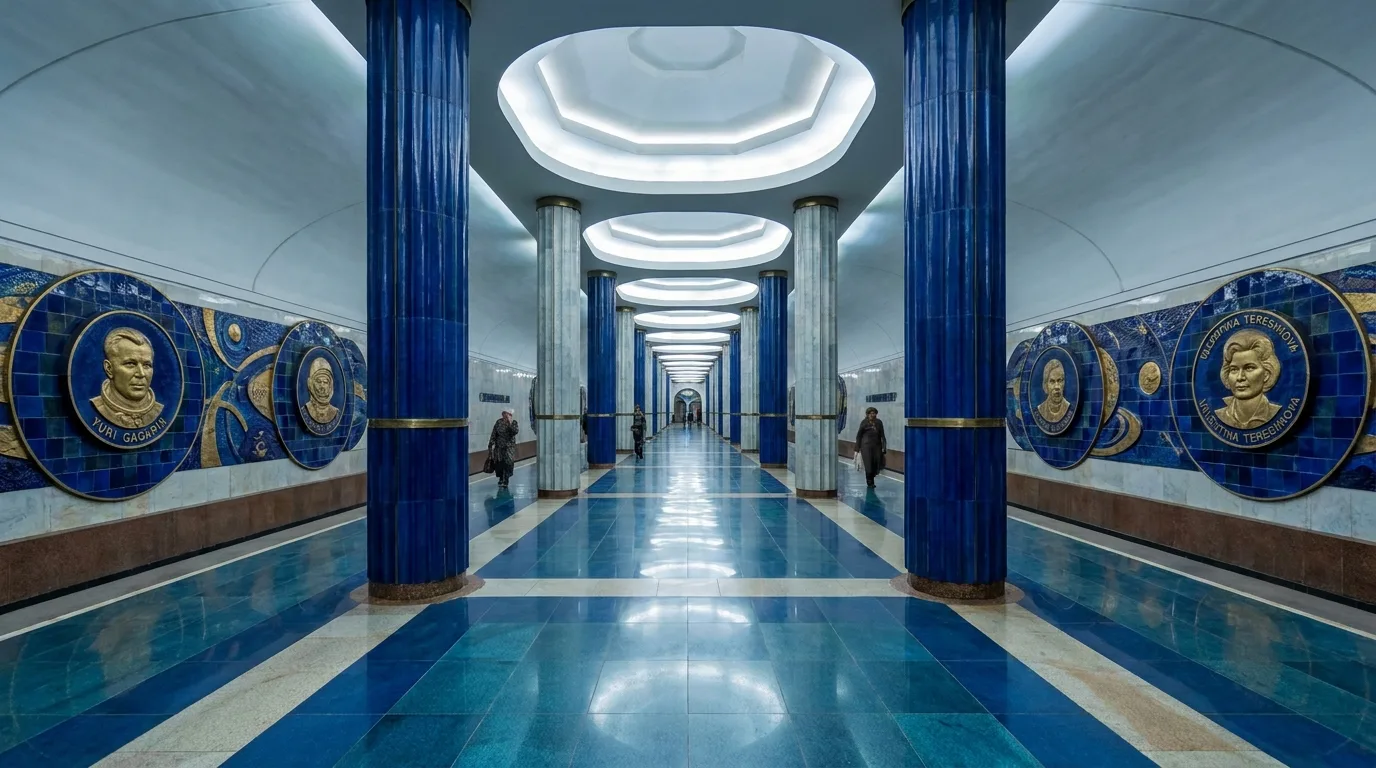
The Tashkent Metro is worth experiencing even if you do not need it to get around. Some stations are known for distinctive decorative designs, chandeliers, columns and architectural details.
Visitor information
- Location: Across Tashkent; stations are spread throughout the city's metro network.
- Operating hours: The official Uzbekistan tourism guidance lists services daily from 6 AM to midnight.
- Closed days: Operates daily, subject to service changes.
- Entry fee: A local transport listing reports a standard fare of approximately 3,000 UZS; check the current fare and payment options at the station.
- Tickets: Buy a ticket or use the currently accepted transport payment method at the station.
- Time needed: 30–60 minutes for a short architectural tour; longer if you visit multiple stations.
Sources: Official Uzbekistan Travel transport guidance and Visit Tashkent Metro guide.
Is it worth your time?
It shows a different side of Uzbekistan from the medieval cities. The metro connects daily urban life with architecture and design.
My planning tip: Choose a few stations that appeal to you rather than trying to visit every station. Follow station rules and any instructions about photography.
15. Chimgan Mountains and Charvak Reservoir
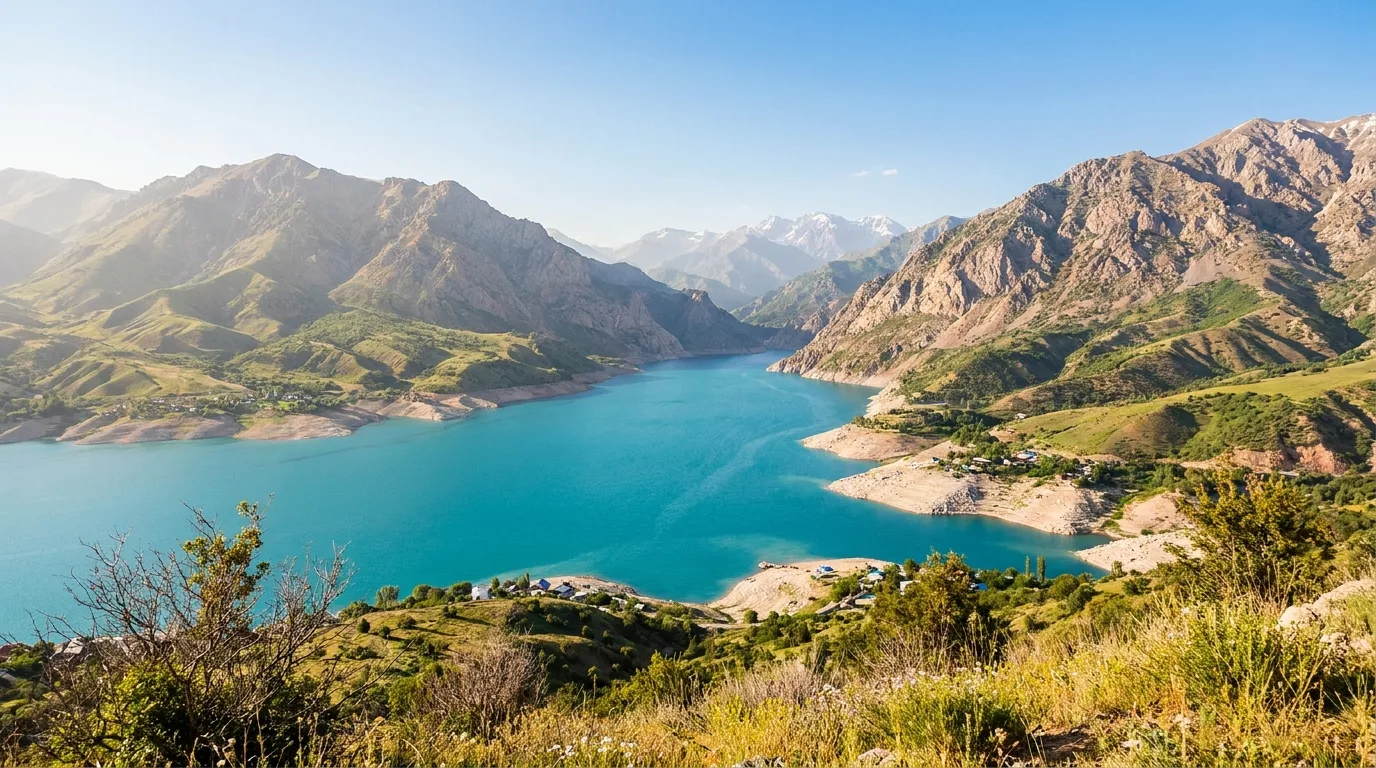
If you have already planned several days around mosques, mausoleums and old towns, consider setting aside a day for nature. The Chimgan area and Charvak Reservoir, northeast of Tashkent, offer a change of scenery from the country's historic cities.
Visitor information
- Location: Mountain area northeast of Tashkent, in the Tashkent Region.
- Opening hours: There is no single opening time for the entire area; cable cars, resorts, restaurants and activity providers operate on their own schedules.
- Closed days: Depends on the specific attraction and weather conditions.
- Entry fee: Access to viewpoints and public areas may be free, while cable cars, activities and resorts charge separately.
- Tickets: Book through the individual resort or activity operator. Confirm operating conditions before leaving Tashkent.
- Time needed: A full day, depending on transport and activities.
Source: Explore Uzbekistan — suggested routes.
Is it worth your time?
It adds variety to your itinerary and lets you experience a different landscape without committing to a long journey across the country.
My planning tip: Check weather, road conditions and seasonal activity availability before leaving Tashkent. Use a full day rather than trying to fit the mountains into a packed sightseeing schedule.
Places to Add If You Have More Time
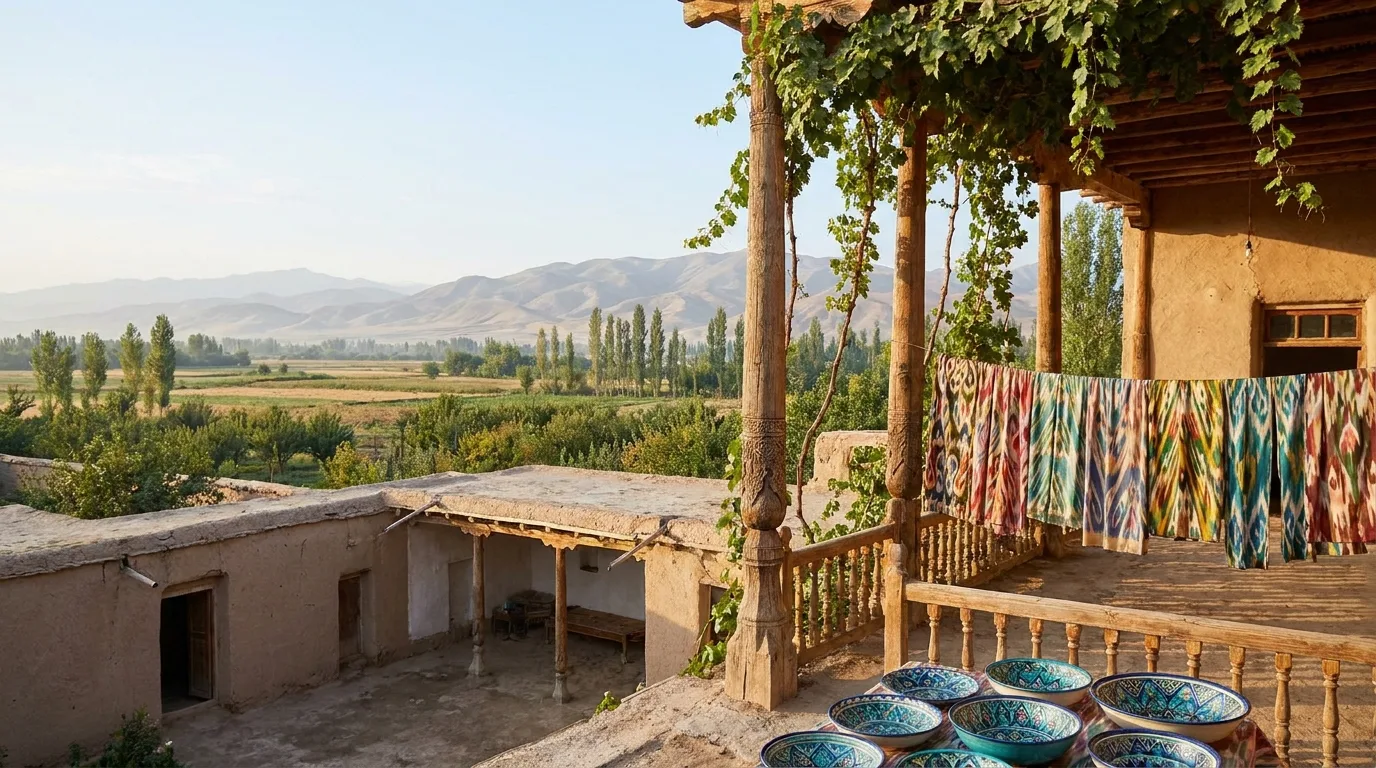
The four main Silk Road cities are not the whole of Uzbekistan. If you have extra days or a specific interest, consider these alternatives.
| Destination | What makes it special | Time to allow | Visitor information to check |
|---|---|---|---|
| Fergana Valley | Silk production, traditional ceramics and craft towns such as Margilan and Rishtan | 2–4 days | Workshop schedules and opening hours vary by business |
| Nukus and the Savitsky Museum | A major art collection in western Uzbekistan | 1 day for Nukus; longer with excursions | Confirm museum opening days, admission and photography rules |
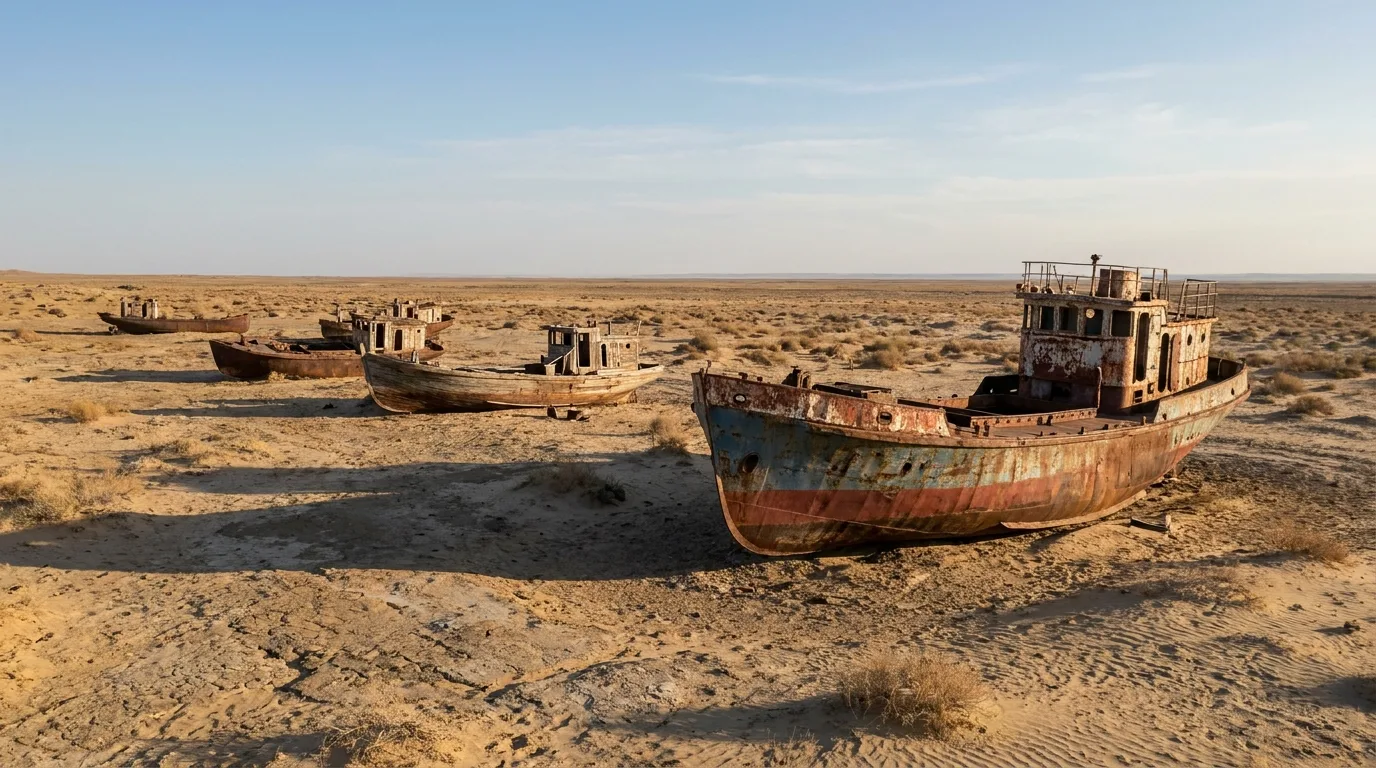
| Moynaq and the Aral Sea region | Desert landscapes and the remains of the former Aral Sea shoreline | 2–3 days, depending on the route | Arrange transport and excursions in advance |
| Shakhrisabz | Historic monuments associated with Amir Timur | 1 day, often as an excursion | Check individual monument hours and access |
| Termez | Archaeological sites and evidence of ancient Buddhist and other cultural connections | 2–3 days | Confirm museum schedules and transport connections |
These destinations involve extra travel planning and are best treated as separate excursions rather than quick add-ons to a short trip.
What is Actually Worth Your Time in Uzbekistan?
If your schedule is tight, prioritise experiences that offer something different from one another.
| Priority | Experience | Why it deserves time |
|---|---|---|
| Must-see | Registan Square | Samarkand's signature architectural ensemble |
| Must-see | Shah-i-Zinda | Intricate tilework and a distinctive historic setting |
| Must-see | Poi Kalyan complex | One of Bukhara's defining landmarks |
| Must-see | Itchan Kala, Khiva | A preserved walled historic city |
| Worth the time | Siab Bazaar | Local food, shopping and everyday culture |
| Worth the time | Lyabi-Hauz, Bukhara | A relaxed place to experience the old town |
| Worth the time | Chorsu Bazaar, Tashkent | Market culture and local produce |
| Worth the time | Tashkent Metro | Architecture and contemporary urban life |
| Optional | Chimgan and Charvak | A nature break if you have a full day |
| Optional | Fergana Valley or Aral Sea region | Best for longer trips or specific interests |
You do not need to visit every museum, mosque or madrasa to appreciate Uzbekistan. Choose a few major monuments, allow time for markets and local food, and leave space to walk around without a fixed checklist.
How Many Days Do You Need to See Uzbekistan?
| Trip duration | Suggested route | Best for |
|---|---|---|
| 4–5 days | Tashkent + Samarkand, or Samarkand + Bukhara | A short holiday focused on two destinations |
| 7 days | Tashkent + Samarkand + Bukhara | First-time visitors who want the main highlights |
| 9 days | Tashkent + Samarkand + Bukhara + Khiva | A more complete classic Silk Road route |
| 10–12 days | Four main cities plus a nature or craft excursion | Travellers who want more variety and a slower pace |
These are practical planning suggestions, not fixed rules. Your arrival and departure times, train schedules and the time needed to transfer between cities will affect how much sightseeing fits into each day.
Practical Tips Before You Plan Your Sightseeing
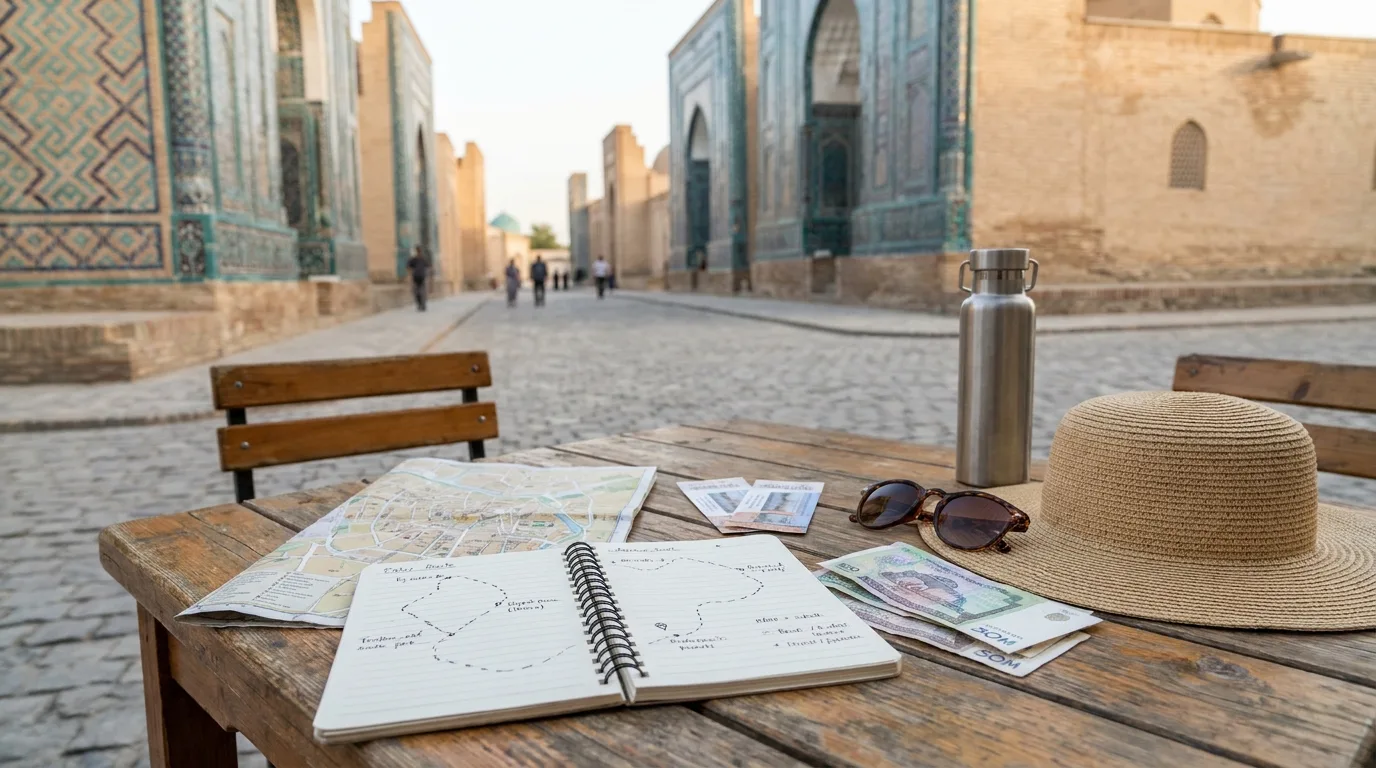
- Check the exact ticket type: Some monuments charge separate fees for museum interiors, viewpoints or minaret climbs.
- Confirm weekly closures: Do not assume every museum or historic site opens daily, particularly in Bukhara.
- Group attractions by location: Visit nearby monuments and markets together instead of repeatedly crossing a city.
- Keep time for travel days: A train journey between cities still takes up part of your day.
- Check seasonal schedules: Summer and winter hours may differ, and evening access can change.
- Carry local currency: Cash can be useful at ticket offices, bazaars and smaller businesses.
- Leave room for unplanned stops: Historic neighbourhoods, bakeries and craft shops can be as memorable as major landmarks.What are the best things to see in Uzbekistan for first-time visitors?
FAQs
What is the most famous thing to see in Uzbekistan?
The Registan in Samarkand: three tiled madrasas around one square. Go at sunset and again after dark.
How many days do you need to see Uzbekistan?
Seven to eight days covers Tashkent, Samarkand, Bukhara and Khiva. Five days is enough for Samarkand and Bukhara.
Do Americans need a visa for Uzbekistan?
No. US citizens can visit visa-free for up to 30 days. Your passport should be valid well beyond your stay.
Samarkand or Bukhara: which is better?
See both. Samarkand has the biggest monuments; Bukhara has the better-preserved old town to walk around. Two nights in each is right.
When is the best time to visit Uzbekistan?
April to May and September to October. July and August often pass 100°F in Bukhara and Khiva.
Want this trip planned and booked for you? Tell Cura where and when, and a person will send you a plan with real prices.
 Next in this guideUzbekistan Trip from IndiaRead →