South Africa Itinerary
Written by a Cura travel advisor · Checked
Short answer
Plan your South Africa trip with this detailed 5, 7 and 10-day itinerary covering Cape Town, Kruger National Park and the Garden Route, with top attractions and travel tips.
Quick Facts About South Africa
- Location: Southernmost part of the African continent
- Administrative capitals: Pretoria, Cape Town and Bloemfontein
- Currency: South African Rand (ZAR)
- Language: South Africa has 12 official languages, including Zulu, Xhosa, Afrikaans and English
- Popular destinations: Cape Town, Kruger National Park, Johannesburg, Knysna and Stellenbosch
- Ideal trip duration: 7–10 days for a first-time visit
- Driving side: Left-hand side of the road
- Time difference: South Africa is 3 hours 30 minutes behind India
South Africa looked like a destination where every landscape had a different story to tell. From the dramatic coastline of Cape Town to the open wilderness of Kruger National Park, the country offers a beautiful mix of nature, wildlife, culture and adventure.
Imagine starting your morning with panoramic views from Table Mountain, spending the afternoon exploring colourful neighbourhoods and, a few days later, heading out on an African safari to spot elephants, giraffes and lions in their natural habitat. And that's not all, you get thousands of beautiful things to do there. The scenic Garden Route adds another layer to the experience, with charming coastal towns, lagoons, forests and beautiful ocean views.
The best part? You can experience all of this in one trip if you plan your route well.
But South Africa is a large country, and travelling between destinations takes time. So, how many days should you spend here? Which places should you include? And how can you plan your itinerary without spending most of your holiday travelling?
In this guide, I'll take you through a detailed South Africa itinerary for 5, 7 and 10 days, covering the places to explore, attractions worth visiting, experiences to try and practical tips to make your trip smoother.
Best Time to Visit South Africa
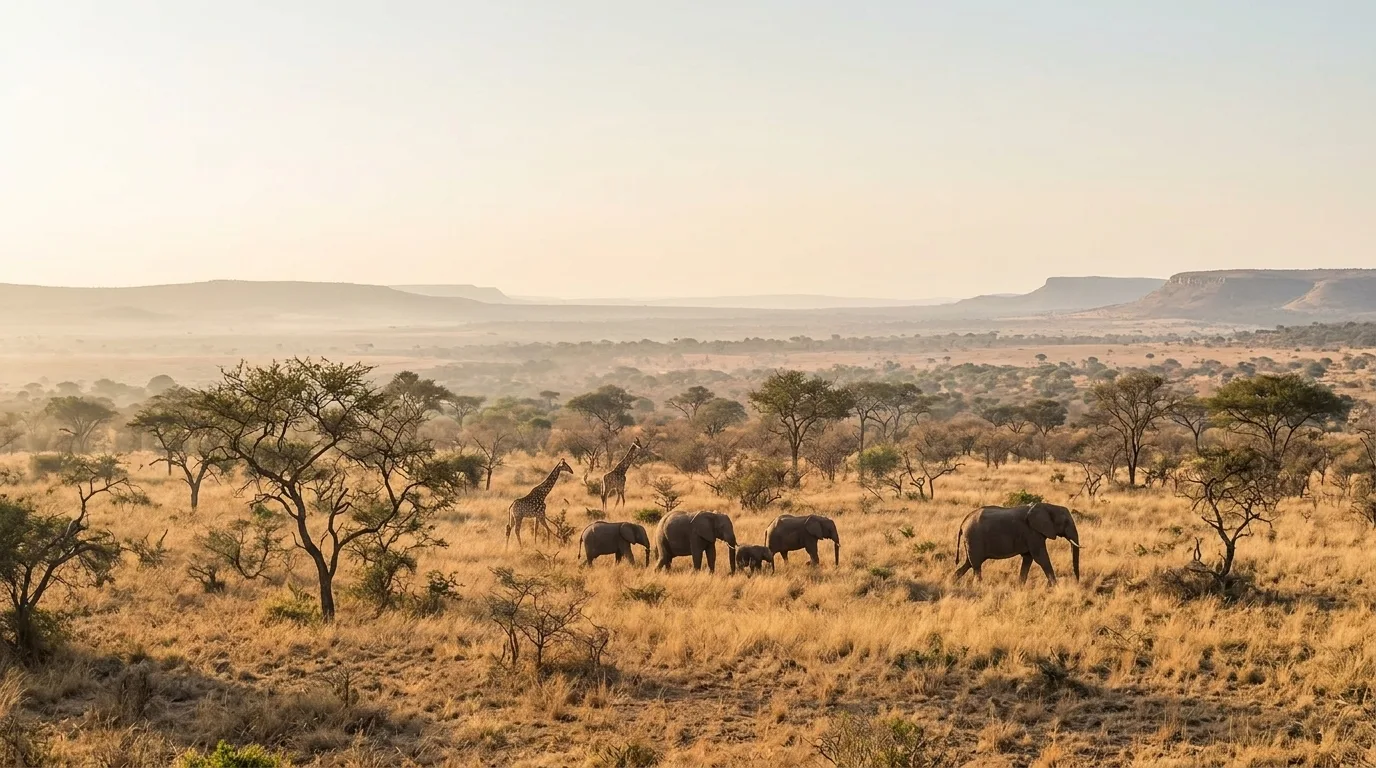
South Africa has different weather patterns across its regions, so the ideal time depends on what you want to experience.
- May to September: A good period for wildlife safaris in Kruger National Park. The dry season makes it easier to spot animals around water sources.
- September to April: A popular period for exploring Cape Town, beaches and coastal attractions.
- June to November: Consider this period if you want to include whale watching around Hermanus.
- September to October and March to April: Useful shoulder-season windows to consider if you want to combine Cape Town with a safari.
If your main priority is wildlife, plan around the dry winter months. If you want to enjoy Cape Town's beaches and outdoor attractions, consider the warmer months.
Things to Know Before Travelling to South Africa
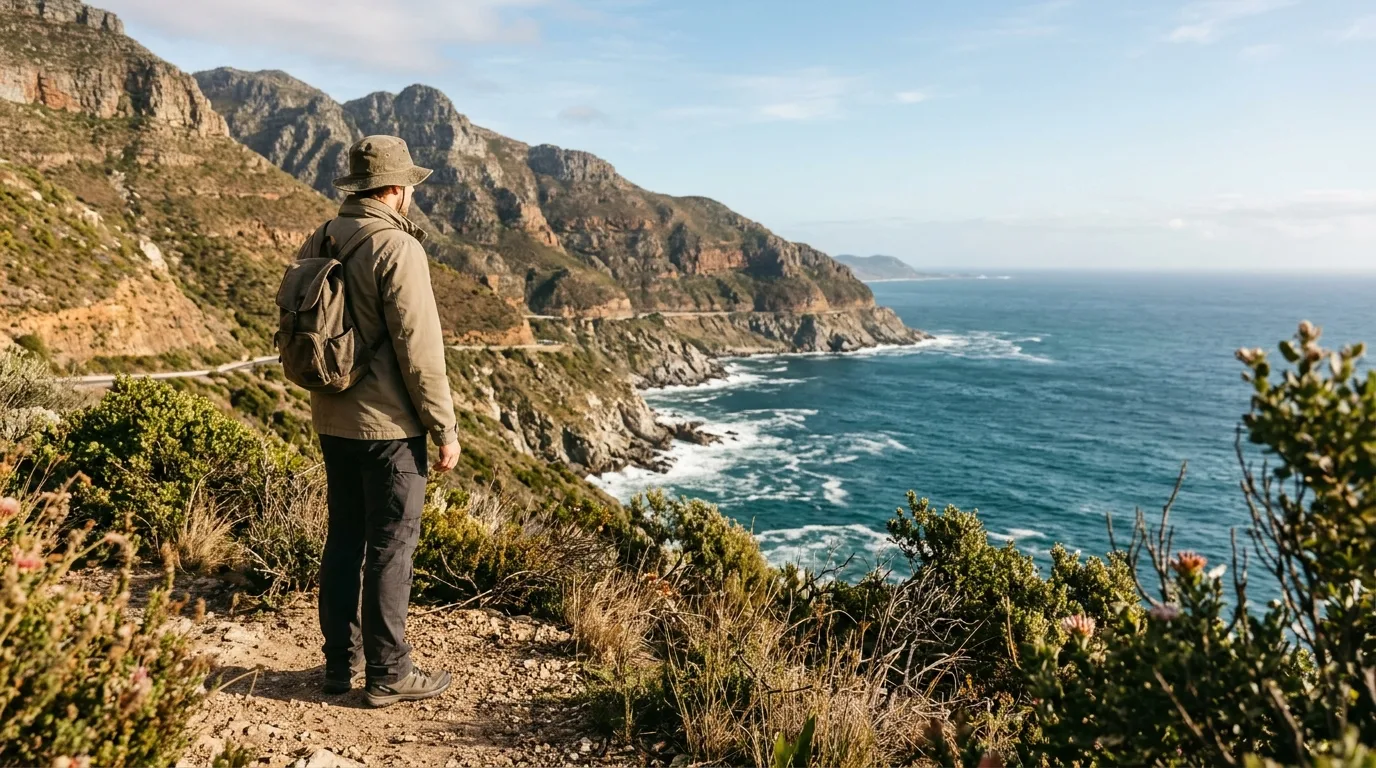
Before starting your South Africa adventure, here are a few practical things worth keeping in mind.
1. Entry requirements: Indian passport holders need an approved ETA or visitor visa before travelling, depending on their eligibility. Check the latest requirements through the official South Africa ETA portal.
2. Traveller declaration: South Africa requires travellers to complete the SARS online traveller declaration when entering or leaving the country. Check the latest instructions on the SARS website.
3. Currency: The local currency is the South African Rand (ZAR). For rough planning, you can use an approximate conversion of R1 = ₹5.8, but check the current exchange rate before your trip.
4. Getting around: Uber is available in major cities such as Cape Town and Johannesburg. A rental car is useful for the Garden Route, while domestic flights are convenient for longer journeys.
5. Food: Vegetarian options are available in major cities. If you follow a strict vegetarian or Jain diet, inform your safari lodge in advance, as food choices can be limited in remote areas.
6. Safety: Use reliable transport, avoid displaying expensive belongings and avoid walking alone in unfamiliar areas late at night. Plan long-distance drives during daylight.
7. Packing: Carry comfortable walking shoes, sunscreen, sunglasses, a light jacket and suitable clothing for the season. For safari drives, binoculars and a camera can be useful.
South Africa Itinerary at a Glance
South Africa has several regions worth exploring, but you don't need to cover everything in one visit. Here's how you can divide your trip depending on the time available.
| Duration | Places covered | Best for |
|---|---|---|
| 5 days | Cape Town | City sightseeing, mountains, beaches and coastal drives |
| 7 days | Cape Town + Kruger region | City exploration and an African safari |
| 10 days | Cape Town + Kruger region + Garden Route | A combination of city, wildlife and scenic road trips |
For this itinerary, Cape Town is the starting point. The longer routes add a safari in the Kruger region, followed by the Garden Route for travellers with more time.
DAY 1 of South Africa Itinerary: Arrival in Cape Town – A Relaxed Start by the Waterfront
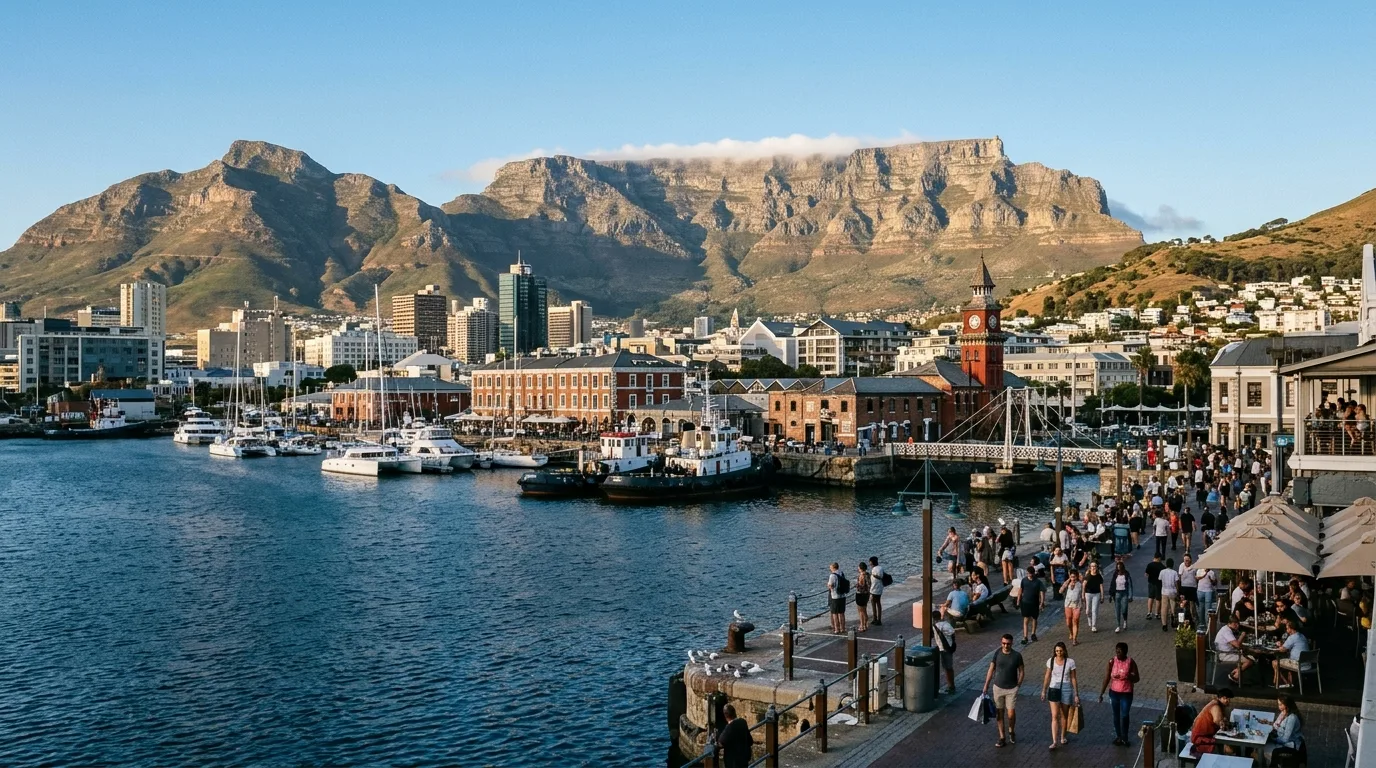
Your South African adventure begins in Cape Town, a city surrounded by mountains, beaches and the Atlantic Ocean.
After landing at Cape Town International Airport, complete the arrival formalities and transfer to your hotel. If you're travelling from India, you may have had a long journey with a connecting flight, so there's no need to rush into sightseeing immediately.
Once you've checked in and freshened up, head towards the V&A Waterfront to spend your first evening exploring one of Cape Town's most popular visitor areas.
Day 1 – Places to Explore
- V&A Waterfront
- Victoria Wharf Shopping Centre
- Harbour promenade
- Waterfront restaurants and cafés
V&A Waterfront
The Victoria & Alfred Waterfront is a lively harbour-side destination where shopping, dining, entertainment and beautiful waterfront views come together.
You can spend a few relaxed hours walking along the harbour, watching boats pass by and enjoying the views of Table Mountain in the distance.
Things to explore:
- Harbour promenade: Walk along the waterfront and enjoy the coastal atmosphere.
- Victoria Wharf Shopping Centre: Browse international brands, local stores and souvenir shops.
- Restaurants and cafés: Choose from a variety of dining options, including international cuisine.
- Harbour views: Find a spot to enjoy the scenery and take photographs of the waterfront.
The Waterfront is also a convenient place to pick up a few travel essentials or exchange money if required.
What Else Can You Do at the Waterfront?
If you reach early and have enough time, you can consider a few additional experiences:
- Take a harbour cruise, depending on the available departure times.
- Explore the Two Oceans Aquarium.
- Visit the Watershed market for local crafts and design products.
- Enjoy an evening meal overlooking the harbour.
Pro tip: Choose accommodation around the V&A Waterfront, City Bowl or another well-connected neighbourhood. This can make travelling to Cape Town's major attractions easier during the next few days.
End your first day with a relaxed dinner and get some rest. Tomorrow, you'll be heading towards one of South Africa's most recognisable landmarks.
DAY 2: Above the Clouds – Table Mountain, Bo-Kaap and Cape Town City
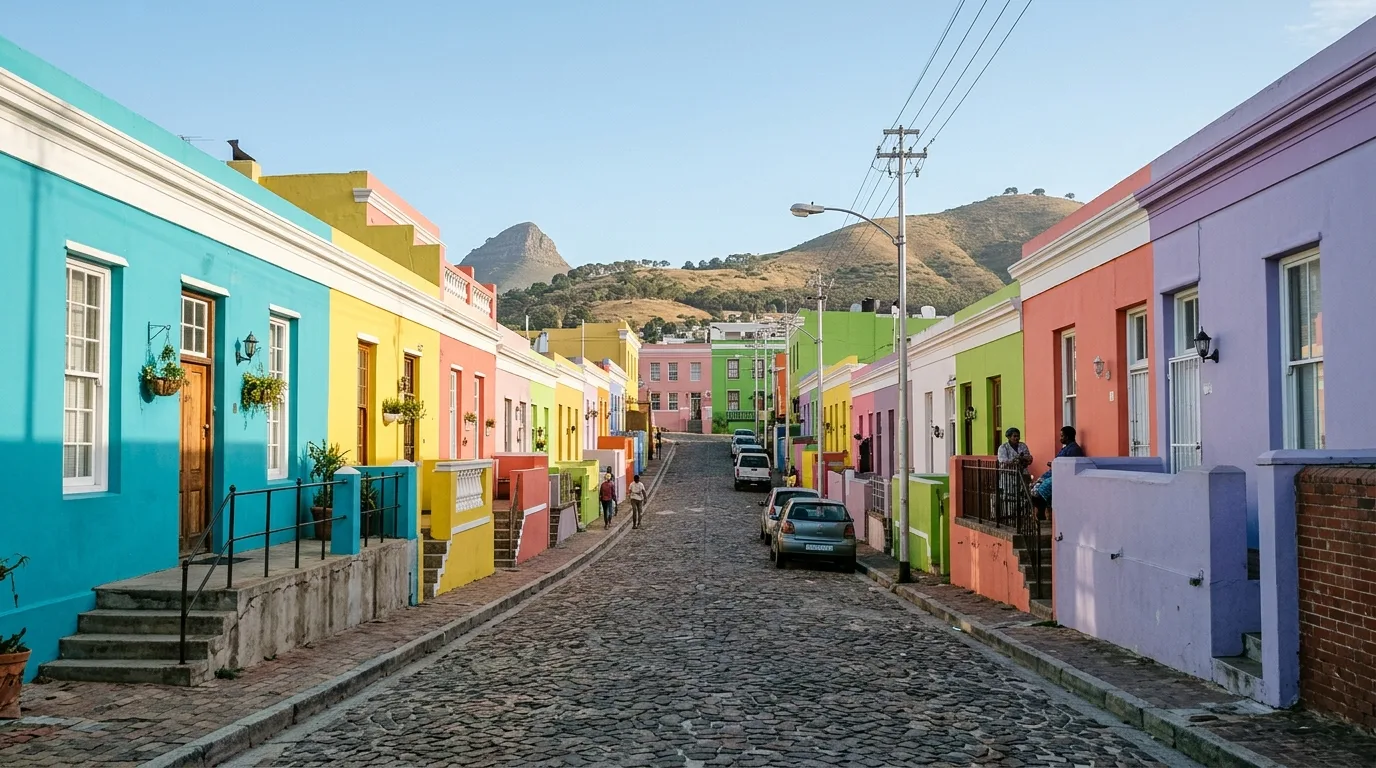
Day 2 is all about exploring Cape Town from different perspectives. Start your morning with a visit to Table Mountain, discover the colourful streets of Bo-Kaap and spend the rest of the day exploring the city's historic surroundings.
Day 2 – Places to Explore
- Table Mountain
- Bo-Kaap
- Company's Garden
- Cape Town City Centre
Table Mountain
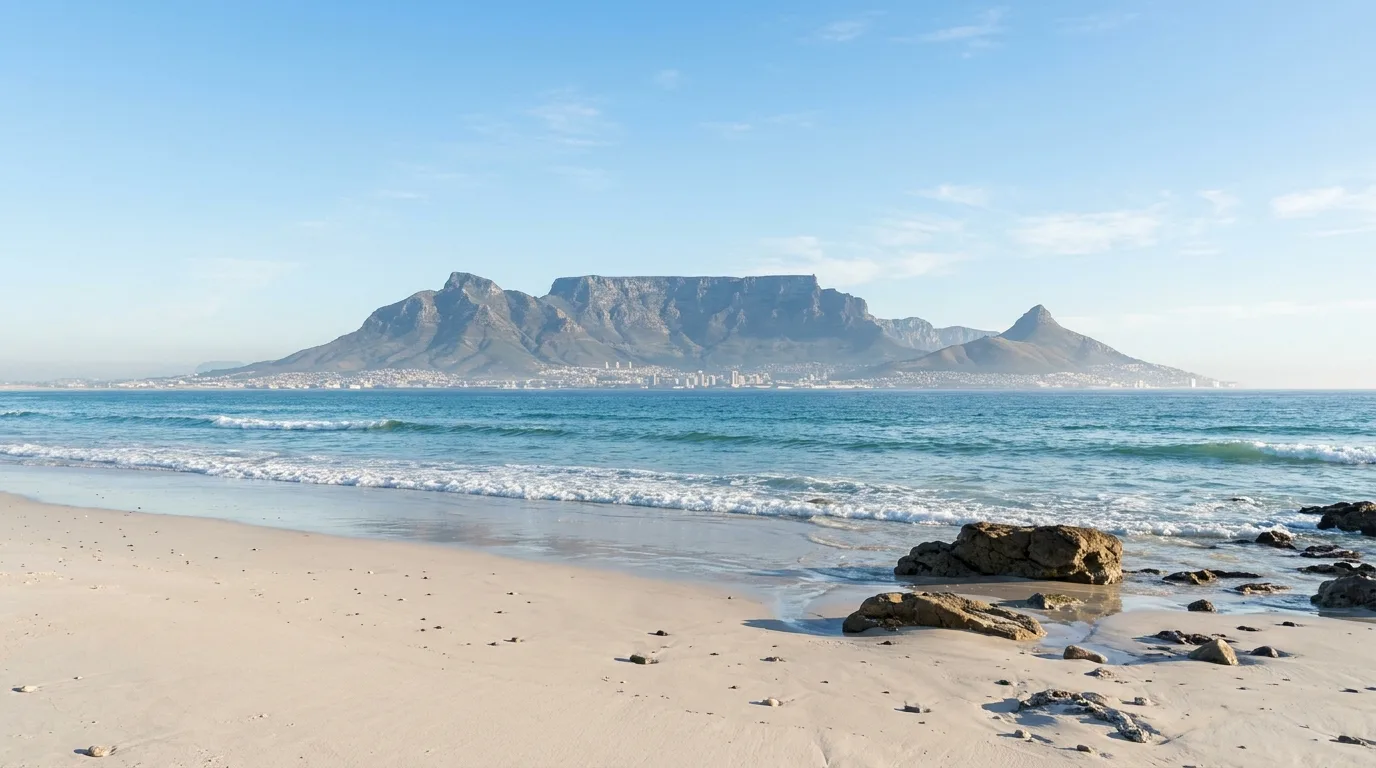
You cannot plan a Cape Town holiday without including Table Mountain.
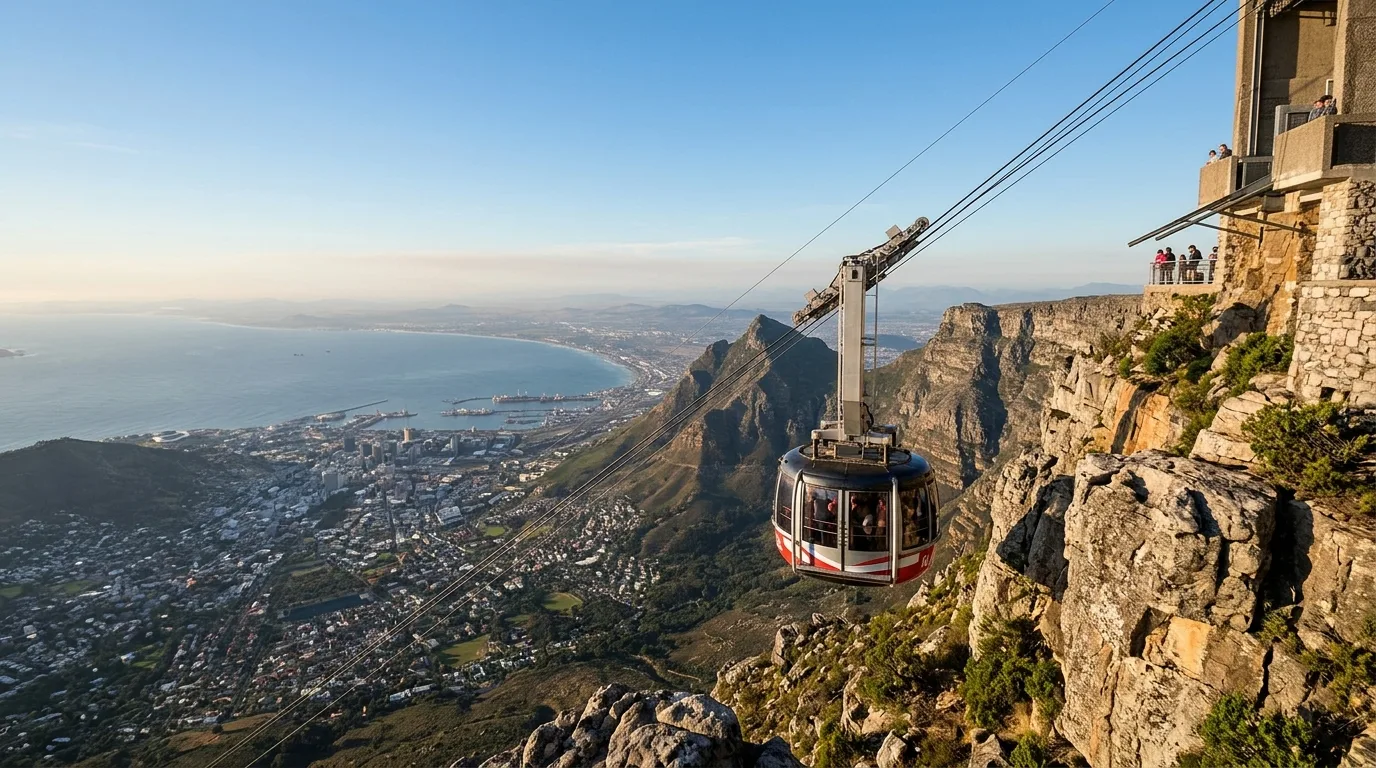
Rising above the city, this flat-topped mountain is one of South Africa's most recognisable natural landmarks. It forms part of the Table Mountain National Park and offers panoramic views of Cape Town, the coastline and the surrounding mountains.
One of the easiest ways to reach the summit is through the Table Mountain Aerial Cableway.
Table Mountain Aerial Cableway
The cable car takes visitors towards the summit, rotating during the journey so that passengers can enjoy views from different directions.
Once you reach the top, you'll find walking paths, viewpoints and areas where you can simply stop and admire the scenery.
What can you experience at the top?
- Panoramic views of Cape Town and the Atlantic coastline.
- Walking routes around the summit.
- Photography viewpoints overlooking the city.
- Café and refreshment facilities, subject to operating hours.
Table Mountain Ticket Prices (2026–27)
| Ticket type | Approximate price |
|---|---|
| Adult return, booked online | R475 (₹2,750) |
| Adult one-way, booked online | R300 (₹1,740) |
| Adult return, ticket office | R530 (₹3,070) |
| Child return, booked online | R230 (₹1,330) |
These rates apply from 1 July 2026 to 30 June 2027. You can check current ticket prices and operating hours on the official Table Mountain Cableway website.
Pro tip: Visit Table Mountain early in the morning. The weather can change quickly, and strong winds or poor visibility may lead to cableway closures. Check the operating status before leaving your hotel.
Bo-Kaap
After exploring Table Mountain, head towards Bo-Kaap, one of Cape Town's most photographed neighbourhoods.
The area is famous for its colourful houses, cobbled streets and strong Cape Malay cultural heritage. Its architecture and history make it more than just a photography stop.
What makes Bo-Kaap special?
- Brightly coloured houses lining the streets.
- Historic Cape Malay architecture.
- Mosques and cultural landmarks.
- Local food and traditional Cape Malay cuisine.
- Opportunities to learn about the neighbourhood's history.
You can explore the streets on foot and spend time appreciating the architecture. Remember that this is a residential neighbourhood, so be respectful when taking photographs of homes and local residents.
Company's Garden
If you still have some time, visit Company's Garden, a historic green space in central Cape Town.
Originally established during the Dutch colonial period, the garden is now a peaceful public space surrounded by museums and historic buildings.
Things to explore:
- Landscaped gardens and walking paths.
- Historic trees and monuments.
- Sculptures and fountains.
- Nearby museums and cultural attractions.
It's a pleasant place to slow down after a busy morning of sightseeing.
Pro tip: Keep this day flexible. Table Mountain deserves enough time, and you don't want to rush through the summit just to fit in more attractions.
DAY 3: Coastal Wonders – Cape Peninsula, Cape Point and African Penguins
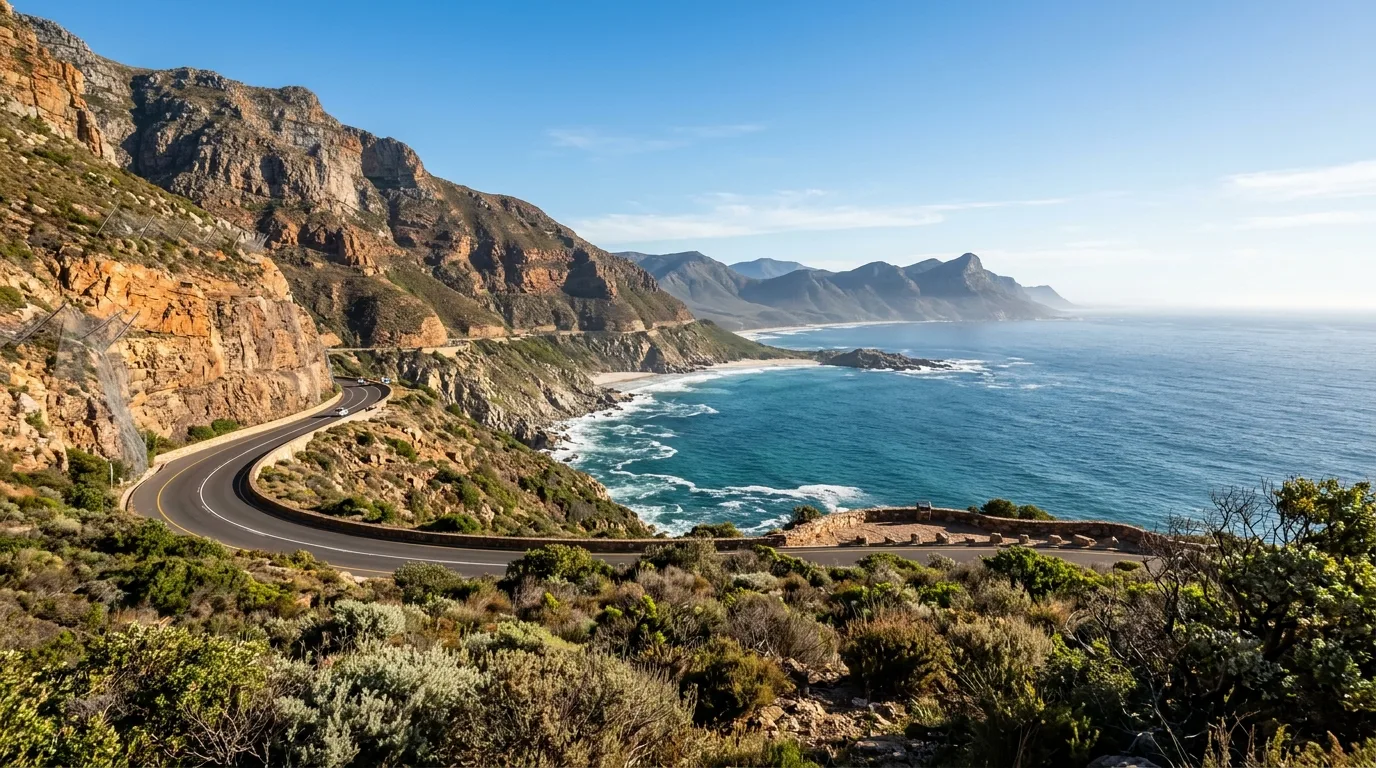
If there's one day trip from Cape Town that deserves an entire day, it's the Cape Peninsula.
Day 3 takes you along dramatic coastal roads, past beautiful ocean viewpoints and towards the southern end of the peninsula. You'll also get an opportunity to see African penguins at Boulders Beach.
Day 3 – Places to Explore
- Chapman's Peak Drive
- Cape Point
- Cape of Good Hope
- Boulders Beach
- Simon's Town
Chapman's Peak Drive
Begin your journey with a scenic drive along Chapman's Peak Drive, one of the most beautiful coastal roads in the region.
The road winds along the mountainside, with steep cliffs on one side and the Atlantic Ocean on the other.
Why should you stop here?
- Dramatic coastal views.
- Mountain and ocean landscapes.
- Scenic photography viewpoints.
- A memorable road-trip experience.
There are designated viewpoints where you can stop, enjoy the scenery and take photographs. Check road conditions and any applicable toll charges before setting off.
Cape Point
Continue towards Cape Point, located within the Table Mountain National Park.
The landscape here is quite different from Cape Town's city centre. You'll find rocky coastlines, open viewpoints, walking trails and expansive ocean scenery.
One of the main attractions is the Cape Point lighthouse viewpoint.
Things to experience at Cape Point:
- Walk towards the old lighthouse viewpoint.
- Enjoy panoramic views of the surrounding coastline.
- Explore designated walking trails.
- Take the Flying Dutchman Funicular, if operating, to reduce the uphill walk.
- Look out for wildlife such as ostriches and baboons from a safe distance.
The funicular can make the climb easier, especially if you don't want to walk uphill.
Cape of Good Hope
Another major stop within the reserve is the Cape of Good Hope, known for its dramatic coastal scenery and iconic signboard.
Many travellers stop here for photographs, but the area is also worth exploring for its walking trails and natural surroundings.
You can spend time enjoying the ocean views and observing the coastal landscape.
Important: Cape Point and the Cape of Good Hope are separate stops within the same protected area. Allow enough time to explore both instead of treating them as one attraction.
Boulders Beach – Meet the African Penguins
On your way back towards Cape Town, make a stop at Boulders Beach near Simon's Town.
This beach is famous for its colony of African penguins. It is one of the most memorable wildlife experiences you can include in a Cape Town itinerary.
Wooden boardwalks allow visitors to observe the penguins without disturbing their nesting areas.
What makes Boulders Beach special?
- A chance to see African penguins in their natural coastal habitat.
- Boardwalk viewpoints for observing the colony.
- Beautiful granite boulders and sheltered beach scenery.
- Photography opportunities along the coastline.
You may see penguins resting on the sand, moving between the rocks or entering the water.
Pro tip: Maintain a respectful distance from the penguins. Never feed or touch them, and stay on the designated boardwalks.
Simon's Town
If you have some extra time, explore Simon's Town, a historic coastal town near Boulders Beach.
You can enjoy its seaside atmosphere, explore the waterfront and stop for a meal before returning to Cape Town.
Travel tip: Cape Point is around 60 km south of central Cape Town. This is a full-day excursion, so consider booking an organised Cape Peninsula tour or arranging a rental car and return transport in advance.
DAY 4: Nature and Countryside – Kirstenbosch Botanical Garden and Cape Winelands
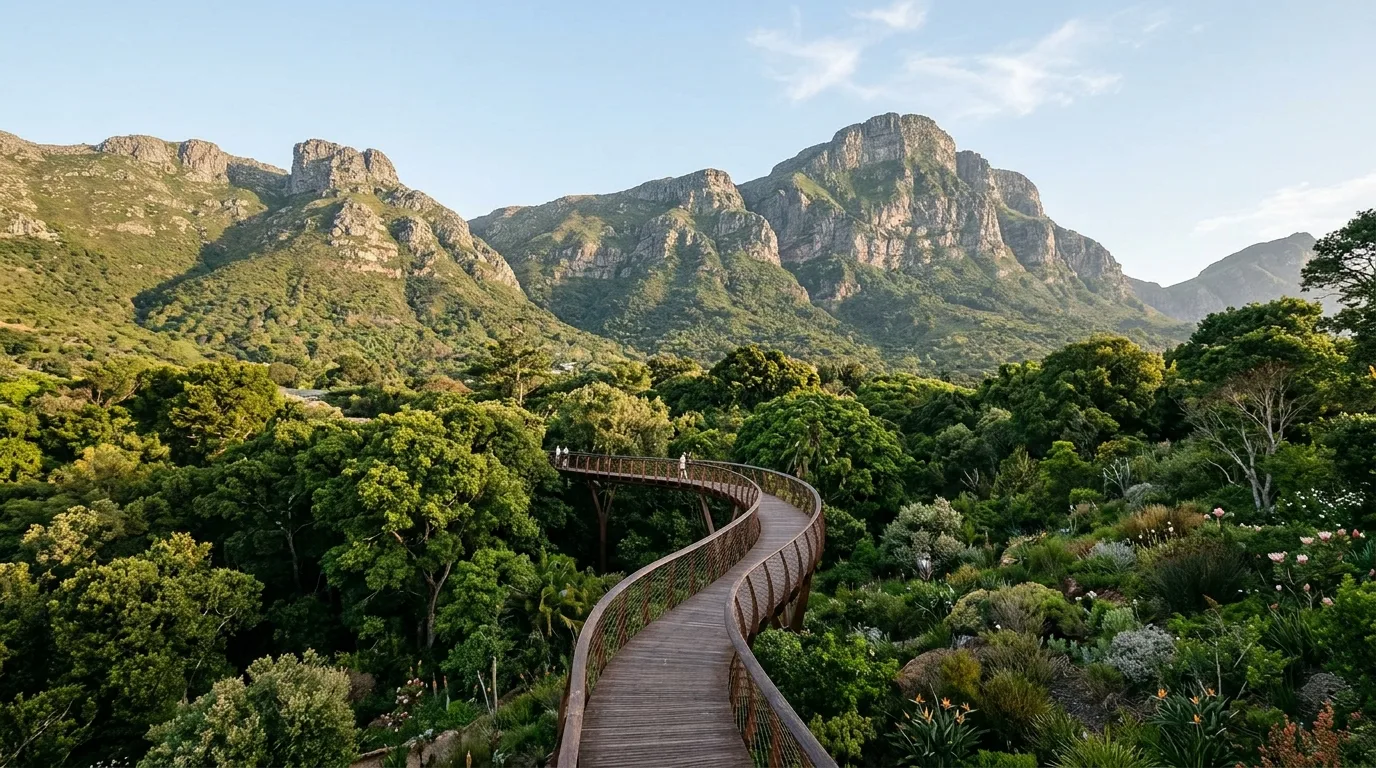
After exploring Cape Town's mountains and coastline, spend your fourth day discovering its natural gardens and surrounding countryside.
Start with Kirstenbosch National Botanical Garden and then head towards the Cape Winelands, where historic towns, vineyards and mountain views make for a beautiful day trip.
Day 4 – Places to Explore
- Kirstenbosch National Botanical Garden
- Stellenbosch
- Franschhoek
Kirstenbosch National Botanical Garden
Located against the eastern slopes of Table Mountain, Kirstenbosch National Botanical Garden is one of the most beautiful botanical gardens in South Africa.
The garden is known for its indigenous plant collections, landscaped spaces and mountain scenery.
It's a lovely place to spend a few hours, especially if you enjoy nature, photography and peaceful walking trails.
Things to explore:
- Boomslang Canopy Walkway: An elevated walkway offering views across the garden and surrounding landscape.
- Indigenous plant collections: Explore South Africa's native plants, including different fynbos species.
- Themed gardens: Discover landscaped sections featuring different plant collections.
- Walking trails: Enjoy the garden's natural surroundings at a relaxed pace.
- Picnic areas: Take a break and enjoy the greenery.
The Boomslang Canopy Walkway is one of the highlights. Its elevated structure takes you above parts of the garden, offering a different perspective of the surrounding vegetation.
Cape Winelands – Stellenbosch and Franschhoek
After spending the morning at Kirstenbosch, continue towards the Cape Winelands.
This region is known for its vineyards, historic architecture, mountain scenery and restaurants.
You can choose to visit one town or combine both, depending on your available time.
Stellenbosch
Stellenbosch is known for its historic town centre, oak-lined streets, cafés and surrounding wine estates.
Things to explore:
- Walk through the historic town centre.
- Explore the architecture and heritage buildings.
- Visit a vineyard or estate restaurant.
- Enjoy the mountain and countryside views.
- Stop at local cafés and shops.
Franschhoek
Franschhoek is another popular destination in the Cape Winelands. It is known for its food scene, vineyards and scenic mountain setting.
You can visit an estate restaurant, enjoy the countryside or explore the town's galleries and shops.
You don't have to participate in wine tasting to enjoy the region. Many estates have beautiful gardens, restaurants and scenic viewpoints.
Pro tip: If you plan to visit wine estates, arrange a guided tour or a designated driver. Avoid planning a self-drive day around alcohol tasting.
DAY 5: Farewell to Cape Town – Departure or Continue Your South African Adventure
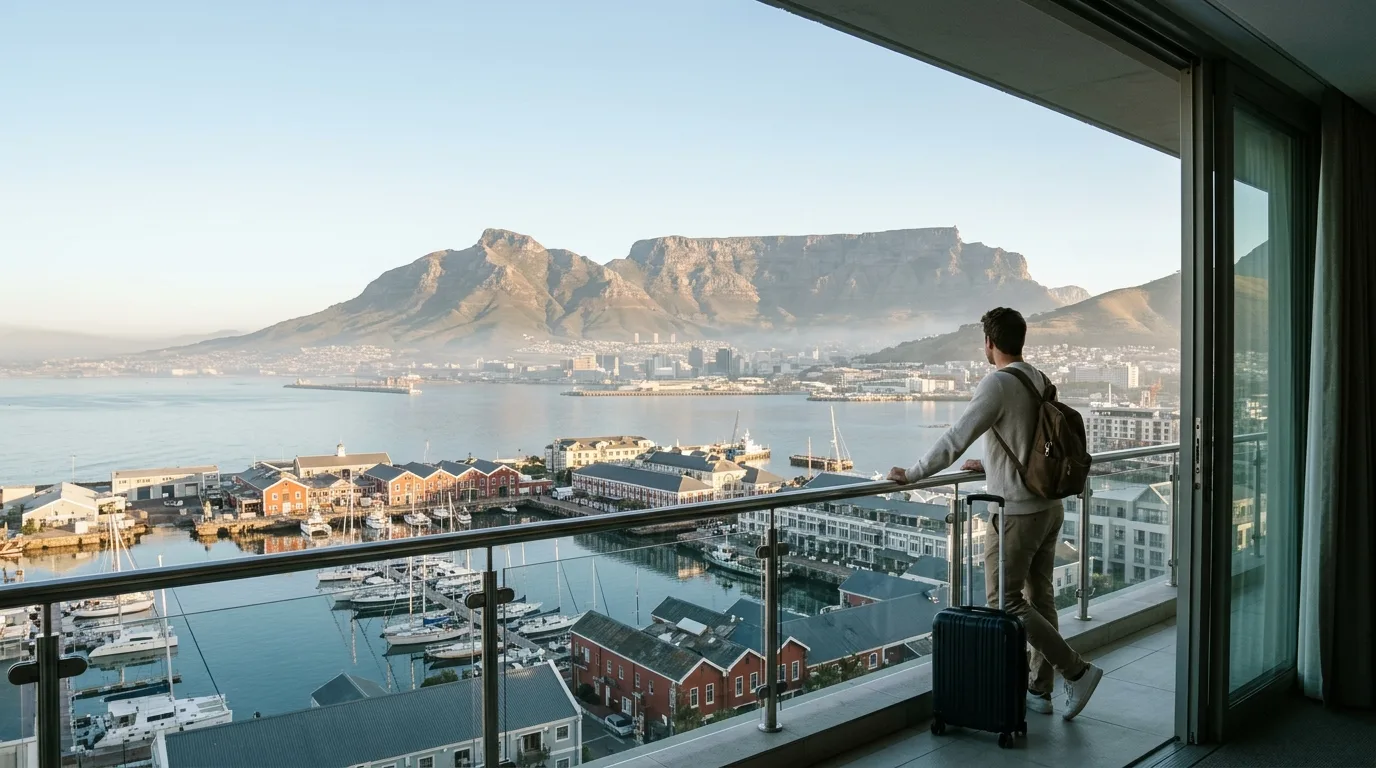
If you're following the 5-day South Africa itinerary, Day 5 is your departure day.
Enjoy breakfast, check out of your hotel and head to Cape Town International Airport for your return flight.
If you have a later flight, you can enjoy a relaxed breakfast, do some last-minute shopping or revisit a nearby attraction, provided you have enough time for the airport transfer.
What If You Have More Than Five Days?
Don't leave South Africa just yet!
If you have seven days, you can use the next two days to explore the Kruger region and experience an African safari.
For a 10-day holiday, you can add another safari day and continue towards the Garden Route for a scenic coastal experience.
The following sections continue the journey without repeating the Cape Town sightseeing days.
DAY 5–7: From Cape Town to the Wild – Kruger National Park Safari
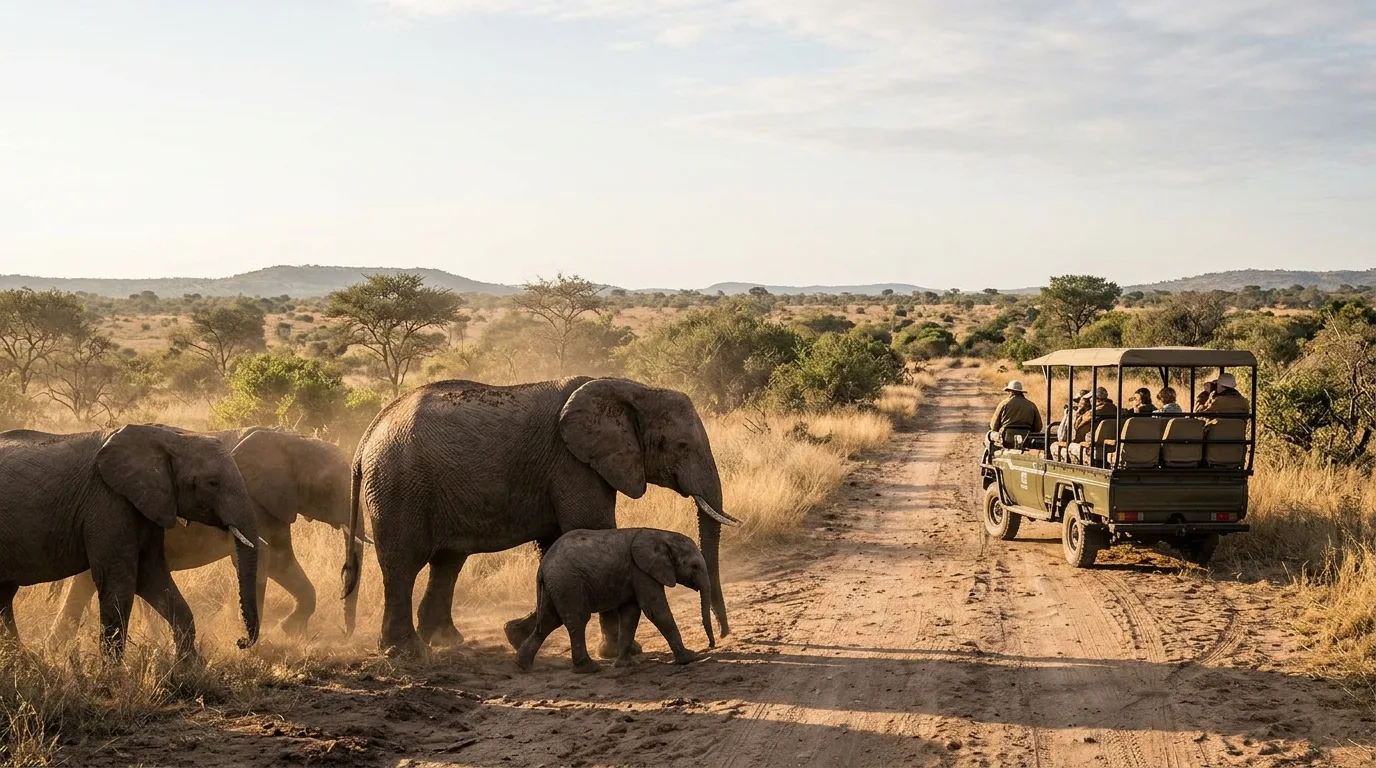
For the 7-day itinerary, continue with Day 5. For the 10-day itinerary, continue through Day 8 before moving to the Garden Route.
If you've always wanted to experience an African safari, this is the part of your South Africa trip you've been waiting for.
Kruger National Park is one of the country's most famous wildlife destinations. It is home to the Big Five, along with giraffes, zebras, hippos, crocodiles and hundreds of bird species.
The next three days are dedicated to travelling to the Kruger region, exploring the wilderness and enjoying guided game drives.
DAY 5: Cape Town to the Kruger Region – Your Safari Adventure Begins
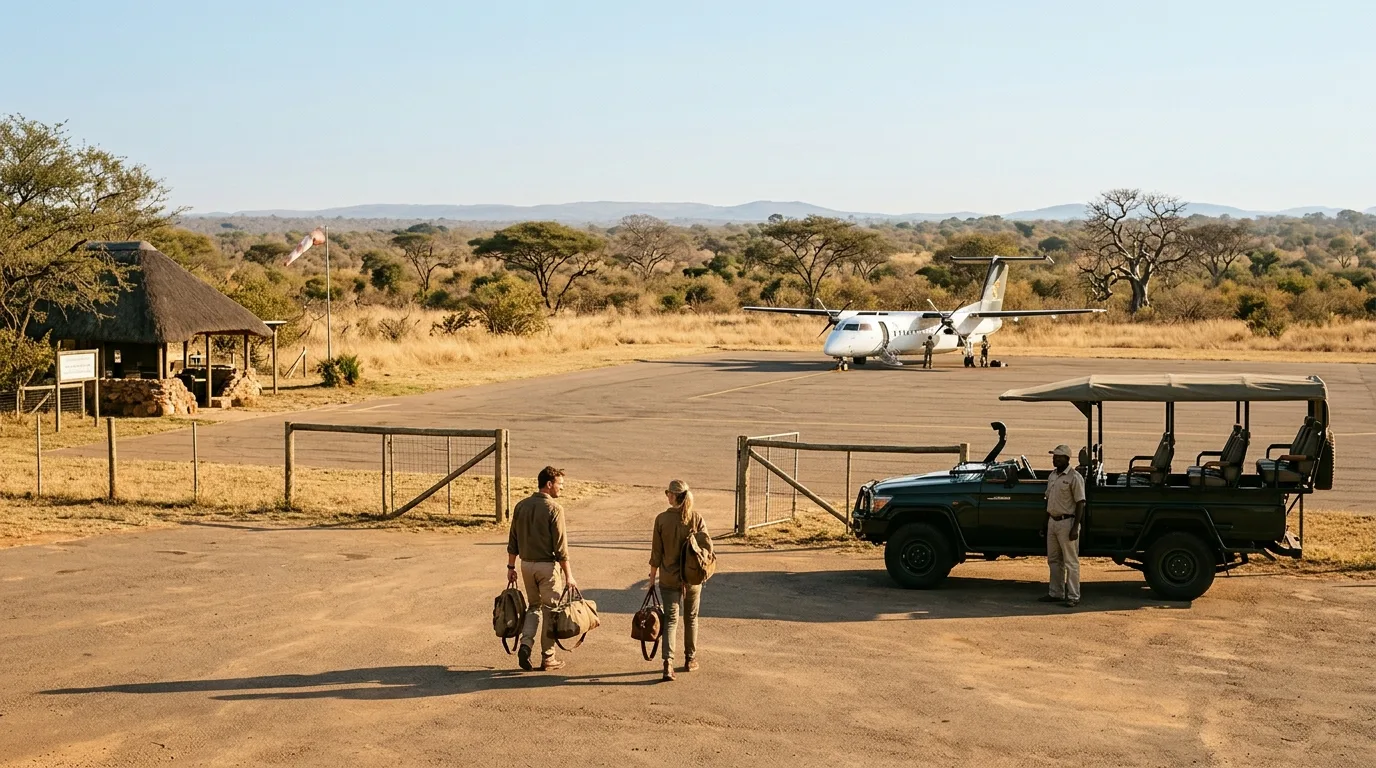
After breakfast, check out of your Cape Town hotel and head to the airport for your domestic flight towards the Kruger region.
The best airport depends on where your safari lodge is located. Some of the main options include:
- Skukuza Airport: Located within Kruger National Park and useful for selected lodge locations.
- Kruger Mpumalanga International Airport: Located near Nelspruit and White River.
- Hoedspruit Airport: Convenient for selected lodges and private reserves in the central and northern safari region.
After landing, arrange your pre-booked lodge transfer. The drive can vary depending on the airport, park entrance and location of your accommodation.
What to Expect at Your Safari Lodge
Safari lodges are quite different from regular city hotels. Many are located close to wildlife areas and are designed to offer a nature-focused stay.
Depending on the property, you may find:
- Rooms or cottages surrounded by natural landscapes.
- Outdoor dining areas.
- Swimming pools and relaxation spaces.
- Wildlife-viewing decks.
- Guided safari activities.
- Early morning and afternoon game drives.
If you arrive early enough, you may be able to join an evening game drive, depending on your lodge's schedule.
Pro tip: Choose your safari lodge before booking your domestic flight. The nearest airport and transfer time depend on the lodge's exact location. Also check whether meals, game drives and park fees are included in your stay.
DAY 6: Into the Wild – Big Five Safari in Kruger National Park
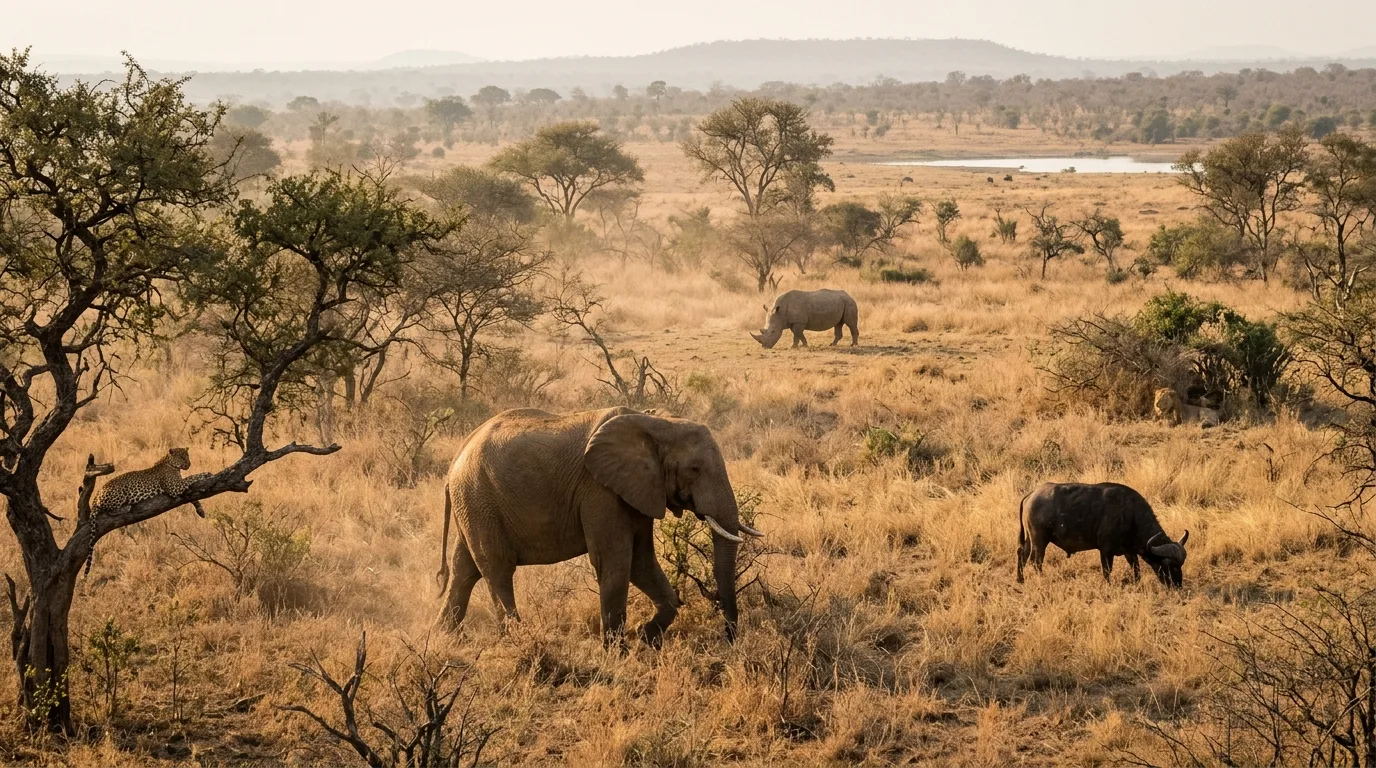
Experience: Morning safari · Afternoon safari · Wildlife photography
Wake up early because your first full safari day begins before most city attractions even open.
One of the most exciting things about a safari is that you never know what you'll encounter along the way. You may spot elephants crossing a road, giraffes feeding on trees or a lion resting in the grasslands.
Kruger National Park is famous for its Big Five:
- African elephant
- Lion
- Leopard
- Rhinoceros
- African buffalo
Apart from these, you can also look out for zebras, giraffes, hippos, crocodiles, antelopes and numerous bird species.
What Does a Safari Day Look Like?
Many safari lodges organise morning and afternoon game drives.
Morning game drive
Morning safaris often begin early, when temperatures are cooler and many animals are active.
Your guide takes you through selected routes, looking for animal movements and explaining the behaviour of the wildlife you encounter.
Keep your camera ready because sightings can happen unexpectedly.
Afternoon game drive
After returning to the lodge for breakfast and some rest, you may head out again in the afternoon.
Depending on the lodge and season, you may experience a sunset drive and observe wildlife becoming active as the day cools.
Wildlife You May Spot in Kruger
Apart from the Big Five, Kruger is home to a wide variety of wildlife.
- Giraffes: Often seen feeding on the leaves of trees.
- Zebras: Recognisable by their distinctive black-and-white stripes.
- Hippos: Commonly found around rivers and water bodies.
- Crocodiles: Can be spotted near rivers and water sources.
- Antelopes: Several species inhabit the park's different landscapes.
- Birdlife: The region is popular among birdwatchers.
Pro tip: Wildlife sightings are never guaranteed. Don't expect to see every animal during one drive. Stay patient, listen to your guide and enjoy the experience of being in the wilderness.
DAY 7: Another Safari Experience – Explore More of the Kruger Region
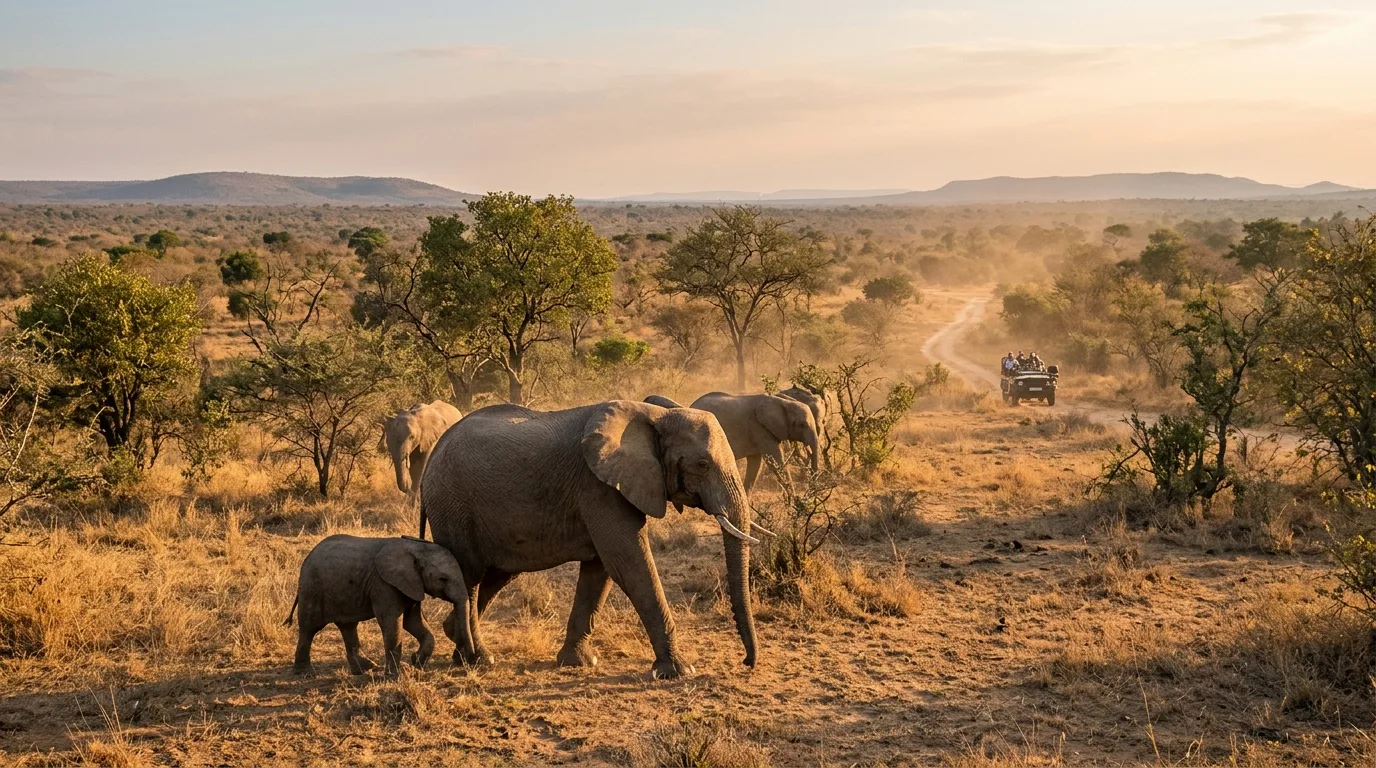
For travellers following the 7-day itinerary, this is your final day in the Kruger region before departure.
If you're following the 10-day itinerary, this is an additional full day to enjoy the safari experience.
Start early with another game drive. Exploring different routes gives you more opportunities to observe wildlife in different habitats and conditions.
Things to Experience
- Another guided morning game drive.
- Birdwatching and wildlife photography.
- A guided nature walk, where offered.
- Relaxing at the lodge between safari activities.
- Enjoying the surrounding natural landscape.
Guided Safari or Self-Drive: Which Should You Choose?
If you're staying inside Kruger National Park, self-drive routes are an option for visitors who are comfortable driving and following park regulations.
However, a guided safari can be more convenient for first-time visitors.
Guided safari:
- A trained guide helps identify wildlife.
- You can learn about animal behaviour and the ecosystem.
- You don't have to navigate the park yourself.
- The experience is organised around the lodge's safari schedule.
Self-drive safari:
- You can explore at your own pace.
- You have more control over your route and stops.
- You need to follow park rules and opening hours.
- You are responsible for driving and spotting wildlife.
Pro tip: Before booking your lodge, check whether conservation fees, meals, game drives and airport transfers are included. These expenses can make a significant difference to the total safari budget.
Day 7 Departure for 7-Day Travellers
If you're following the 7-day itinerary, enjoy breakfast and arrange your transfer to the nearest suitable airport.
If your international flight departs from Johannesburg, you may need to connect through Johannesburg or arrange a road transfer depending on your safari location.
Avoid booking a tight connection between your lodge transfer and international flight. Keep enough time for unexpected delays.
For travellers on the 10-day itinerary: Stay one more night in the Kruger region and continue with the Garden Route journey on Day 8.
DAY 8–10: The Garden Route – Coastal Towns, Lagoons and Scenic Landscapes
After exploring Cape Town and experiencing an African safari, it's time to discover another beautiful side of South Africa: the Garden Route.
The Garden Route is a scenic stretch along the country's southern coastline, known for its beaches, forests, lagoons, coastal towns and dramatic ocean views.
A road trip is one of the best ways to explore this region. For this itinerary, Knysna will be your base, with visits to nearby attractions.
DAY 8: Kruger Region to Knysna – Begin Your Garden Route Journey
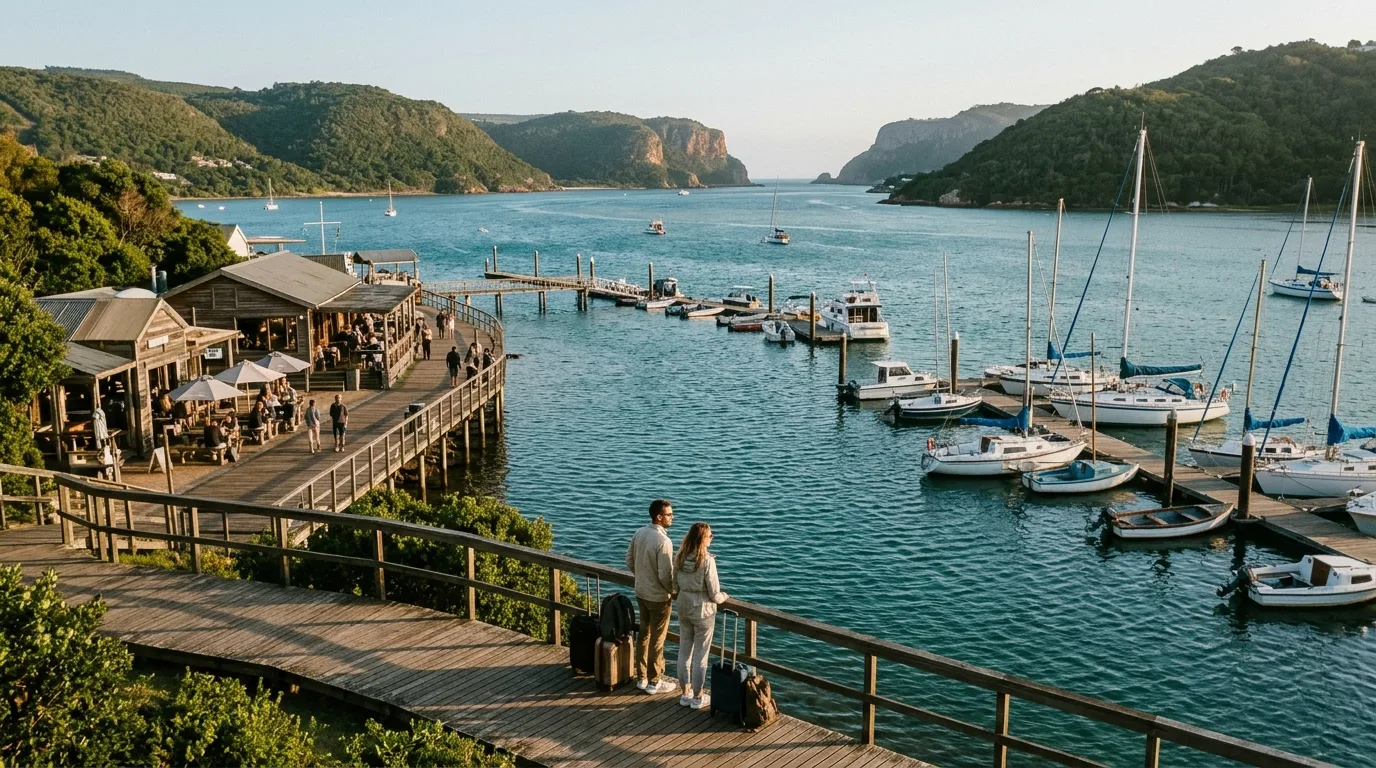
After breakfast, check out of your safari lodge and begin your journey towards the Garden Route.
For this route, you can travel from the Kruger region to George Airport, usually with a connection through Johannesburg depending on available flight schedules.
From George, drive towards Knysna, a popular coastal town and a convenient base for exploring the region.
The journey involves a combination of domestic flights and a road transfer, so avoid planning too many sightseeing stops on this day.
Knysna Waterfront
Once you reach Knysna, check into your accommodation and spend the evening exploring the waterfront.
The Knysna Waterfront is known for its lagoon views, restaurants, shops and relaxed coastal atmosphere.
Things to explore:
- Walk along the waterfront.
- Enjoy views of the Knysna Lagoon.
- Explore local shops and cafés.
- Try seafood or other local dishes.
- Relax after your journey.
You can also enjoy a meal overlooking the water and spend the evening at a relaxed pace.
Pro tip: The drive from George to central Knysna takes approximately an hour, depending on traffic and your exact destination. Confirm your rental car or transfer arrangements before arriving at George Airport.
DAY 9: Explore Knysna – The Heads, Lagoon and Coastal Views
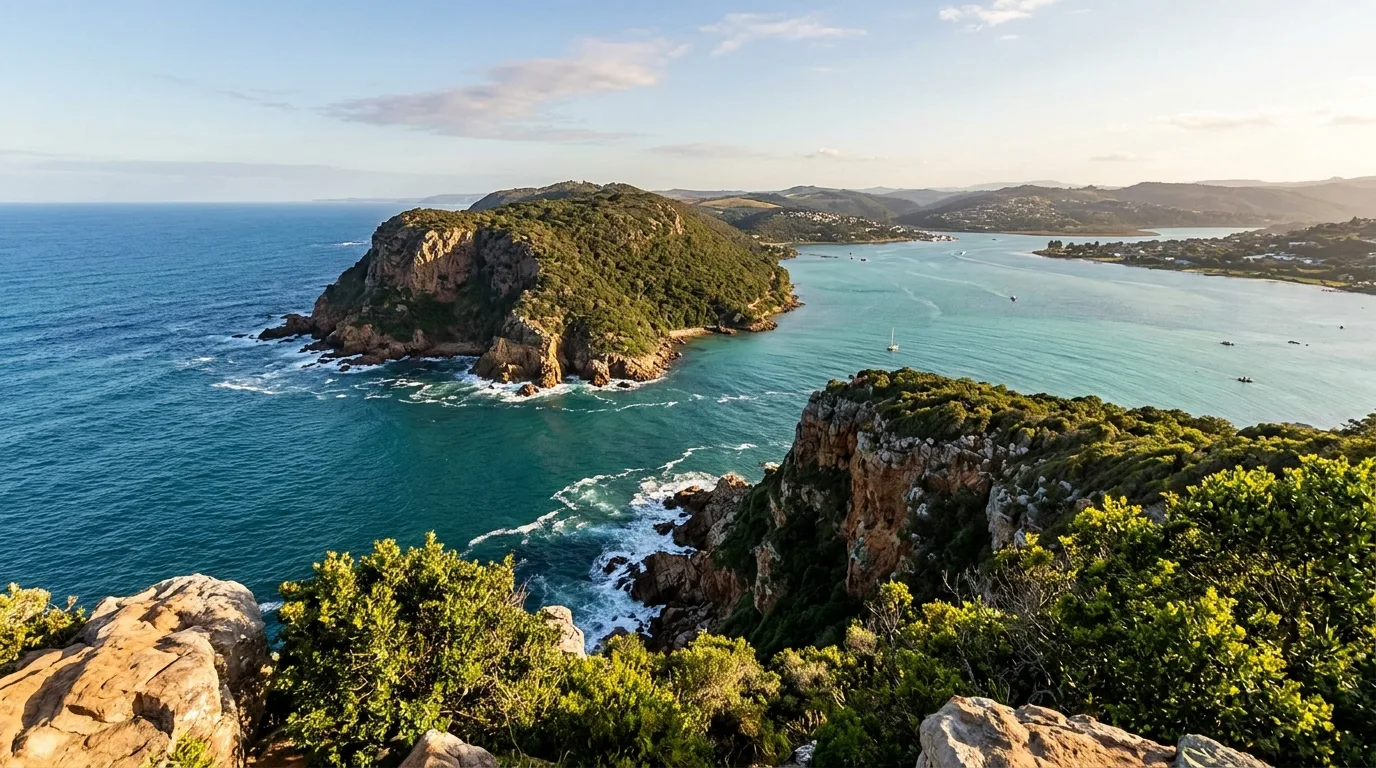
Spend the day exploring Knysna and its surrounding natural attractions.
The town is particularly known for its lagoon and the dramatic sandstone cliffs that form the entrance between the lagoon and the Indian Ocean.
Knysna Heads
The Knysna Heads are two sandstone cliffs that form a narrow entrance between the Indian Ocean and the Knysna Lagoon.
The viewpoints offer beautiful views of the water, cliffs and coastline.
What to experience:
- Visit viewpoints overlooking the ocean.
- Enjoy photography opportunities.
- Explore the surrounding coastal scenery.
- Spend time at nearby beaches if conditions permit.
The views from the Heads are among the highlights of a visit to Knysna.
Knysna Lagoon
The lagoon is another major attraction in the town.
Depending on the weather and available operators, you can explore the water through boat trips and other recreational activities.
Things to do around the lagoon:
- Take a boat cruise.
- Enjoy the views from the waterfront.
- Explore nearby cafés and restaurants.
- Try water-based activities offered by local operators.
You can also keep the afternoon relaxed and return to the waterfront for lunch.
Pro tip: Check weather and water conditions before booking a boat trip. Keep your schedule flexible rather than trying to cover too many places in one day.
DAY 10: Plettenberg Bay or Tsitsikamma – A Final Coastal Experience
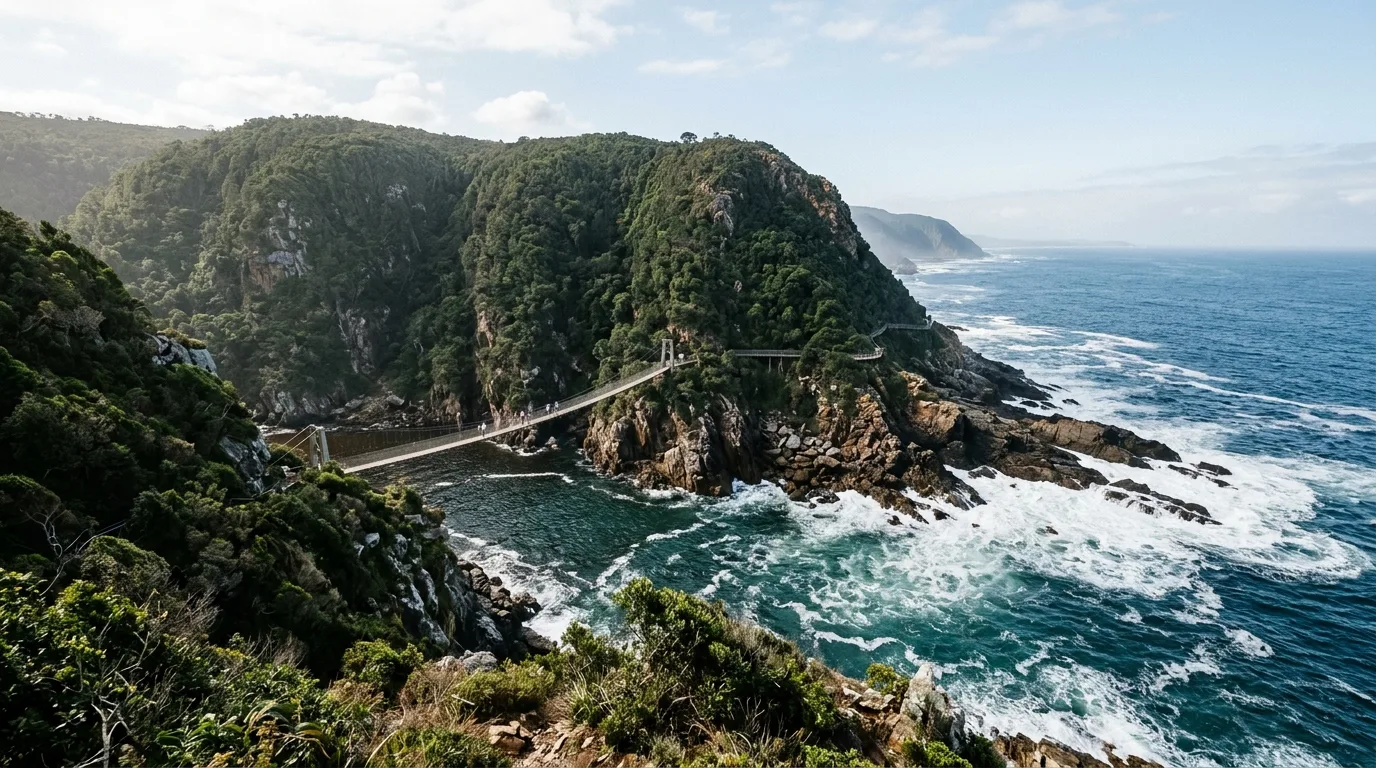
For your final day, choose between exploring Plettenberg Bay or visiting Tsitsikamma National Park, depending on your departure time and how much driving you're comfortable with.
Both offer beautiful coastal landscapes, but the experiences are quite different.
Option 1: Plettenberg Bay
Plettenberg Bay is a popular coastal town along the Garden Route, known for its beaches and scenic surroundings.
You can enjoy a relaxed morning exploring the coastline before heading towards George Airport for your onward journey.
Things to experience:
- Spend time at the beach.
- Enjoy coastal viewpoints.
- Explore the town's cafés and restaurants.
- Take photographs of the surrounding landscape.
Option 2: Tsitsikamma National Park
If you have an earlier start and enough time for the drive, consider visiting the Storms River Mouth section of Tsitsikamma National Park.
The park is known for its rugged coastline, indigenous forests, walking trails and ocean scenery.
Things to explore:
- Storms River Mouth.
- Coastal walking trails.
- Suspension bridges, subject to current access conditions.
- Views of the Indian Ocean.
- Indigenous vegetation and birdlife.
The suspension bridges are a popular highlight, offering views of the river mouth and surrounding coastline.
Pro tip: Don't try to squeeze both Plettenberg Bay and Tsitsikamma into a short departure day. Choose one based on your flight schedule and allow enough time to reach the airport.
After your final Garden Route experience, head towards George Airport or your planned departure point.
With this, your 10-day South African adventure comes to an end, bringing together city exploration, wildlife and some of the country's most beautiful coastal landscapes.
Which South Africa Itinerary Should You Choose?
Not sure whether to plan five, seven or ten days? Here's a quick comparison.
| Itinerary | Route | What you'll experience |
|---|---|---|
| 5 days | Cape Town | Table Mountain, Bo-Kaap, Cape Peninsula, penguins and Cape Winelands |
| 7 days | Cape Town + Kruger | Cape Town sightseeing and an African safari |
| 10 days | Cape Town + Kruger + Garden Route | City attractions, wildlife and a scenic coastal road trip |
My recommendation: If this is your first visit to South Africa, seven days is a good option if you want to experience both Cape Town and an African safari. If you have ten days, add the Garden Route for a more varied holiday. With only five days, focus on Cape Town instead of rushing between distant destinations.
South Africa Itinerary: Important Travel Tips
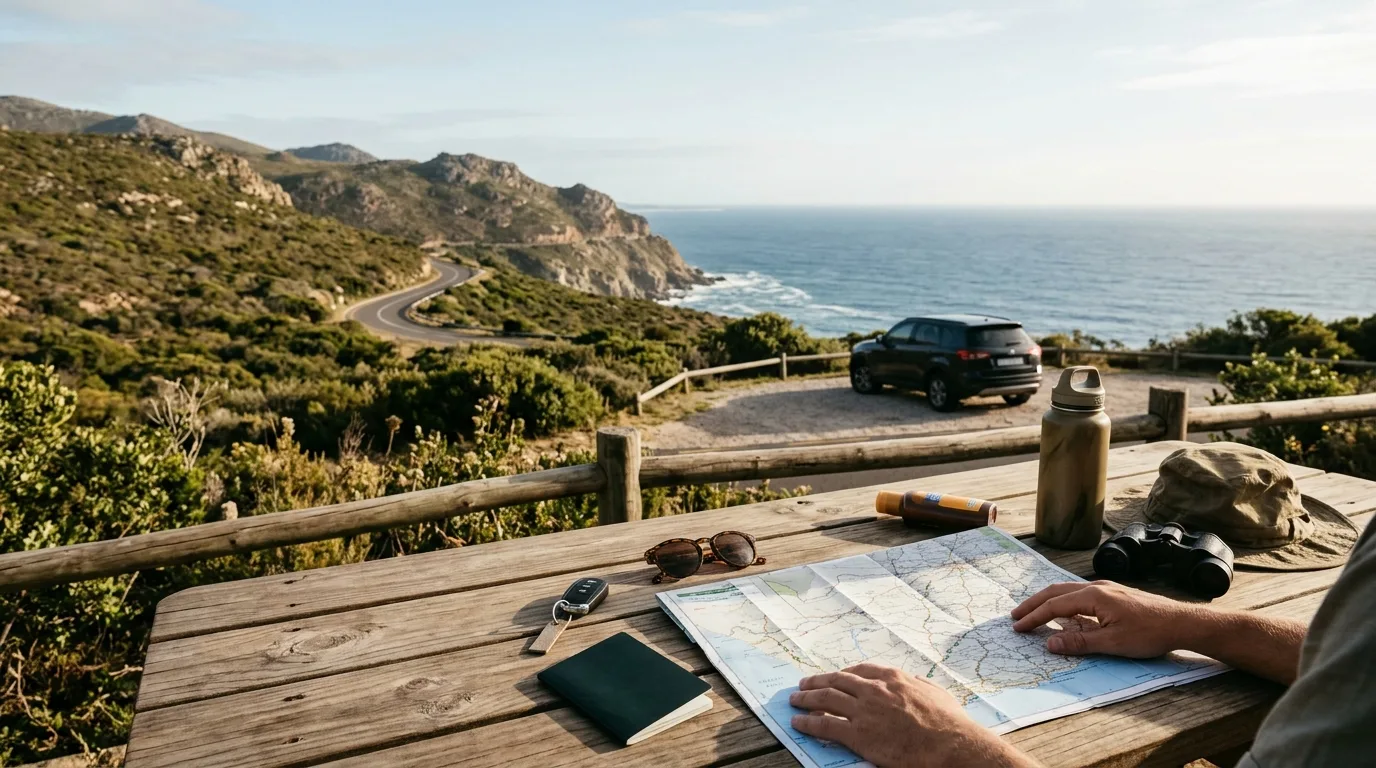
A few small planning decisions can make your South African holiday much smoother.
- Book Table Mountain early: The cableway can close due to wind or poor visibility, so keep your schedule flexible.
- Keep a full day for the Cape Peninsula: Cape Point, the Cape of Good Hope and Boulders Beach are spread across a large area.
- Choose your safari lodge first: The best airport depends on the lodge's location.
- Allow time for domestic connections: Flights and lodge transfers can take longer than expected.
- Plan your Garden Route drive: Cape Town to Knysna is approximately 500 km by road. Avoid treating it as a short transfer.
- Check safari inclusions: Confirm whether meals, game drives, transfers and conservation fees are part of your lodge package.
- Avoid unnecessary night driving: Plan long road journeys during daylight hours.
- Keep your departure day flexible: Don't book a tight international connection after a long lodge transfer or domestic flight.
Frequently Asked Questions About South Africa Itinerary
1. How many days are enough for a South Africa trip?
Five days are suitable for exploring Cape Town. Seven days allow you to combine Cape Town with a Kruger safari, while ten days give you time to add the Garden Route.
2. What are the best places to visit in South Africa for first-time travellers?
Cape Town, Kruger National Park and the Garden Route are among the best places to include in a first-time itinerary. You can also visit Stellenbosch and Franschhoek for their vineyards and countryside.
3. Is five days enough for South Africa?
Five days are enough to explore Cape Town and its nearby attractions, including Table Mountain, Bo-Kaap, Cape Point, Boulders Beach and the Cape Winelands. You will need more time if you want to include a safari or the Garden Route.
4. Can I visit Kruger National Park on a seven-day South Africa trip?
Yes. You can spend the first four days exploring Cape Town and use the remaining days to travel to the Kruger region and enjoy safari experiences. Plan your domestic flights and lodge transfers carefully.
5. Is the Garden Route worth visiting?
Yes. The Garden Route is a great addition if you enjoy scenic drives, coastal towns, beaches, forests and lagoons. Knysna, Plettenberg Bay and Tsitsikamma are popular stops.
6. Can I explore South Africa without renting a car?
Yes. You can use Uber in major cities, domestic flights for longer journeys and organised tours for sightseeing. However, a rental car gives you more flexibility along the Garden Route and in the Cape Winelands.
7. Can I see the Big Five in Kruger National Park?
Kruger National Park is home to all five members of the Big Five: lions, leopards, elephants, rhinoceroses and African buffalo. However, wildlife sightings are never guaranteed.
8. Is vegetarian food available in South Africa?
Yes. Major cities such as Cape Town and Johannesburg have vegetarian restaurants and meat-free options. If you're visiting a remote safari lodge, inform the property about your dietary requirements in advance.
9. Is South Africa suitable for a family holiday?
Yes. South Africa offers a variety of family-friendly experiences, including beaches, gardens, wildlife experiences, scenic drives and city attractions. Choose safari properties and activities according to the ages and needs of your family members.
10. What should I not miss on a South Africa trip?
If you're visiting for the first time, don't miss Table Mountain, the Cape Peninsula, Boulders Beach and an African safari in the Kruger region. If you have additional days, explore the Garden Route.
Conclusion
South Africa is a destination that offers something different at every stop. From the mountain views and colourful neighbourhoods of Cape Town to the wildlife-rich landscapes of Kruger National Park and the coastal beauty of the Garden Route, there's plenty to discover.
The best way to enjoy the country is to plan your itinerary around the time you have rather than trying to cover every destination in one trip.
Spend five days exploring Cape Town, extend your holiday to seven days for an African safari, or take ten days to include the Garden Route as well.
Whichever route you choose, give yourself enough time to enjoy each place. After all, the best part of travelling isn't just ticking destinations off a list. It's having the time to experience what makes each one special. Contact Cura to learn about your South Africa trip cost in details, we are happy to help you!
Safe travels, and enjoy discovering South Africa!
Want this trip planned and booked for you? Tell Cura where and when, and a person will send you this route with real prices.
 Next in this guideSouth Africa things to doRead →