South Africa Trip from India
Written by a Cura travel advisor · Checked
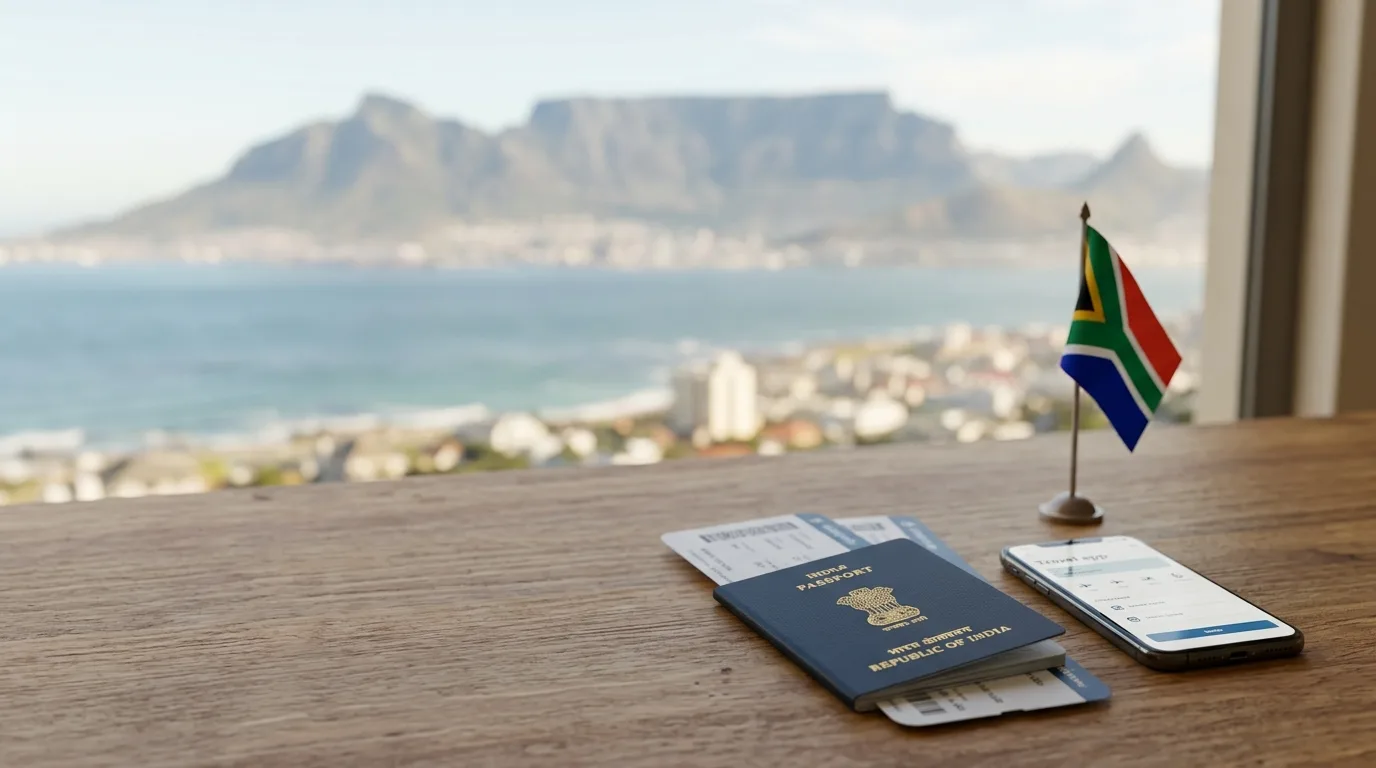
Planning a South Africa trip from India? Explore 2026 visa and ETA rules, flight prices, safari costs, the best time to visit and a practical itinerary.
Key Takeaways
- Ideal duration: 7–10 nights for a first-time trip.
- Visa: Apply for the required ETA or visitor visa before departure.
- Flights: Most routes from India require at least one stop.
- Best time to visit: May–September for safaris; September–April for Cape Town.
- Top places: Cape Town, Kruger National Park, the Garden Route and Johannesburg.
- Trip budget: Seven-night tour packages start from approximately ₹1.38 lakh per person; costs vary by inclusions.
- Getting around: Use domestic flights, Uber, rental cars or guided safari transfers.
- Before departure: Complete the traveller declaration and check transit-related yellow fever requirements.
A South Africa trip from India requires a little more planning than a typical international holiday. There are no direct flights from India to Johannesburg or Cape Town in the flight listings reviewed, the entry process changed in 2026, and two of the country's biggest highlights — Cape Town and a safari in the Kruger region — are far apart.
Get your travel documents, flight connections and itinerary right, and the rest becomes much easier.
For most first-time visitors from India, 7–10 nights is a good starting point. You can spend a few days exploring Cape Town's mountains and coastline, visit the Cape Winelands, and finish with a safari in or near Kruger National Park. If you have more time, you can add the Garden Route without rushing through the country.
This guide covers the latest entry information available for Indian passport holders, flight routes, costs in Indian rupees, the best time to visit, places to explore and sample itineraries.
Price note: Rand prices are shown in brackets. INR conversions use an indicative exchange rate of approximately ₹5.8 per South African rand, based on a rate reported on 21 October 2026. Exchange rates and travel prices change, so treat the figures below as planning estimates rather than guaranteed quotes.
South Africa Trip from India at a Glance
| Travel detail | What you need to know |
|---|---|
| Ideal duration | 7–10 nights for Cape Town and a safari |
| Entry permission | ETA or the applicable visitor-visa route, arranged before departure |
| ETA fee | Approximately ₹2,900 (R500), according to the reported fee introduced in August 2026 |
| Return flights | Recent fare snapshots start around ₹47,000, but many options cost considerably more |
| Best time for safari | May–September, during the dry winter months |
| Best time for Cape Town | Roughly September–April, depending on your activities |
| Best months for a combined trip | September–October or March–April, depending on priorities |
| Time difference | South Africa is 3 hours 30 minutes behind India |
| Driving | On the left-hand side of the road, as in India |
| Important pre-departure task | Complete the required South African traveller declaration within the permitted window1. Entry Rules for Indian Passport Holders in 2026 |
1. Visa for South Africa from India: What Changed in 2026?
If you're travelling on an Indian passport, sort out your entry permission before flying. South Africa has introduced an Electronic Travel Authorisation (ETA) system for eligible travellers, alongside the traditional visitor-visa process.
The right application route depends on your passport, travel purpose and intended port of entry. Start with the official South African ETA portal and check the latest instructions before making non-refundable bookings.
Option 1: Apply for the Electronic Travel Authorisation (ETA)
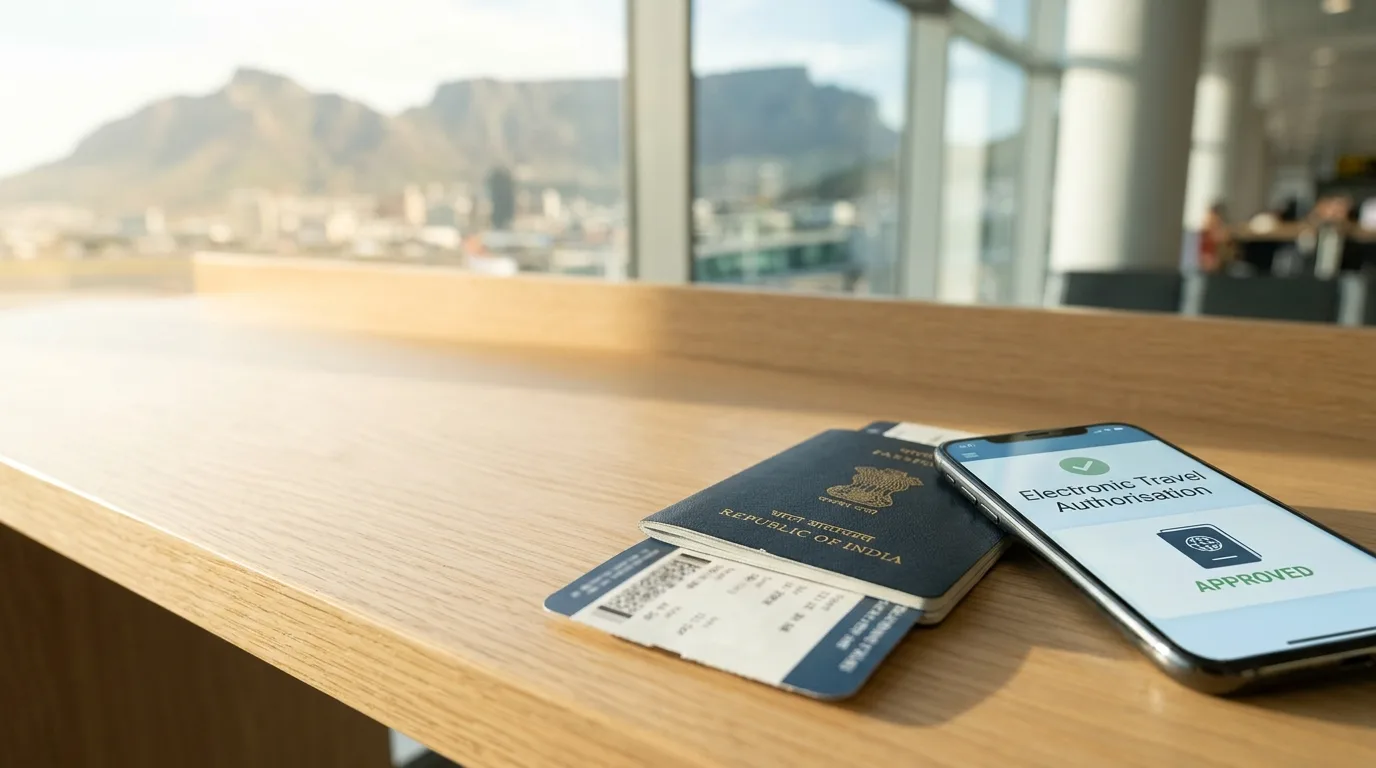
The ETA is a digital travel authorisation linked to your passport. Eligible travellers can apply online rather than following the traditional visa process.
Here are the main points Indian travellers should know:
- Reported fee: R500, approximately ₹2,900. The fee was reported as effective from 17 August 2026.
- Eligible airports: The official ETA portal currently lists O. R. Tambo International Airport in Johannesburg, Cape Town International Airport, Lanseria International Airport and King Shaka International Airport in Durban.
- Travel purpose: The ETA is intended for eligible tourism or visitor travel. It does not permit employment in South Africa.
- Application process: Create an account, provide passport and trip details, complete the required biometric steps, pay the applicable fee and submit the application.
- Decision time: Published guidance varies. Some reports describe an almost immediate result, while others allow up to 72 hours. Apply well before departure rather than relying on the fastest reported timeline.
The ETA portal describes the authorisation as linked to your passport. Carry your approval details and follow the conditions stated in your application outcome.
What about children? The research available for this guide did not conclusively establish every current ETA rule for minors. If you're travelling as a family, confirm eligibility and the correct application route for each child before booking.
Option 2: Apply for a traditional visitor's visa

The traditional visitor-visa route is also documented through VFS Global South Africa–India.
The research pack reports that the government visa fee is waived for Indian nationals, while VFS service charges still apply. The reported service-fee range is approximately ₹2,000–₹2,500, depending on the centre and applicable charges.
Typical supporting documents may include:
- A valid passport.
- Details of your travel itinerary.
- Proof of accommodation.
- Evidence of sufficient funds.
- A return or onward flight booking, where required.
- Any additional documents listed in the current application checklist.
Processing is commonly quoted at around 5–15 working days, although it can take longer during busy periods or if further checks are required. The research pack recommends allowing around 30–45 days before travel for the traditional route.
If you're booking a package, ask whether your tour operator participates in South Africa's Trusted Tour Operator Scheme, which has been associated with faster processing for eligible group applications.
Our recommendation: Check the official ETA portal first, then compare it with the current VFS instructions if you need the traditional route. Do not rely on older visa guides that may not reflect the 2026 changes.
2. Important Things to Sort Before You Fly
You will get to enjoy many things to do in South Africa. Your visa or ETA is not the only document-related task. Two other details deserve attention, particularly if you are choosing a cheaper connecting flight or planning a safari.
South Africa's online traveller declaration

Since 1 July 2026, travellers entering or leaving South Africa must submit a traveller declaration through the country's customs declaration system, subject to the published exceptions.
The declaration covers information about your trip and any goods or currency that need to be declared. The official South African Revenue Service (SARS) guidance explains how to complete it.
Keep these points in mind:
- The declaration applies to travellers entering and leaving South Africa, including children. A parent or guardian can complete it on behalf of a minor.
- Submit it no more than 24 hours before departure from the country you are travelling from. For a journey with stops, SARS says the relevant window is before departure on the final leg directly to South Africa.
- You can use the SARS Traveller Management System or the available SATMS app and other supported declaration channels.
- Keep your confirmation accessible and follow the instructions provided.
- Declare goods and currency when required. The rules for cash and goods are separate from the requirement to complete the declaration itself.
SARS says travellers will not be denied entry or departure solely because they have not completed the online declaration before arriving at a port. However, it remains a required customs step, and failing to declare items correctly can cause delays or penalties.
Yellow fever certificate: Check your layover carefully
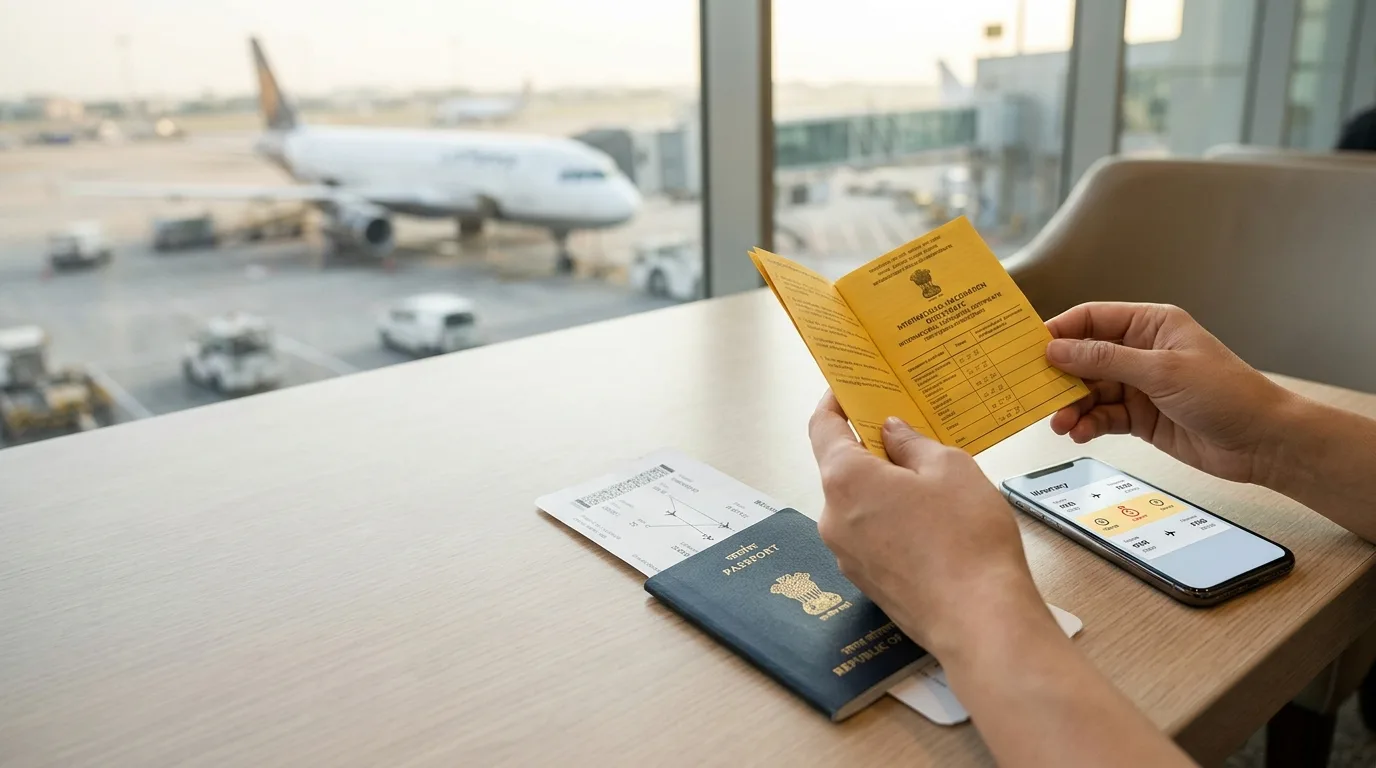
A direct journey from India does not, by itself, trigger South Africa's yellow fever certificate requirement because India is not classified as a yellow fever risk country.
The important detail is your route.
South Africa may require a yellow fever vaccination certificate if you arrive from a risk country or spend more than 12 hours in transit in one. Ethiopia and Kenya are relevant examples for travellers comparing connecting flights.
This matters because some of the lower-priced itineraries from India connect through Addis Ababa or Nairobi.
Before booking, check the complete itinerary and the latest official South African Tourism yellow fever guidance. Do not assume that every transit itinerary has the same requirements.
What about malaria?
Malaria risk depends on the region and time of year. If your itinerary includes Kruger National Park or nearby areas, speak to a qualified healthcare professional about prevention, medication and other precautions before departure.
3. Flights from India to South Africa
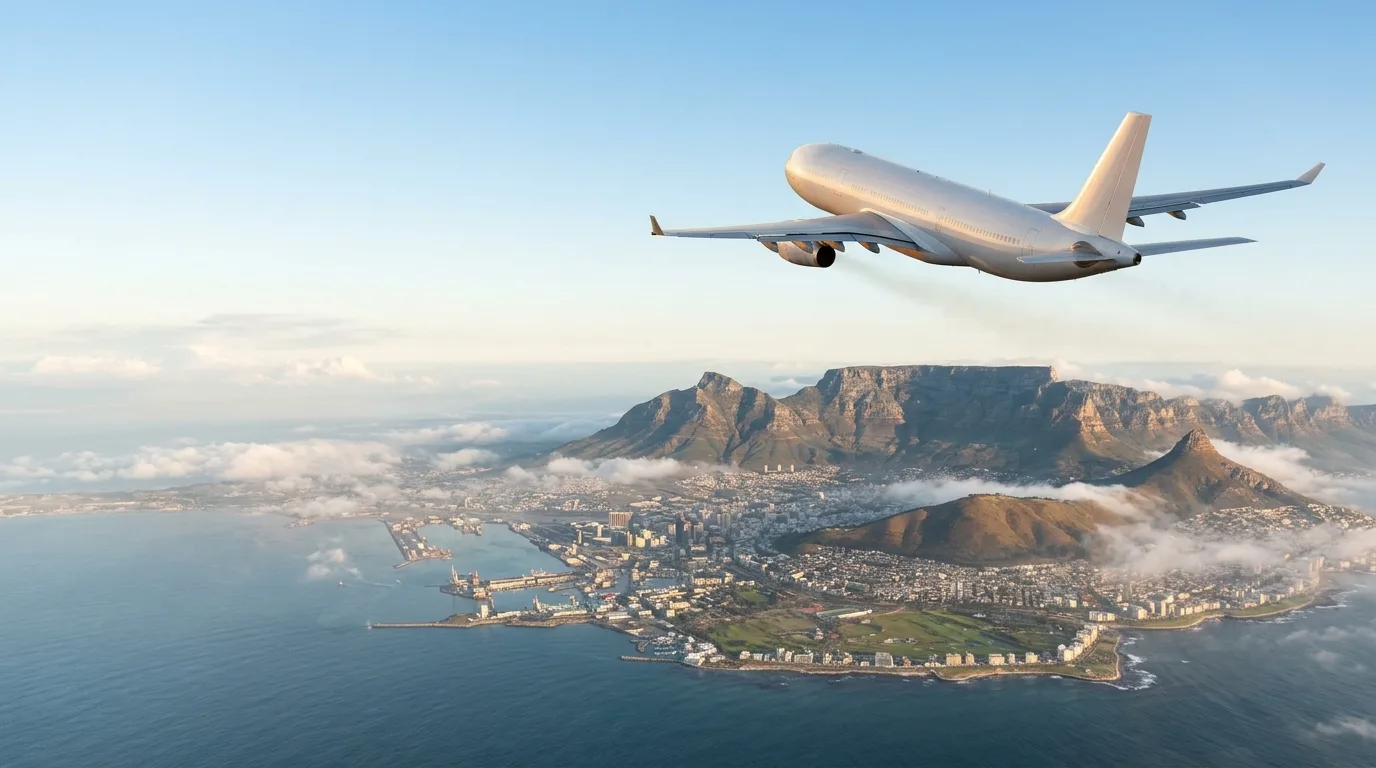
The first decision is where you want to begin your trip: Johannesburg or Cape Town.
Johannesburg is a major international hub and a useful gateway for many safari itineraries. Cape Town is a better starting point if you want to prioritise the coast, Table Mountain, the Cape Peninsula and nearby wine regions.
Flight prices vary considerably by date, airline, baggage allowance and layover duration.
Common flight routes
| Route | Airlines or connections seen in listings | What to consider |
|---|---|---|
| Via Addis Ababa | Ethiopian Airlines, sometimes combined with an Indian domestic connection | Lower fares may be available; check yellow fever transit rules |
| Via Gulf hubs | Emirates, Qatar Airways and Etihad | Compare total journey time and baggage allowance |
| Via Istanbul | Turkish Airlines and connecting services | Some listed fares were considerably higher than budget options |
| Via Nairobi | Kenya Airways and connecting services | Check yellow fever requirements if the transit exceeds the applicable threshold |
| Airline combinations | Air India, IndiGo and partner airlines | Separate tickets can affect baggage handling and missed-connection protection |
How much do flights cost from India?
The following are price snapshots from the research pack, not live fares.
| Flight cost reference | Indicative price |
|---|---|
| Mumbai–Johannesburg return | From approximately ₹47,000 in a recent search |
| Mumbai–Johannesburg one-way | From approximately ₹29,000 in a recent search |
| Delhi–Johannesburg one-way | Approximately ₹38,000–₹40,000 for selected early-November dates |
| Delhi–Cape Town one-way | Approximately ₹38,000–₹40,000 for selected early-November dates |
| Higher-priced one-way options | Approximately ₹85,000–₹1,50,000 in some listings |
These fares can change quickly. Some listings have different baggage conditions, longer layovers or separate-ticket connections, so compare the complete journey rather than choosing the lowest displayed price.
Start your search on Google Flights, momondo or the relevant airline website.
Should you fly into Johannesburg or Cape Town?
Choose Johannesburg if your trip begins with a safari, a visit to Sun City or a connection to another part of the country. Choose Cape Town if you want to spend the first few days exploring the Western Cape.
If your itinerary includes both, consider an open-jaw ticket: fly into Cape Town and return from Johannesburg, or the other way around. This can reduce backtracking, but compare the total fare before deciding.
Practical tip: Do not book a long international journey without checking your ETA or visa route, transit requirements, baggage conditions and connection times first.
Best Time to Visit South Africa
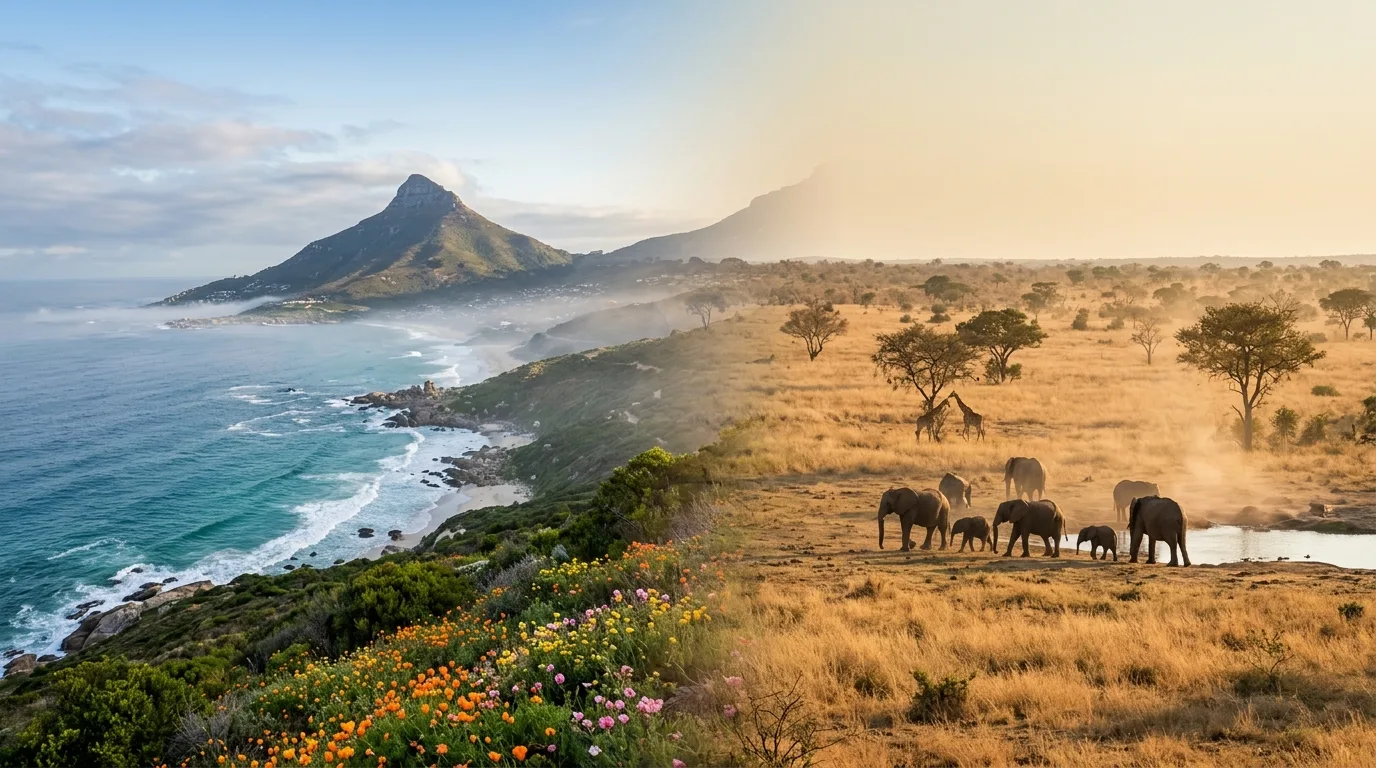
South Africa is in the Southern Hemisphere, so its seasons are opposite to India's. Winter falls roughly between June and August, while summer runs from December to February.
The best month depends on what you want to do. A safari-focused trip has different seasonal priorities from a Cape Town holiday or a scenic drive along the coast.
South Africa by season
| Season or activity | Months | What to expect |
|---|---|---|
| Dry winter and safari season | May–September | Drier conditions in many safari regions, thinner vegetation and better opportunities for wildlife viewing |
| Cape Town and coastal activities | Roughly September–April | Warmer conditions for sightseeing, coastal drives and outdoor experiences |
| Quieter shoulder periods | March–May and September–November | Potentially fewer crowds and more moderate conditions, depending on the region |
| Whale watching | June–November | Seasonal opportunities along the Cape coast, with September often highlighted around Hermanus |
| Summer in Kruger | December onwards | Warmer conditions and summer rainfall; December is among the wetter months in the region |
These are broad seasonal patterns rather than weather guarantees. Conditions vary by destination and year.
Best time for a safari
For many safari areas around Kruger, May to September is a popular period. The drier landscape can make wildlife easier to spot, and animals may gather around available water sources.
That does not guarantee sightings. The reserve, weather, guide, animal movements and length of your stay all influence the experience.
Best time for Cape Town
Cape Town is generally popular from spring into autumn, roughly September to April. The warmer months are attractive for beaches, outdoor sightseeing and coastal drives, although December to February is also a busy holiday period.
If you want to combine Cape Town with a safari, September–October is a useful period to consider. March–April can also suit travellers looking for milder conditions and potentially quieter periods in Cape Town.
Our recommendation: If wildlife is your main priority, plan around the dry safari season. If you want a balanced first trip with Cape Town and Kruger, compare September–October and March–April against your budget and flight availability.
5. Best Places to Visit on a South Africa Trip
South Africa has more to offer than a single city or safari. However, the distances between its major attractions mean you should choose a route that suits the number of nights you have.
For a first trip from India, these four destinations provide a practical starting point.
1. Cape Town: Best for First-Time Visitors
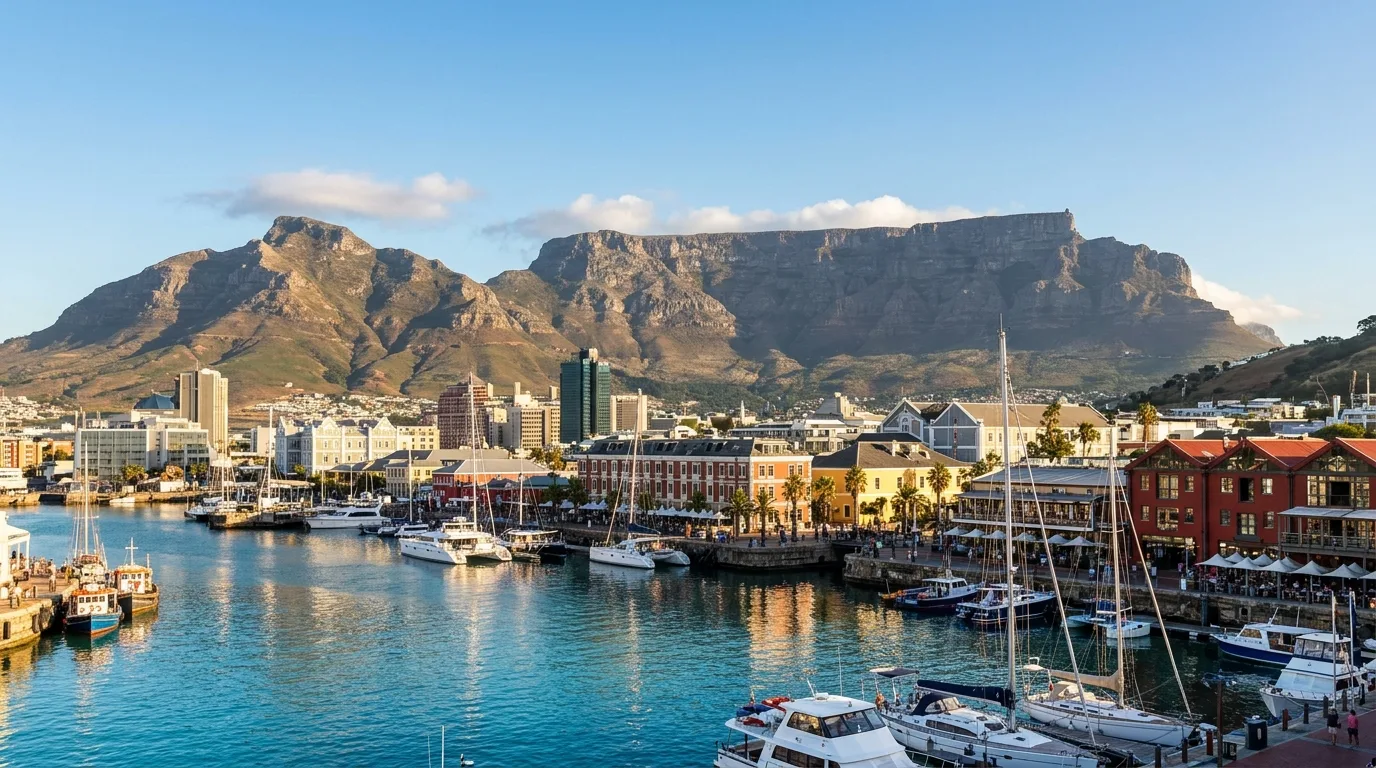
Best for: Scenery, city experiences, wine country and coastal drives.
Cape Town is an excellent base for a first visit because it combines city attractions with mountain scenery, beaches and day trips. You can spend the morning exploring a historic neighbourhood, take in the views from Table Mountain and finish the day at the waterfront.
- Table Mountain: Take the cableway when conditions permit, or choose a suitable hike if you have the fitness and experience.
- V&A Waterfront: A convenient area for restaurants, shopping and organised activities.
- Bo-Kaap: Known for its colourful houses and Cape Malay cultural heritage.
- Cape Point and the Cape Peninsula: A scenic day trip with coastal viewpoints and nature stops.
- Boulders Beach: Known for its African penguin colony. Follow designated paths and wildlife-protection rules.
- Kirstenbosch National Botanical Garden: A good choice for gardens, plant life and mountain scenery.
The research pack lists the following prices for the cableway's 2026–27 schedule:
| Ticket | Price in rand | Approximate INR |
|---|---|---|
| Adult return, booked online | R475 | ₹2,750 |
| Adult one-way, booked online | R300 | ₹1,740 |
| Adult return, ticket office | R530 | ₹3,070 |
| Child return, booked online | R230 | ₹1,330 |
| Adult Fast Track return | R1,200 | ₹6,960 |
These figures should be checked against the official Table Mountain Aerial Cableway ticket page before publication or booking.
Allow three to four nights for Cape Town if you want to see the main sights and include a day trip to the Cape Peninsula or the Winelands.
Our recommendation: Keep some flexibility in your schedule. The cableway can close in strong winds or poor visibility, so check its operating status before you set off.
2. Kruger National Park: Best for a Safari
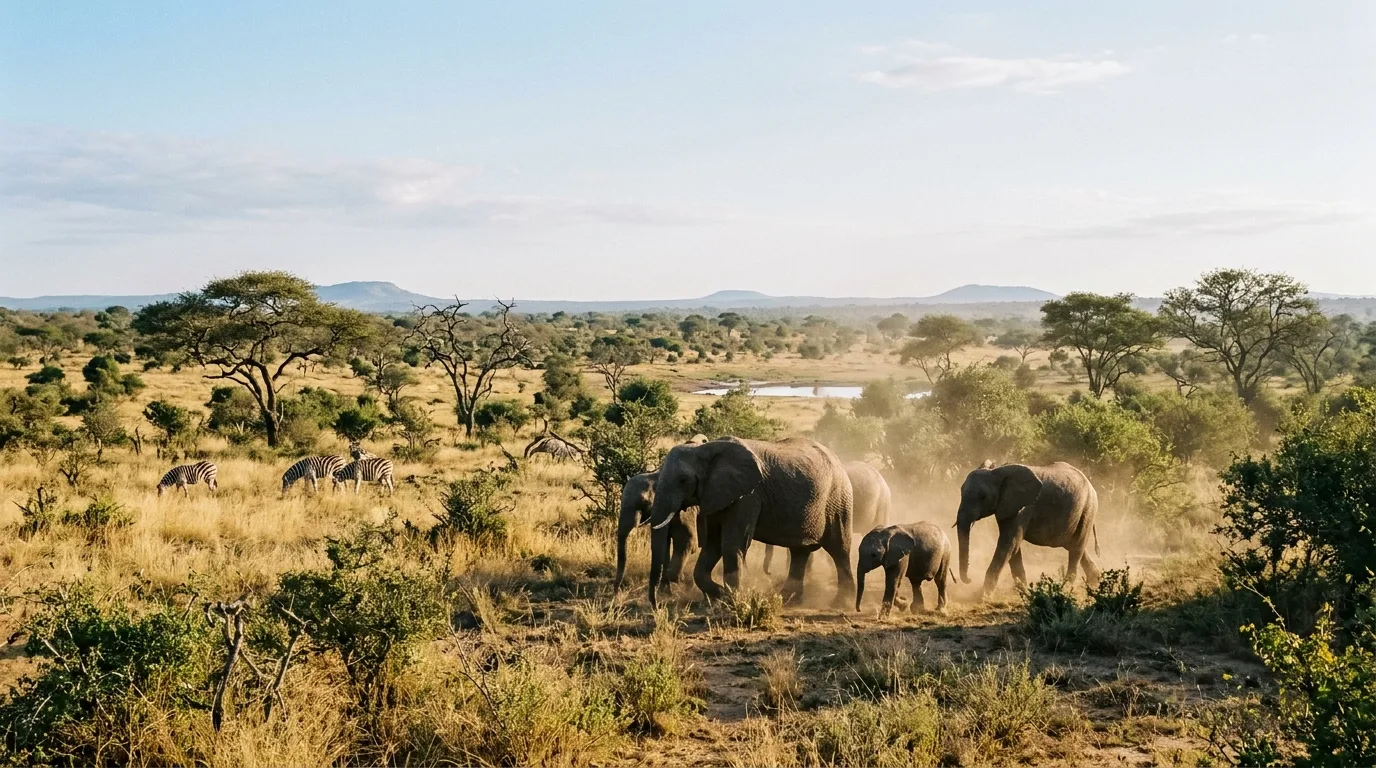
Best for: Wildlife viewing, photography and a classic African safari.
Kruger National Park is one of South Africa's best-known wildlife destinations. Depending on the reserve and conditions, you may see elephants, giraffes, zebras, buffalo, lions, leopards and many bird species.
There are two broad ways to experience the region: drive through the park yourself where permitted, or stay at accommodation that arranges guided game drives.
- Self-drive: The park's main roads are largely paved, making a self-drive trip possible for visitors who are comfortable with the rules and local conditions.
- Guided safari: A guide can help you spot wildlife and explain animal behaviour, making this a useful option for first-time visitors.
- Private reserves: Some lodges offer guided drives and meals as part of a package, often at a higher price.
- Access: Depending on your chosen location, you may fly to Kruger Mpumalanga International Airport near Nelspruit or to Hoedspruit, then arrange a road transfer.
SANParks lists an international adult conservation fee of R602 per day for the period ending 31 October 2026. The research pack reports an increase to R692 per adult per day from 1 November 2026.
| Travel date | Adult international conservation fee | Approximate INR |
|---|---|---|
| Until 31 October 2026 | R602 per day | ₹3,490 |
| From 1 November 2026 | R692 per day | ₹4,010 |
Check the current SANParks rates and entry fees before travel. The conservation fee is separate from accommodation, game drives, vehicle costs and transfers.
Allow two to three nights as a starting point. This gives you more than one opportunity to go on a game drive and reduces the risk of making the safari a rushed stop between flights.
Our recommendation: For a first safari, compare a guided lodge package with a self-drive stay. Look at the full price, including park fees, meals, game drives and transfers, before choosing.
3. The Garden Route: Best for Scenic Drives
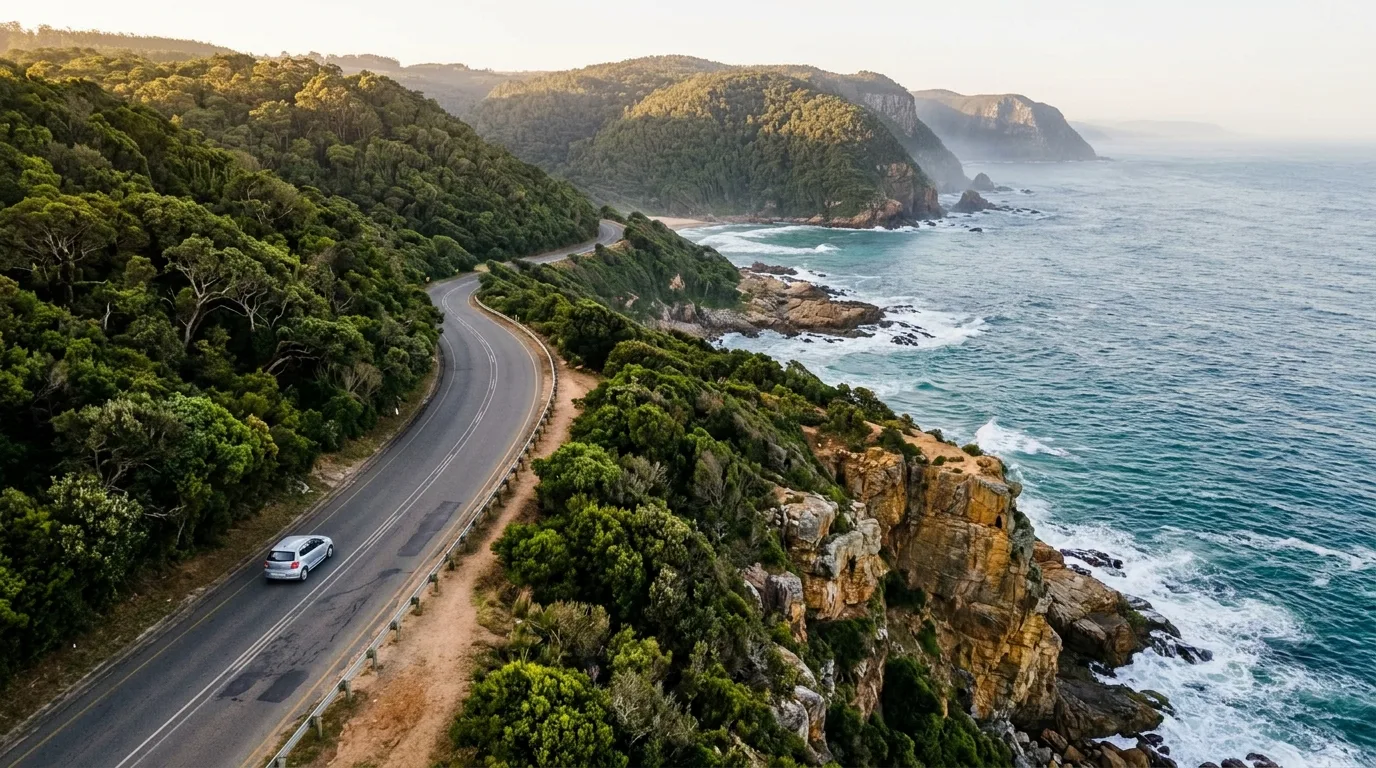
Best for: Coastal scenery, road trips and a slower travel pace.
The Garden Route is a popular addition for travellers who want to explore South Africa beyond its major cities. George and Knysna are common bases on itineraries along the southern coast.
This region is best suited to a road trip. You'll need to allow time for driving and stops along the way rather than treating it as a quick excursion from Cape Town.
- Choose a few towns or stops rather than trying to see the entire coast.
- Compare rental-car costs with guided tour options.
- Allow additional time for driving, meals and scenic stops.
- Check the route and overnight locations before booking accommodation.
Our recommendation: Add the Garden Route if you have nine or ten nights, or longer. If you have only seven nights and want a safari, combining the Garden Route with Cape Town and Kruger may leave too little time in each place.
4. Johannesburg and Sun City: Best as a Gateway or Short Stop

Best for: International connections, urban history and selected entertainment experiences.
Johannesburg is a common gateway for international visitors, and some itineraries include a night or two in the city before continuing to a safari region.
If you want to explore the city, consider attractions connected with South Africa's history and culture. You could also compare packages that include Sun City, depending on your interests and available time.
The Gautrain connects the airport with Johannesburg and Pretoria, but it will not take you to every tourist attraction or safari lodge.
Our recommendation: If you have limited time, use Johannesburg primarily as a gateway unless the city's attractions are an important part of your trip.
6. Sample South Africa Itineraries from India
The best itinerary depends on your total nights, domestic flight schedules and the safari reserve you choose. The following are planning outlines, not guaranteed travel timings.
Option 1: Seven Nights — Cape Town and Kruger
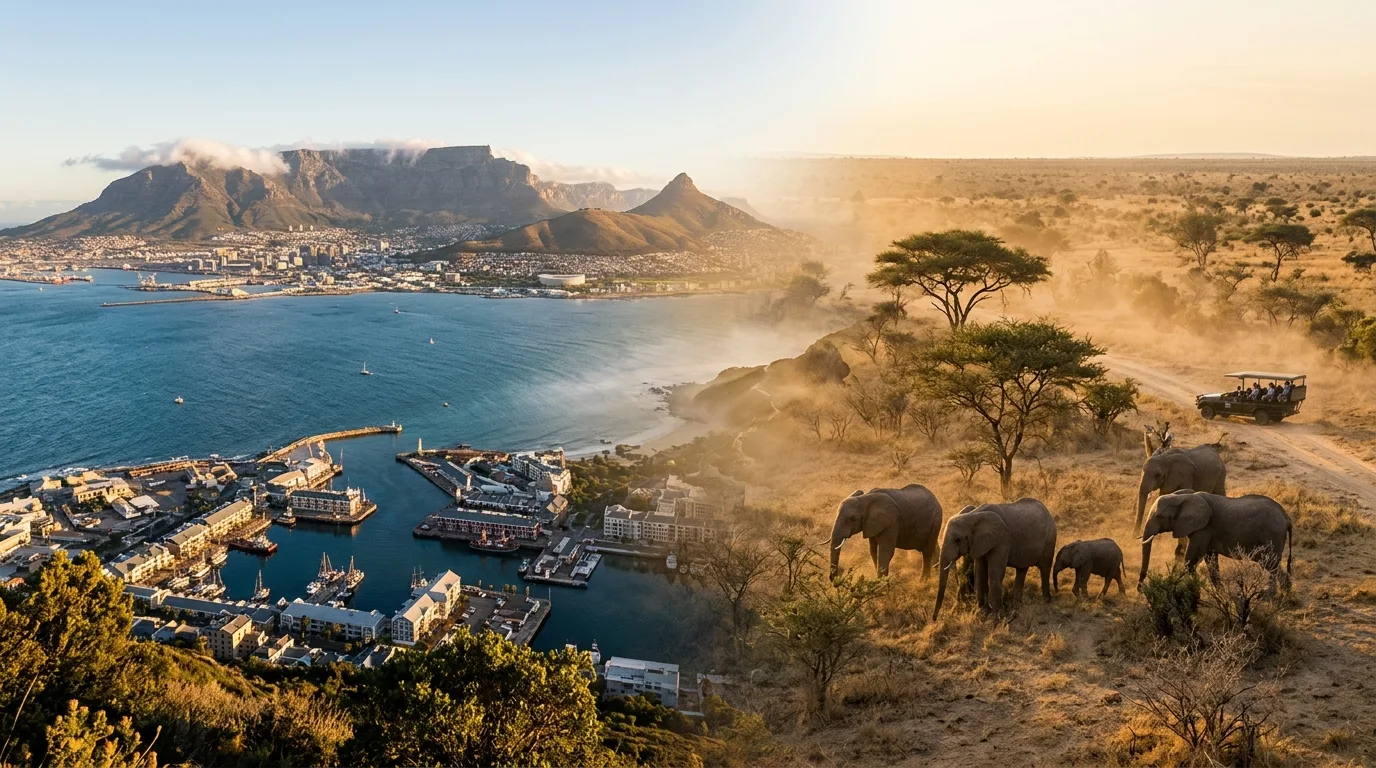
First-time visitors who want city sightseeing and a safari without adding too many destinations.
| Nights | Base | Suggested experiences |
|---|---|---|
| Nights 1–4 | Cape Town | Table Mountain, city sightseeing, Cape Peninsula and a Winelands day trip |
| Nights 5–7 | Kruger region | Guided game drives or a self-drive safari, depending on your accommodation |
| Departure | Johannesburg or a suitable connecting airport | Arrange the final transfer and international flight around your domestic connection |
How to plan it: Choose the safari lodge first, then check which airport offers the most practical connection from Cape Town. Depending on the lodge, you may need to fly to Nelspruit or Hoedspruit and arrange a transfer.
If your international flight leaves from Johannesburg, allow enough time for the final journey. Avoid relying on a tight connection between a remote safari transfer and your international departure.
Option 2: Ten Nights — Cape Town, Garden Route and Safari
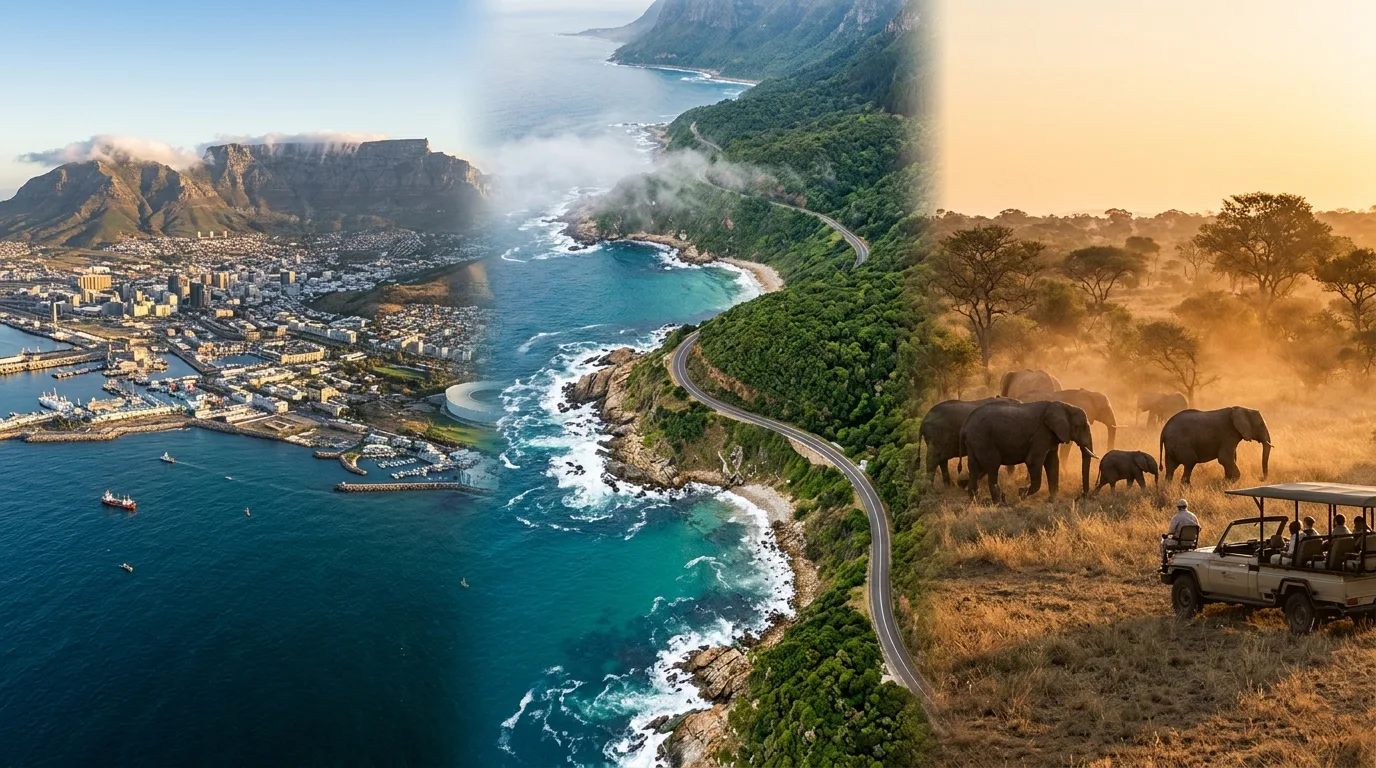
Travellers who want coastal scenery, a road trip and wildlife.
| Nights | Base | Suggested experiences |
|---|---|---|
| Nights 1–4 | Cape Town | Table Mountain, city sightseeing and the Cape Peninsula |
| Nights 5–7 | Garden Route | Coastal towns, scenic drives and selected stops around the route |
| Nights 8–10 | Kruger or a nearby private reserve | Game drives, wildlife viewing and time at the lodge |
How to plan it: This itinerary covers more ground, so check road distances and domestic flight schedules before committing to the route. You may need to adjust the number of nights in each region depending on your chosen stops.
If you would rather spend more time on safari, skip the Garden Route and use those nights in the Kruger region.
7. How Much Does a South Africa Trip from India Cost?
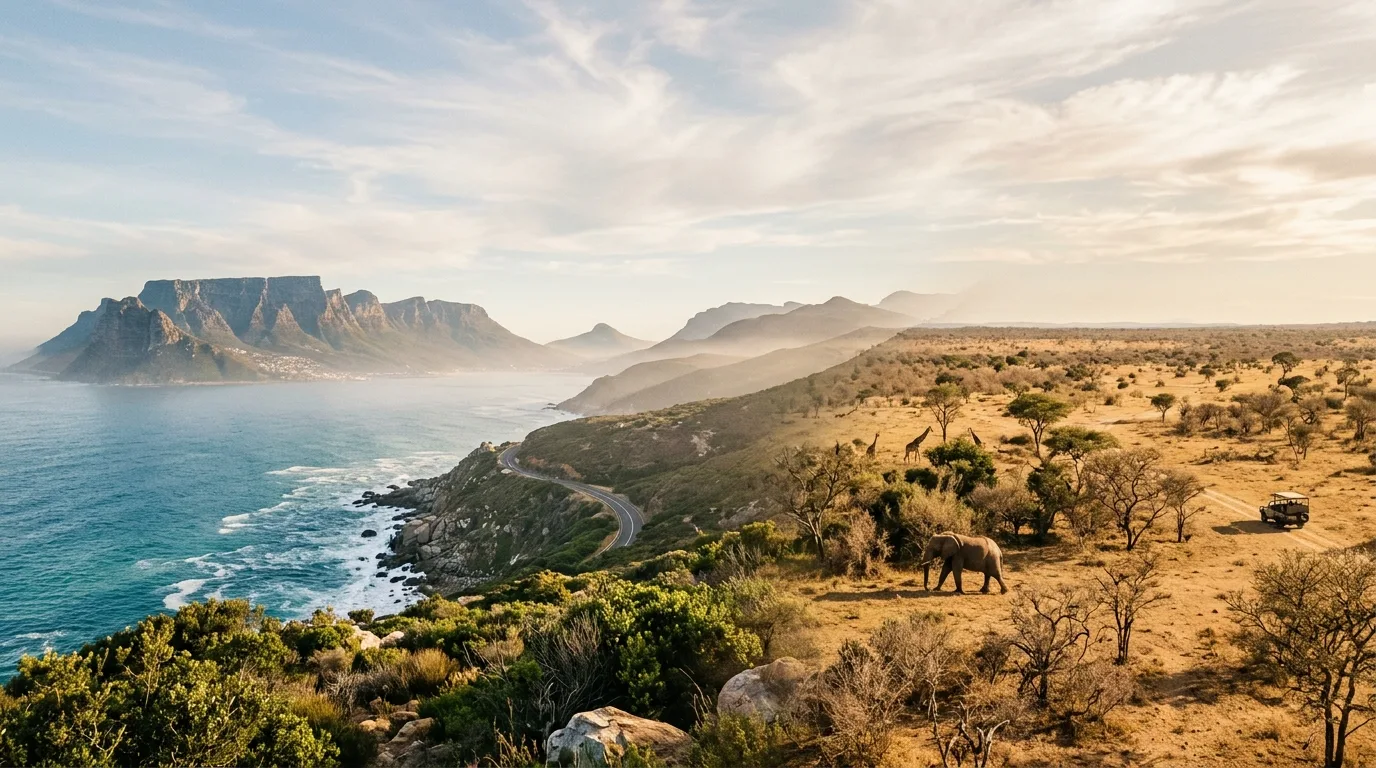
Your total cost depends on flight dates, accommodation, transport, safari style and the number of destinations. The figures below are useful starting points, but they are not a complete package quotation.
Key costs to budget for
| Expense | Indicative cost | Notes |
|---|---|---|
| Return international flights | From around ₹47,000; often ₹85,000 or more | Recent fare snapshots; varies by route and date |
| ETA | Around ₹2,900 (R500) | Reported fee effective from August 2026 |
| Traditional visitor-visa route | Around ₹2,000–₹2,500 in VFS service charges | Government fee reported as waived for Indians; check current VFS charges |
| Kruger conservation fee | Around ₹4,010 (R692) per adult per day from 1 November 2026 | Separate from accommodation and safari activities |
| Cape of Good Hope section fee | Around ₹3,430 (R592) per international adult per day from 1 November 2026 | Verify current SANParks rates before travel |
| Table Mountain cableway | Around ₹2,750 (R475) for an adult return ticket booked online | Ticket-office price is higher |
| Hostel accommodation | Around ₹1,200–₹2,500 per bed per night | Indicative figures; check live rates |
| Guesthouse accommodation | From around ₹2,000 per night | Property, season and room type affect the price |
| Compact car rental | Around ₹2,900–₹5,200 (R500–R900) per day | Indicative guide figures; insurance may be extra |
| SUV rental | Around ₹5,200–₹10,400 (R900–R1,800) per day | Check insurance, deposits and mileage conditions |
| Indian-operator tour packages | Seven nights from around ₹1,38,000 per person | Inclusions vary; check whether flights are included |
| Indian-operator tour packages | Eight nights from around ₹1,51,000 per person | Operator quote, not a guaranteed current price |
| Indian-operator tour packages | Nine nights from around ₹1,62,000 per person | Operator quote; compare itinerary and inclusions |
Note: The park fees, ETA charges, flight fares and package prices are subject to change.
How much should you budget per day?
One travel guide in the research pack suggests an indicative daily spend of ₹8,000–₹15,000 per person. Treat that as a rough reference rather than a universal budget: a safari lodge, internal flight or premium restaurant can push daily spending much higher.
For a more useful estimate, calculate these separately:
- International flights.
- Accommodation for every night.
- Domestic flights or car rental.
- Safari accommodation, conservation fees and game drives.
- Food and drinks.
- Sightseeing and optional activities.
- Visa or ETA costs, travel insurance and a contingency buffer.
Tour package or independent travel?
A tour package may suit you if:
- You prefer having flights, hotels and transfers arranged together.
- You want a guided safari and a pre-planned itinerary.
- You are travelling with family and prefer fewer logistical decisions.
Independent travel may suit you if:
- You want to choose your own accommodation and activities.
- You prefer spending longer in one place.
- You are comfortable comparing flights, rental cars and transfers yourself.
Do not compare package prices without checking the inclusions. A cheaper package may exclude international flights, park fees, some meals, airport transfers or optional activities.
8. Getting Around South Africa
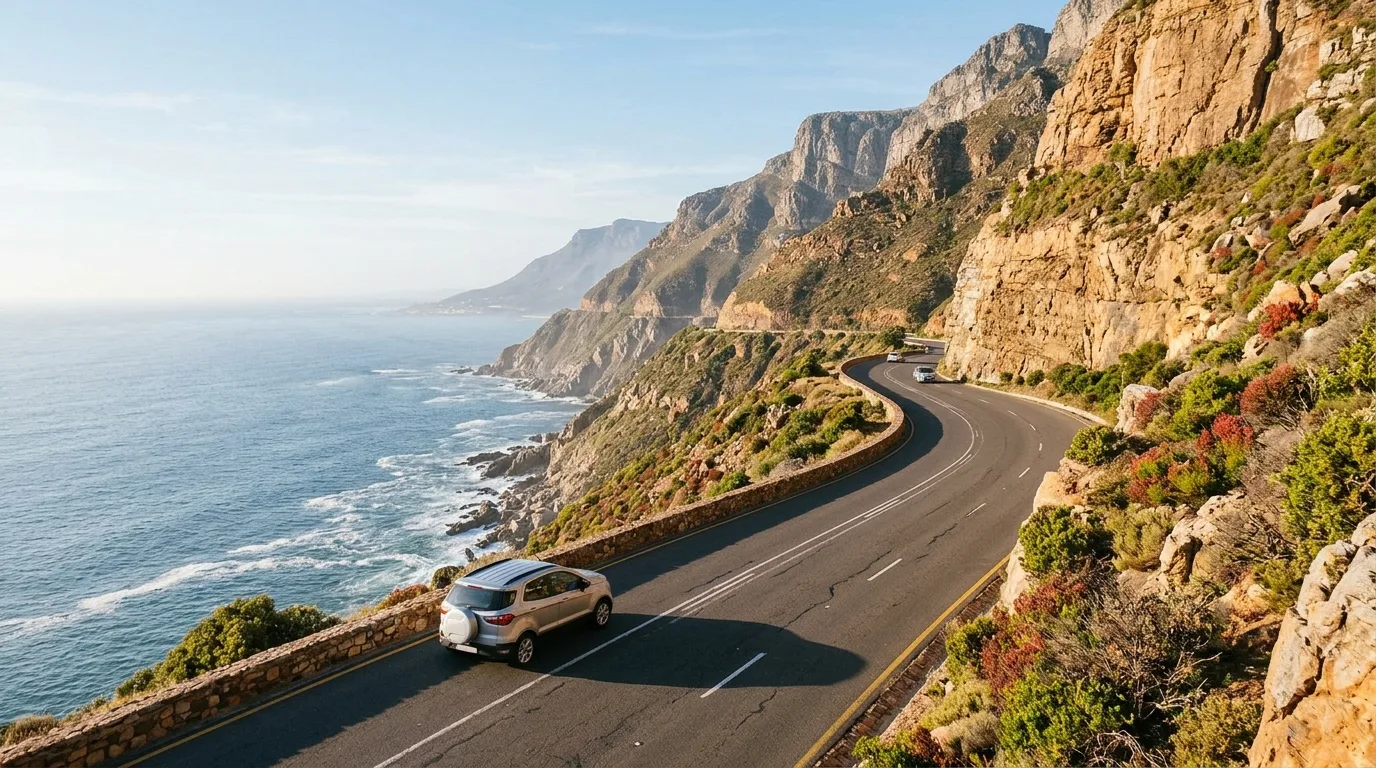
South Africa is a large country, so transport plays an important role in planning your itinerary. The best way to get around depends on where you're travelling, how many days you have and whether you're visiting cities, coastal towns or safari regions.
| Mode of Transport | Where It Works Best | Approximate Cost / Key Details | What Travellers Should Know |
|---|---|---|---|
| Domestic flights | Cape Town, Johannesburg and safari access points | Fares vary by route, date and airline. Check baggage charges separately. | Flying saves considerable time between major destinations. Compare the airfare with airport transfers and baggage costs before booking. |
| Uber and ride-hailing | Cape Town and Johannesburg | A Cape Town city-centre to V&A Waterfront ride may cost around R60–R90 (₹350–₹520). | Fares depend on demand, pickup point and time. Confirm the driver and vehicle details in the app before getting in. |
| Public buses – MyCiTi | Selected routes across Cape Town | Fares depend on the route and ticket or payment option. | Useful for reaching certain city attractions, but the network does not cover every tourist spot. Check routes near your accommodation. |
| Gautrain | Johannesburg, OR Tambo Airport and Pretoria | Fares vary by station and journey. | A convenient option for airport transfers and travel between selected areas. It does not connect directly to every attraction or safari lodge. |
| Self-drive rental car | Cape Winelands, Garden Route and selected safari routes | Compact car: around R500–R900 (₹2,900–₹5,200) per day. SUV: around R900–R1,800 (₹5,200–₹10,400) per day. | Offers flexibility for road trips. Check insurance, deposits, mileage limits and driving requirements before booking. |
| Guided transfers and safari vehicles | Kruger National Park and private game reserves | Usually priced separately or included in safari accommodation packages. | A good option if you don't want to drive yourself. Confirm whether airport transfers, park fees and game drives are included in your package. |
Driving in South Africa: What Indian Travellers Should Know
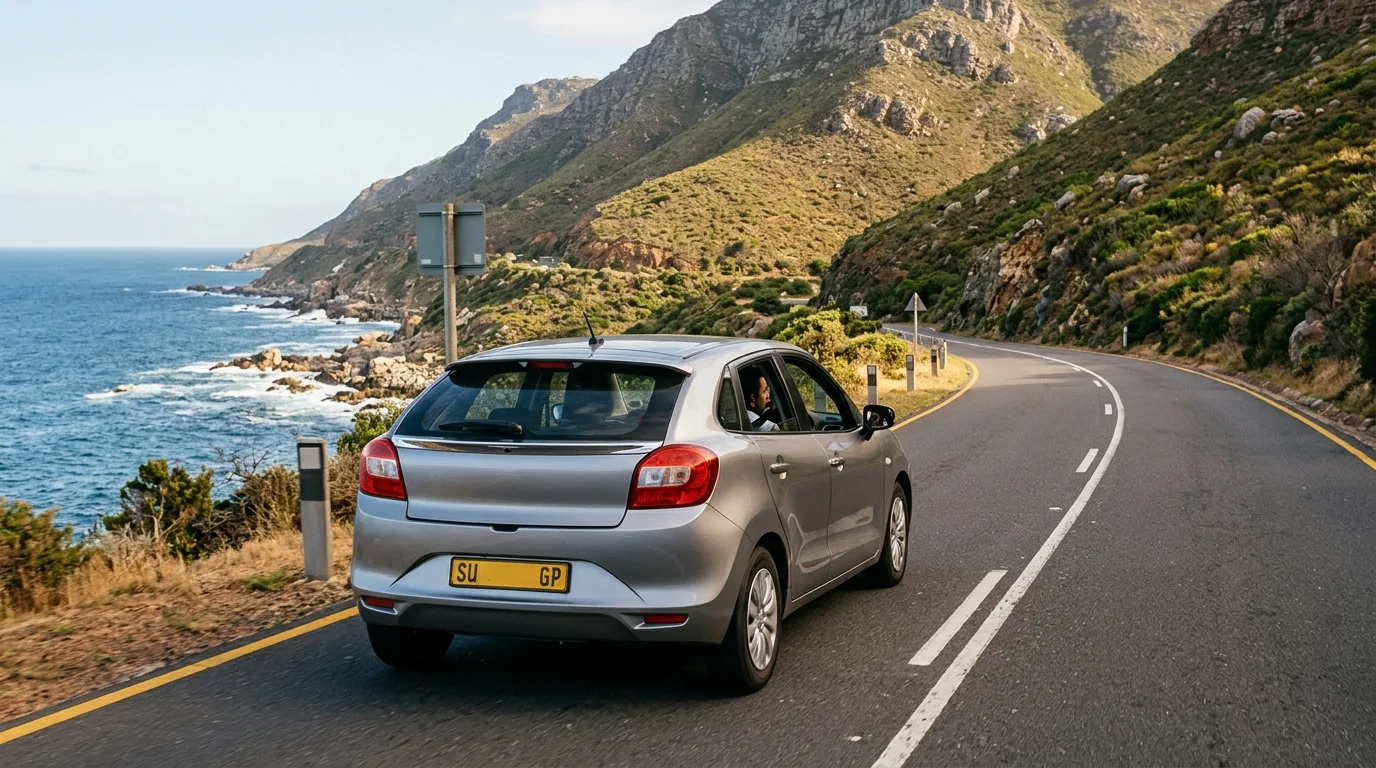
South Africa follows left-hand-side driving, just like India. Renting a car can be particularly useful for exploring the Garden Route, Cape Winelands and certain safari areas.
Before renting a car, keep these points in mind:
- Check the rental company's driving licence and International Driving Permit requirements before booking.
- Confirm insurance coverage, security deposits, mileage limits and cross-region restrictions.
- If your Indian driving licence is not in English, check whether an International Driving Permit or an accepted translation is required.
- Plan driving distances and fuel stops in advance, particularly on longer routes.
- Avoid driving at night in unfamiliar areas where possible.
- Keep car doors locked in traffic and valuables out of sight.
Our recommendation: Use domestic flights for long distances, Uber for city travel and a rental car for scenic road trips. If you're visiting Kruger for the first time, compare a guided safari package with self-drive options before deciding.
9. Food, Vegetarian Options and Practical Details
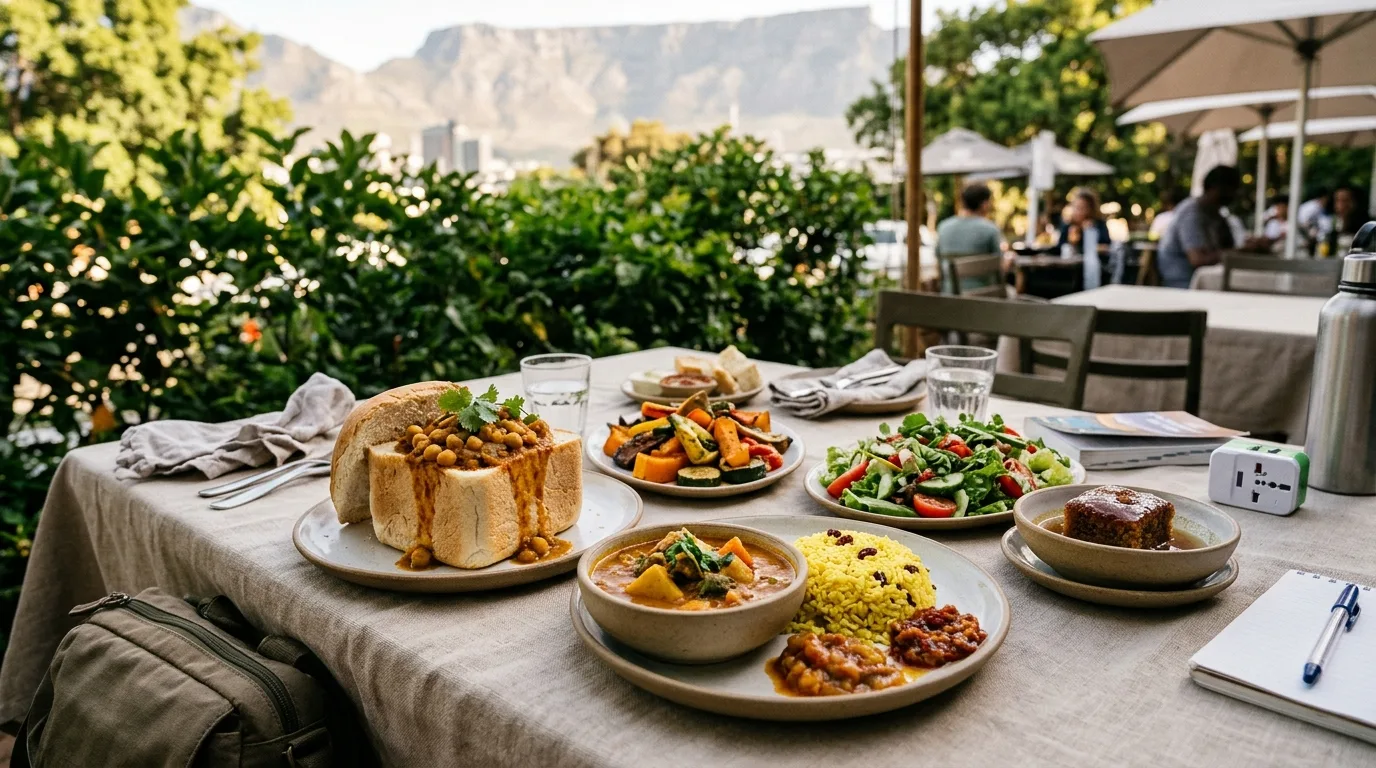
South Africa has a mix of local, international and Indian food. Vegetarian options are available in major cities and tourist centres, although the selection can be more limited in remote areas and some safari lodges.
If you follow a Jain diet or have strict dietary requirements, contact your accommodation before booking. Explain exactly what you avoid, especially if you need meals prepared without onion, garlic, eggs or particular ingredients.
Food experiences to consider
- Cape Malay cuisine: A distinctive food tradition associated with the Western Cape.
- Bunny chow: A Durban speciality of curry served inside a hollowed-out loaf of bread; fillings vary.
- Local seafood: Available in many coastal destinations.
- Malva pudding: A traditional South African dessert.
- Braai: A South African-style barbecue.
Other practical details
Power plugs: The research pack identifies Type C, M and N sockets. Carry a suitable travel adapter and check your devices' voltage requirements.
Travel insurance: Choose cover appropriate for medical expenses, cancellations, lost baggage and planned activities. Check the policy conditions if you intend to hike, take part in adventure activities or visit remote safari areas.
Malaria precautions: If you're travelling to Kruger or nearby regions, seek professional advice on prevention and check current guidance for your specific itinerary.
10. Safety Tips for Travelling in South Africa
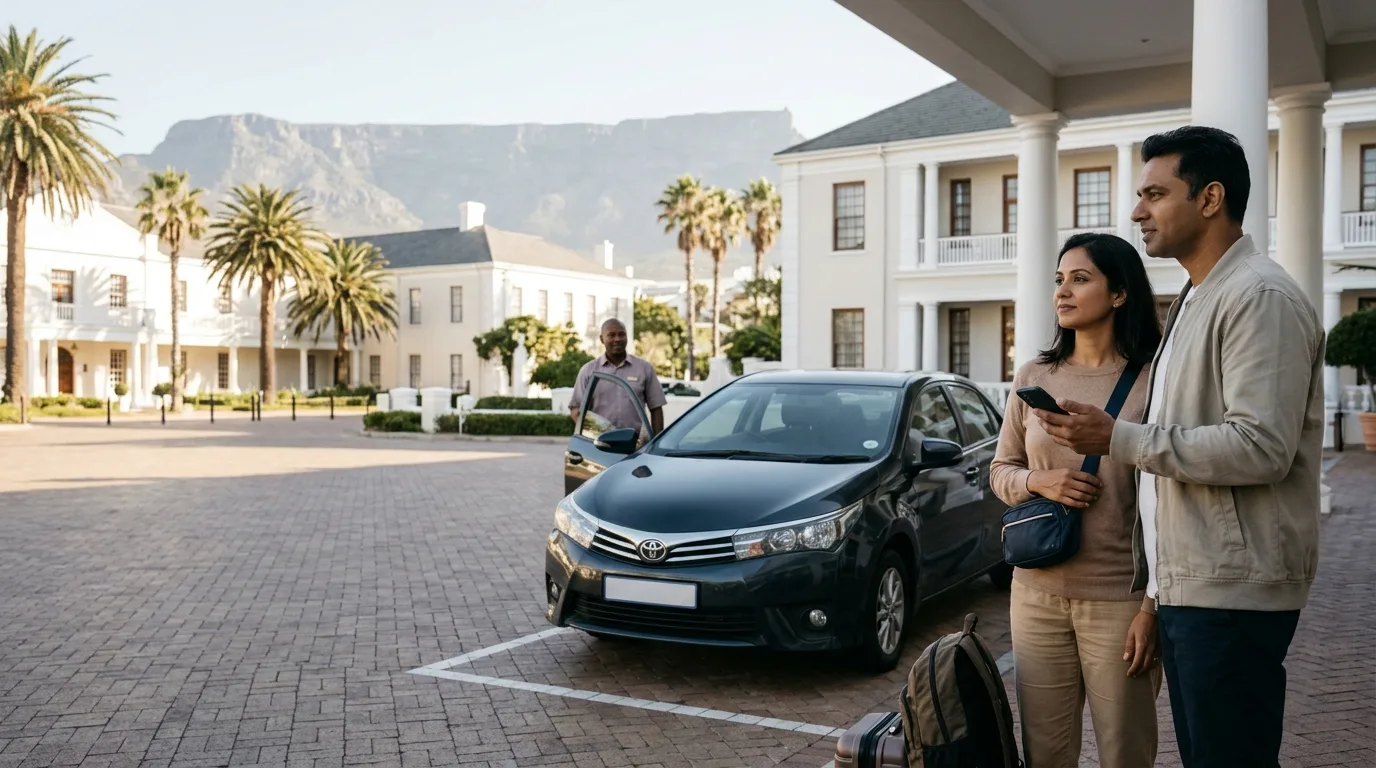
South Africa receives visitors from around the world, but crime is a genuine consideration in some urban areas. Conditions vary by neighbourhood and route, so plan transport and accommodation carefully rather than relying on a blanket assessment of the entire country.
Practical safety advice
- Arrange airport transport in advance. This is particularly useful if you arrive late or are carrying luggage.
- Use reputable transport at night. Consider a ride-hailing service or a pre-arranged transfer instead of walking through an unfamiliar area after dark.
- Keep valuables out of sight. Avoid displaying expensive phones, cameras and jewellery unnecessarily.
- Lock car doors while driving. Keep bags and electronics out of view.
- Research your accommodation's exact location. Read recent reviews and ask the property about local transport and routes.
- Plan road journeys carefully. Avoid driving at night in unfamiliar areas where possible.
- Follow wildlife rules. Stay inside your vehicle where required and follow your guide's instructions during game drives.
- Keep emergency contacts accessible. South Africa's police emergency number is 10111. The mobile emergency number is 112.
For additional guidance, consult the South African Department of Tourism's safety information and the South African Police Service tourist safety advice.
11. Common Mistakes to Avoid

A little preparation can save you money, time and last-minute stress.
- Booking flights before checking entry rules: Confirm your ETA or visa route and allow enough processing time.
- Ignoring transit requirements: A low fare through Addis Ababa or Nairobi may have health-document implications if your transit meets the relevant threshold.
- Assuming every airport accepts the same authorisation: Check the official ETA portal for eligible entry points before buying tickets.
- Forgetting the traveller declaration: Complete the SARS declaration within the permitted window and keep your confirmation accessible.
- Underestimating distances: Cape Town and Kruger are far apart. Plan flights and transfers rather than trying to cover both through a short road journey.
- Rushing the Garden Route: Add it only if you have enough nights to enjoy the drive.
- Using outdated safari fees: For travel from 1 November 2026, check the new conservation fees rather than relying on older prices.
- Comparing package prices without checking inclusions: Confirm whether flights, meals, transfers, game drives and park fees are included.
- Leaving no room for weather changes: Keep your schedule flexible for activities such as the Table Mountain cableway.
Frequently Asked Questions About a South Africa Trip from India
Do Indians need a visa for South Africa?
Indian passport holders need the applicable entry permission before travelling. Eligible travellers can check the ETA process at the official South African portal, while the traditional visitor-visa route is documented through VFS Global. Confirm the current eligibility rules and requirements before applying.
How much does the South Africa ETA cost for Indians?
The research pack reports a fee of R500, approximately ₹2,900, effective from 17 August 2026. Check the official ETA portal for the current fee and payment instructions before applying.
Is there a direct flight from India to South Africa?
The flight listings reviewed for this guide showed no direct flights from India to Johannesburg or Cape Town. Most routes require at least one connection, and the total journey can take around 20–31 hours or longer depending on the itinerary.
Do I need a yellow fever certificate when travelling from India?
A direct journey from India does not, by itself, require a yellow fever certificate. However, South Africa's requirements may apply if you arrive from or spend more than 12 hours in transit in a yellow fever risk country. Check your complete route and current official guidance before booking.
What is the best time to visit South Africa from India?
May to September is popular for safari, while Cape Town and the coast are generally most popular from around September to April. September–October is a useful option for travellers who want to combine Cape Town with a safari.
How much does a seven-day South Africa trip from India cost?
The research pack found Indian tour-operator packages advertised from around ₹1,38,000 per person for seven nights. However, inclusions vary. Independent travellers need to account separately for flights, accommodation, local transport, safari costs, meals, sightseeing and entry permission.
How many days are enough for South Africa?
Seven nights can cover Cape Town and a short Kruger safari if you plan the connections carefully. Nine to ten nights gives you more flexibility and may allow you to add the Garden Route without rushing.
Is South Africa suitable for vegetarian travellers?
Yes, vegetarian food is available in major cities and many tourist centres. If you follow a strict vegetarian or Jain diet, confirm meal options with your hotel or safari lodge before booking.
A South Africa trip from India rewards a little extra planning. Sort out your ETA or visa first, check your flight connections carefully, and build your itinerary around the experiences you most want to enjoy.
For a first visit, Cape Town and the Kruger region make a strong combination: one offers mountains, coastline and city experiences, while the other provides opportunities for wildlife viewing. Seven to ten nights can be enough to experience both, provided you allow time for transfers and avoid packing too many destinations into the same trip.
Before booking, verify the current entry requirements, compare the full cost of your flight and safari options, and check conservation fees close to your travel dates. That way, you can spend less time managing logistics and more time enjoying South Africa's landscapes, wildlife and culture.
Want this trip planned and booked for you? Tell Cura where and when, and a person will send you a plan with real prices.
 Next in this guideSouth Africa itineraryRead →