40 Best Things to Do in South Africa (2026 Updated)
Written by a Cura travel advisor · Checked
Short answer
Discover 40 best things to do in South Africa, from Kruger safaris and Table Mountain to scenic road trips, beaches, wildlife and cultural attractions.
Key Takeaways:
- Explore South Africa's top attractions, from Table Mountain and Robben Island to the Garden Route.
- Experience Big Five safaris at Kruger, Addo Elephant and other wildlife reserves.
- Discover coastal highlights, including Boulders Beach, Hermanus and Durban's Golden Mile.
- Enjoy adventure activities, scenic drives, mountain hikes and wine tasting.
- Plan your visit by region, as attractions are spread across South Africa's nine provinces.
- Book popular tours, safaris and seasonal activities in advance.
South Africa is a destination where you can experience wildlife safaris, dramatic coastlines, mountain adventures, historic neighbourhoods, vineyards, and beautiful road trips. From watching African penguins along the Cape Peninsula to spotting elephants in Kruger National Park, the country offers experiences for different kinds of travellers.
The best things to do in South Africa are spread across its nine provinces. You can explore Cape Town's landmarks, drive along the Garden Route, discover the country's history in Johannesburg, or head to KwaZulu-Natal for beaches, wetlands, and mountain scenery.
Here are 40 must-do experiences in South Africa, along with practical information to help you plan your visit.
Best Things to Do in Cape Town and the Western Cape
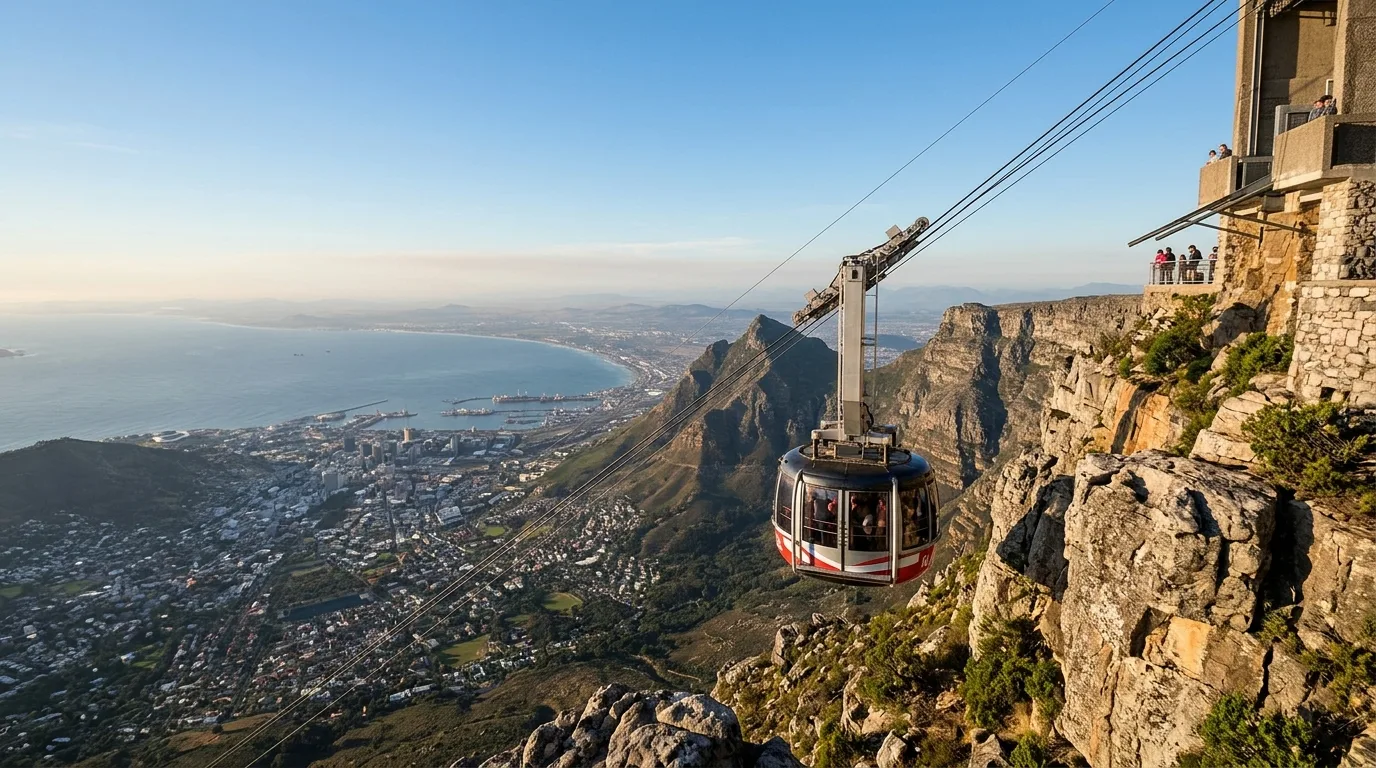
1. Take a Cable Car Ride to the Top of Table Mountain
Table Mountain offers panoramic views of Cape Town, the Atlantic Ocean, and the surrounding coastline. The easiest way to reach its summit is by taking the Table Mountain Aerial Cableway.
Why visit:
- Enjoy 360-degree views from the summit.
- Explore the mountain's walking paths and viewpoints.
- Take photographs of Cape Town's skyline and coastline.
- Stop at the summit cafe for refreshments.
Visitor information:
- Ticket: Online adult return ticket R475; valid from 1 July 2026 to 30 June 2027.
- Timings: Seasonal operating hours; weather permitting.
- Visitor tip: Book through the official Cableway website and check its live operating status before travelling. Strong winds can cause closures.
2. Visit Robben Island
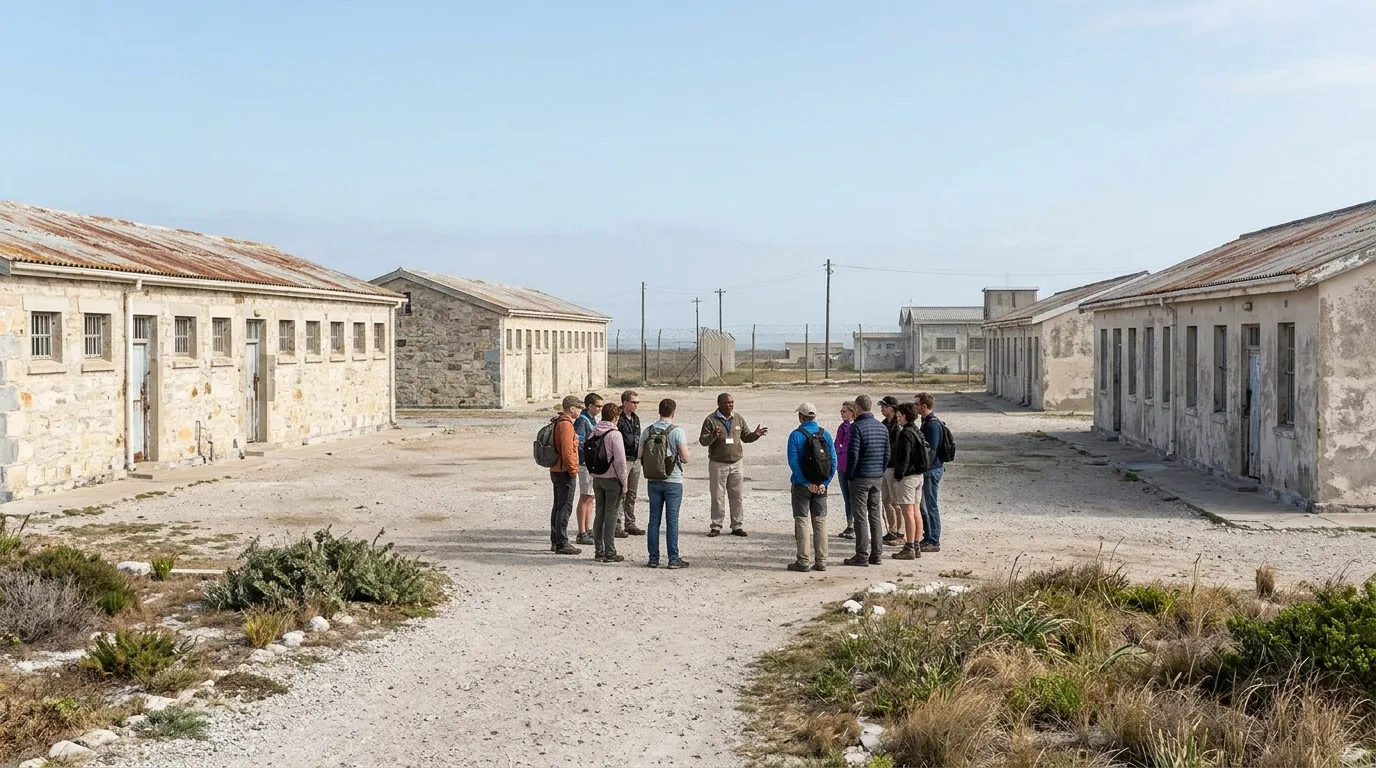
Robben Island is where Nelson Mandela spent 18 years of his imprisonment. The museum tour includes a ferry ride from the V&A Waterfront, a guided bus tour around the island, and a visit to the prison.
Why visit:
- See the prison cell where Nelson Mandela was held.
- Learn about South Africa's anti-apartheid movement.
- Explore important historical sites across the island.
- Hear accounts of prison life and the island's history from guides.
Visitor information:
- Ticket: R600 per international adult for the standard tour.
- Departure: Nelson Mandela Gateway, V&A Waterfront; scheduled departures include 9 AM, 11 AM, 1 PM and 3 PM, subject to availability.
- Duration: Approximately 3.5–4 hours, including ferry journeys.
- Visitor tip: Book in advance and arrive at least 30 minutes before departure. Ferry services depend on weather conditions.
3. See African Penguins at Boulders Beach
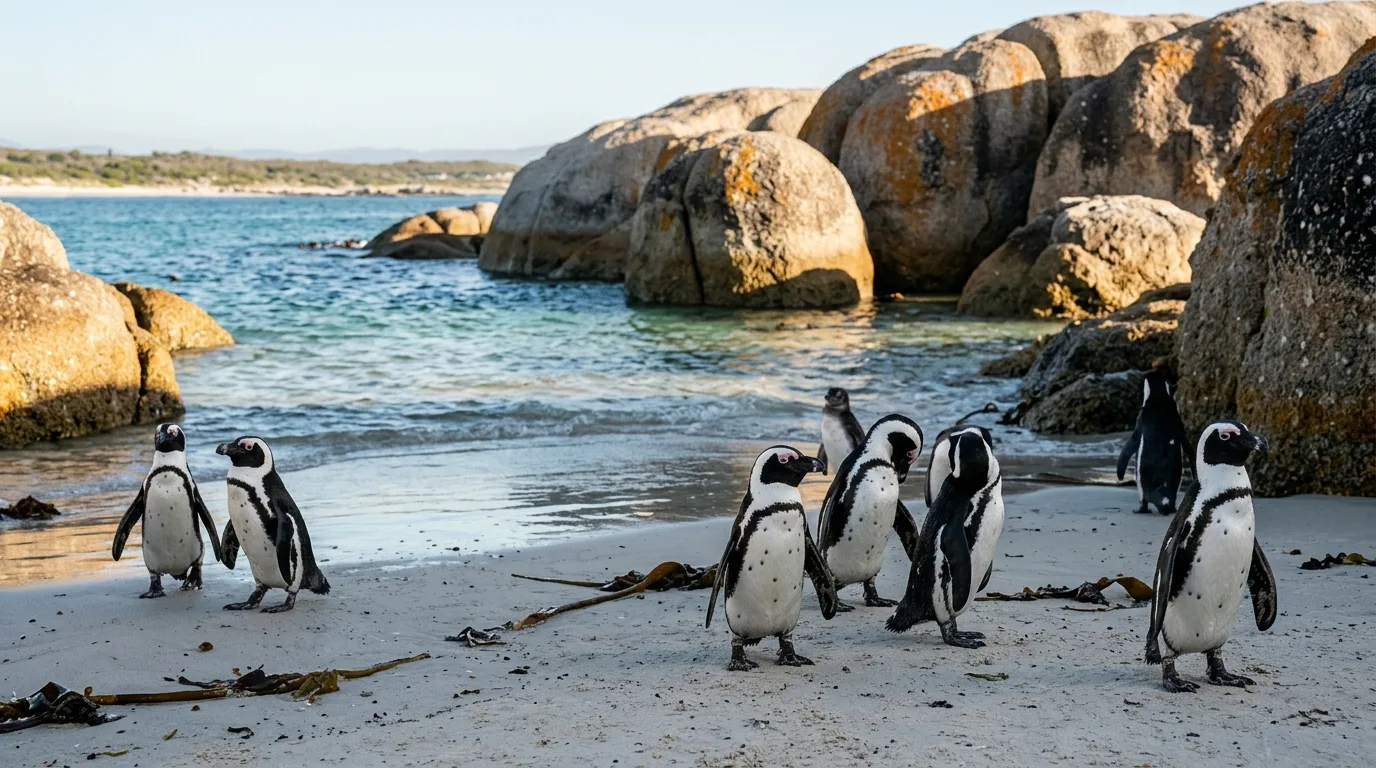
Boulders Beach in Simon's Town is home to a colony of African penguins. Wooden boardwalks provide designated viewing areas where visitors can observe the penguins without disturbing their habitat.
Why visit:
- Watch African penguins resting, swimming, and moving around the beach.
- Explore the sheltered coves surrounded by granite boulders.
- Take photographs from the designated viewing platforms.
- Visit the nearby beaches along the Cape Peninsula.
Visitor information:
- Ticket: R245 per international adult under the SANParks tariff valid until 31 October 2026.
- Location: Simon's Town, approximately 40 km from central Cape Town.
- Visitor tip: Arrive early during busy months. Stay on the boardwalks and never feed or touch the penguins.
4. Explore Cape Point and the Cape of Good Hope
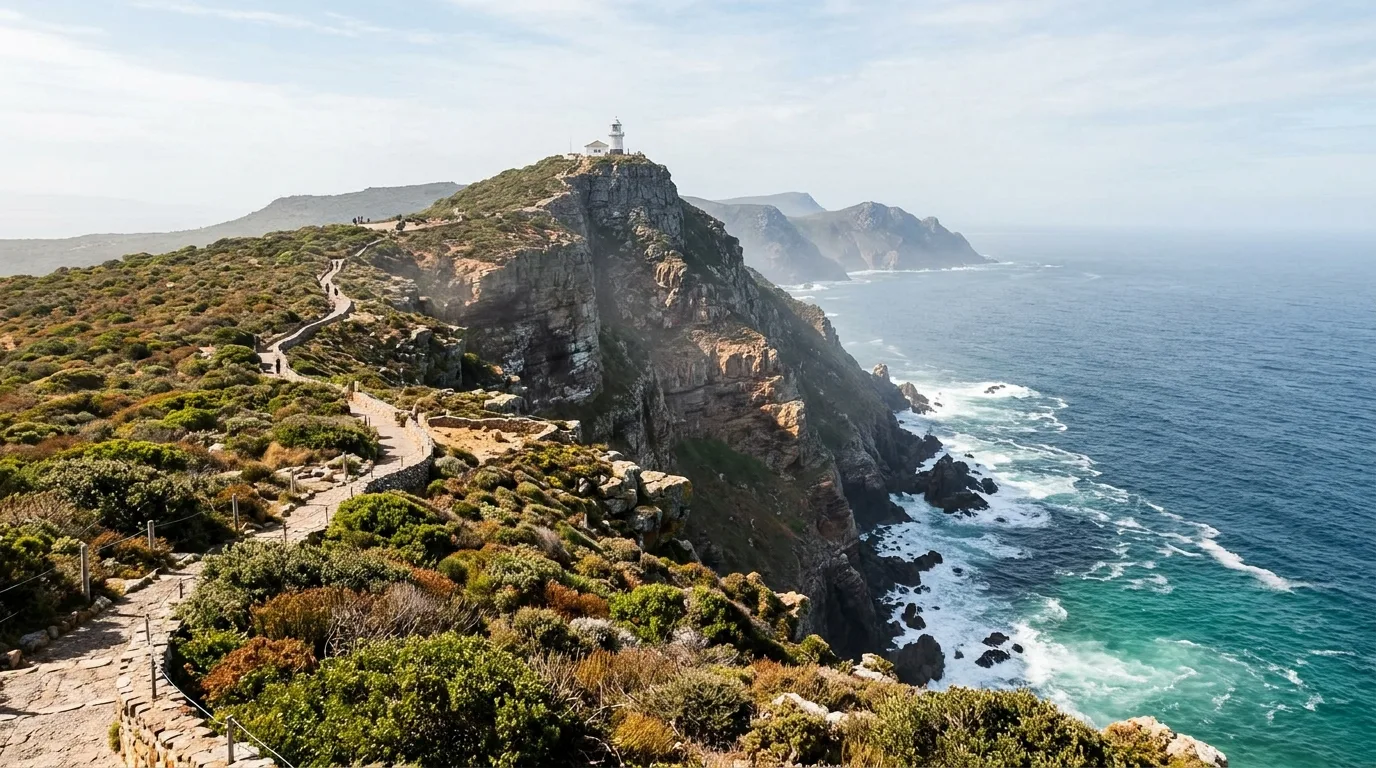
Cape Point offers views of steep coastal cliffs, rugged landscapes, and the meeting of ocean currents around the Cape Peninsula. The Cape of Good Hope is another major stop within the same nature reserve.
Why visit:
- Walk up to the historic lighthouse viewpoint.
- Take the Flying Dutchman Funicular to reach the upper viewpoint.
- Visit the Cape of Good Hope signpost.
- Explore coastal trails and look for ostriches, baboons, and antelope.
Visitor information:
- Ticket: R515 per international adult under the SANParks tariff valid until 31 October 2026.
- Location: Approximately 60 km from central Cape Town.
- Visitor tip: Allow at least half a day and carry a card for entry payments. Keep food secured around baboons.
5. Drive Along Chapman's Peak Drive
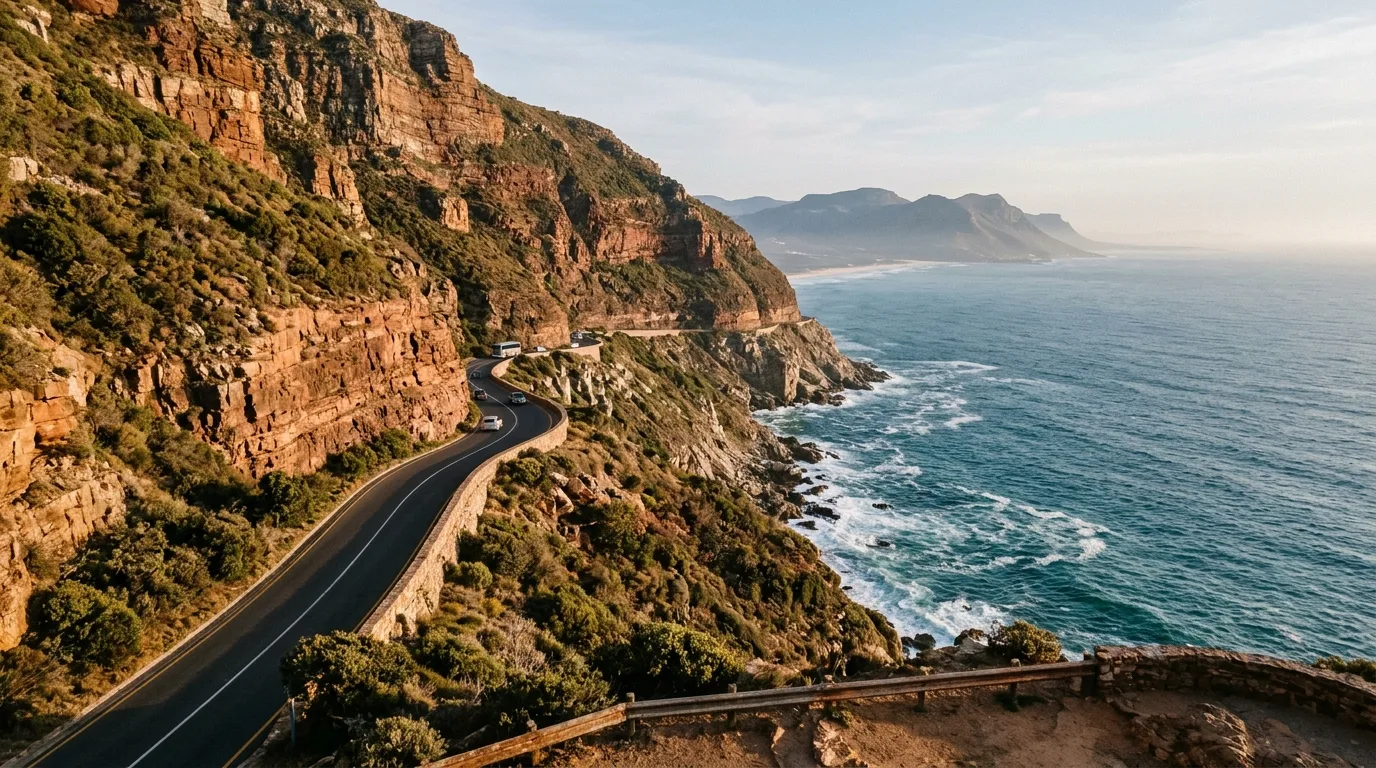
Chapman's Peak Drive is a coastal road connecting Hout Bay and Noordhoek. It winds along steep mountain slopes, with several viewpoints overlooking the Atlantic Ocean.
Why visit:
- Stop at designated viewpoints for ocean and mountain views.
- Photograph the coastline and winding road.
- Combine the drive with Hout Bay and Noordhoek.
- Visit around sunset for changing coastal light.
Visitor information:
- Ticket: A toll fee applies; rates depend on vehicle category.
- Location: Between Hout Bay and Noordhoek.
- Visitor tip: Check the official road status before travelling. Temporary closures may occur due to rockfalls, strong winds, or maintenance.
6. Explore Bo-Kaap
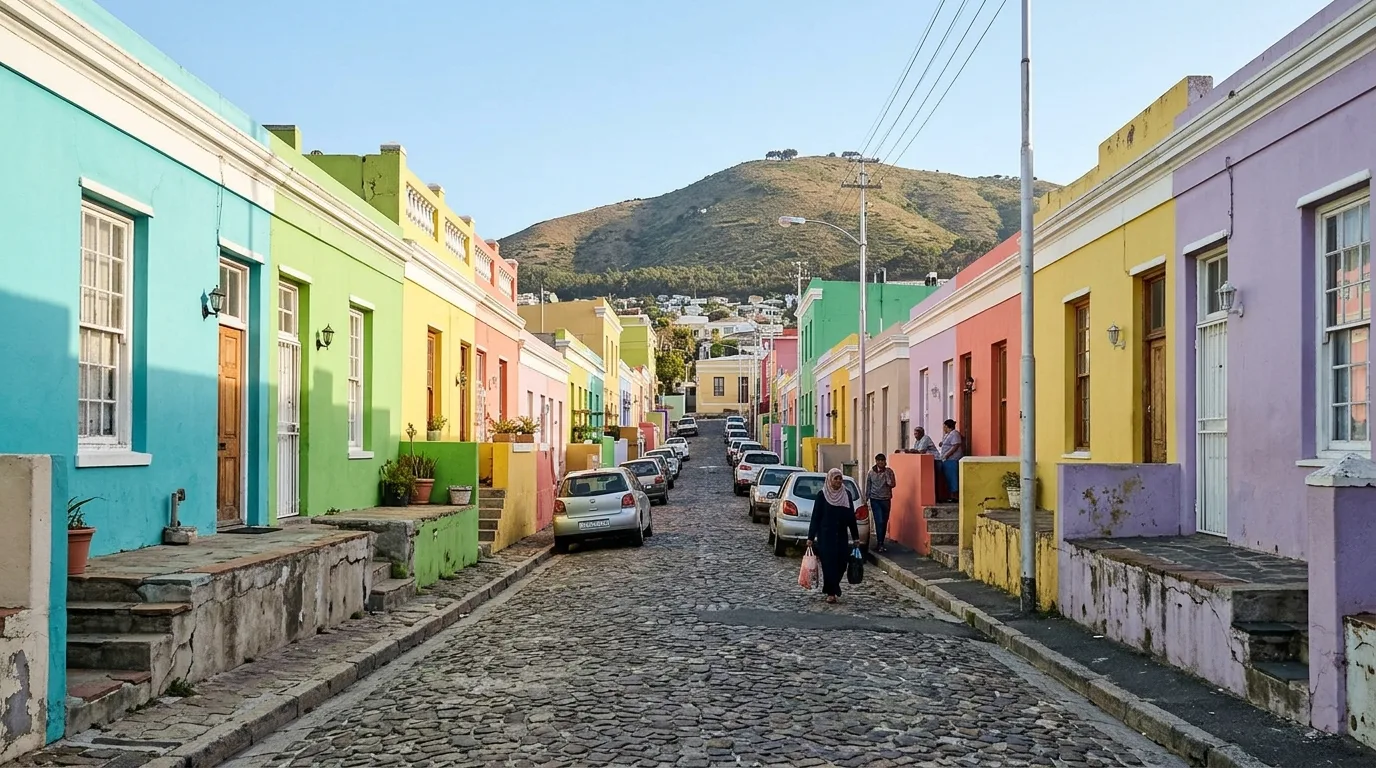
Bo-Kaap is a historic Cape Town neighbourhood known for its colourful houses, cobbled streets, and Cape Malay heritage. Wale Street and the surrounding lanes are the main areas to explore.
Why visit:
- Photograph the brightly painted houses.
- Visit the Bo-Kaap Museum to learn about the area's history.
- Explore Cape Malay food and local restaurants.
- See the historic Auwal Mosque.
Visitor information:
- Ticket: Walking through the neighbourhood is free; museum entry is charged separately.
- Location: Near central Cape Town.
- Visitor tip: Visit in the morning for photographs. Bo-Kaap is a residential neighbourhood, so respect residents' privacy.
7. Explore Kirstenbosch National Botanical Garden
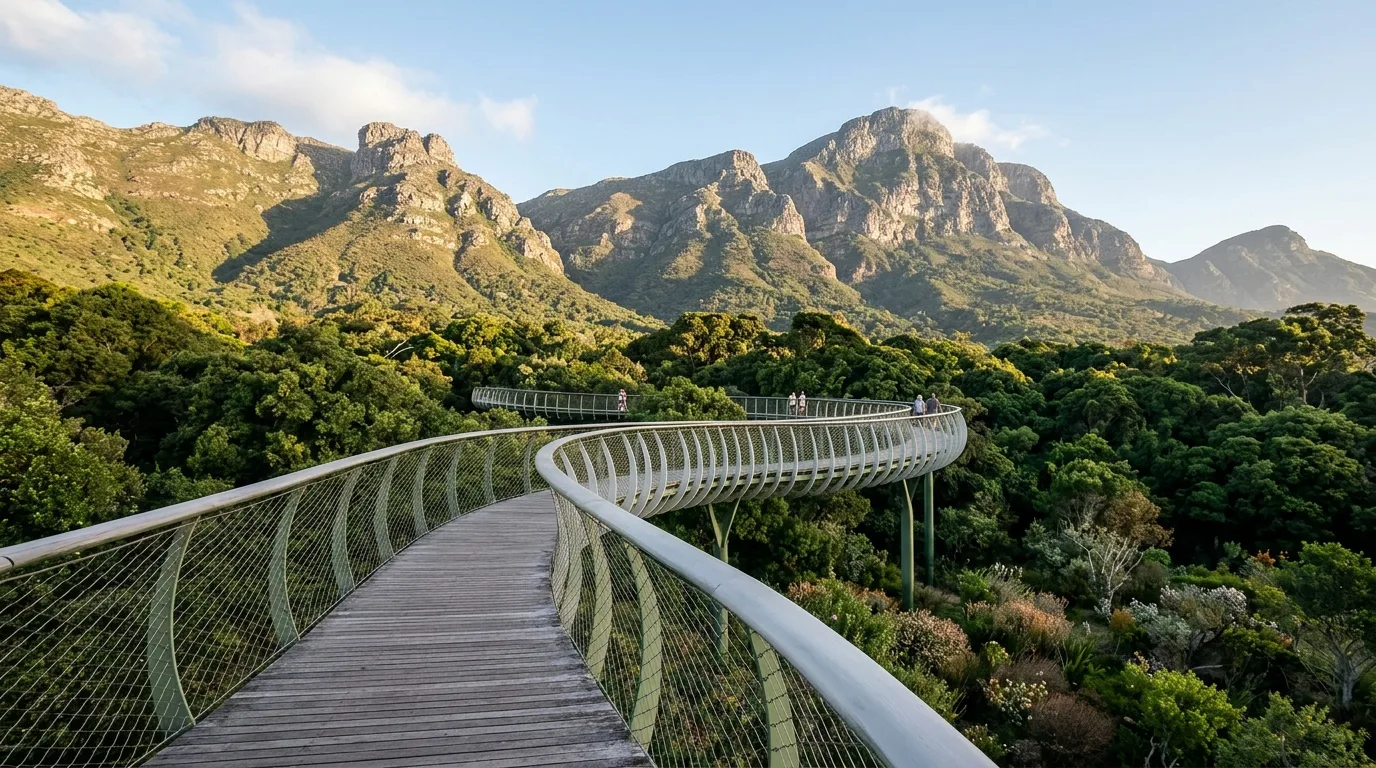
Kirstenbosch lies on the eastern slopes of Table Mountain and showcases South Africa's indigenous plants, including fynbos species. The garden also has walking trails and elevated viewpoints.
Why visit:
- Walk along the Centenary Tree Canopy Walkway, also called the Boomslang.
- Explore indigenous plant collections and themed gardens.
- Enjoy views of Table Mountain and the surrounding slopes.
- Attend seasonal outdoor concerts.
Visitor information:
- Ticket: International visitor rates apply; check the official SANBI website.
- Timings: Open daily; seasonal hours vary.
- Visitor tip: Allow two to three hours and wear comfortable walking shoes. Check the concert schedule if visiting during summer.
8. Spend an Evening at the V&A Waterfront
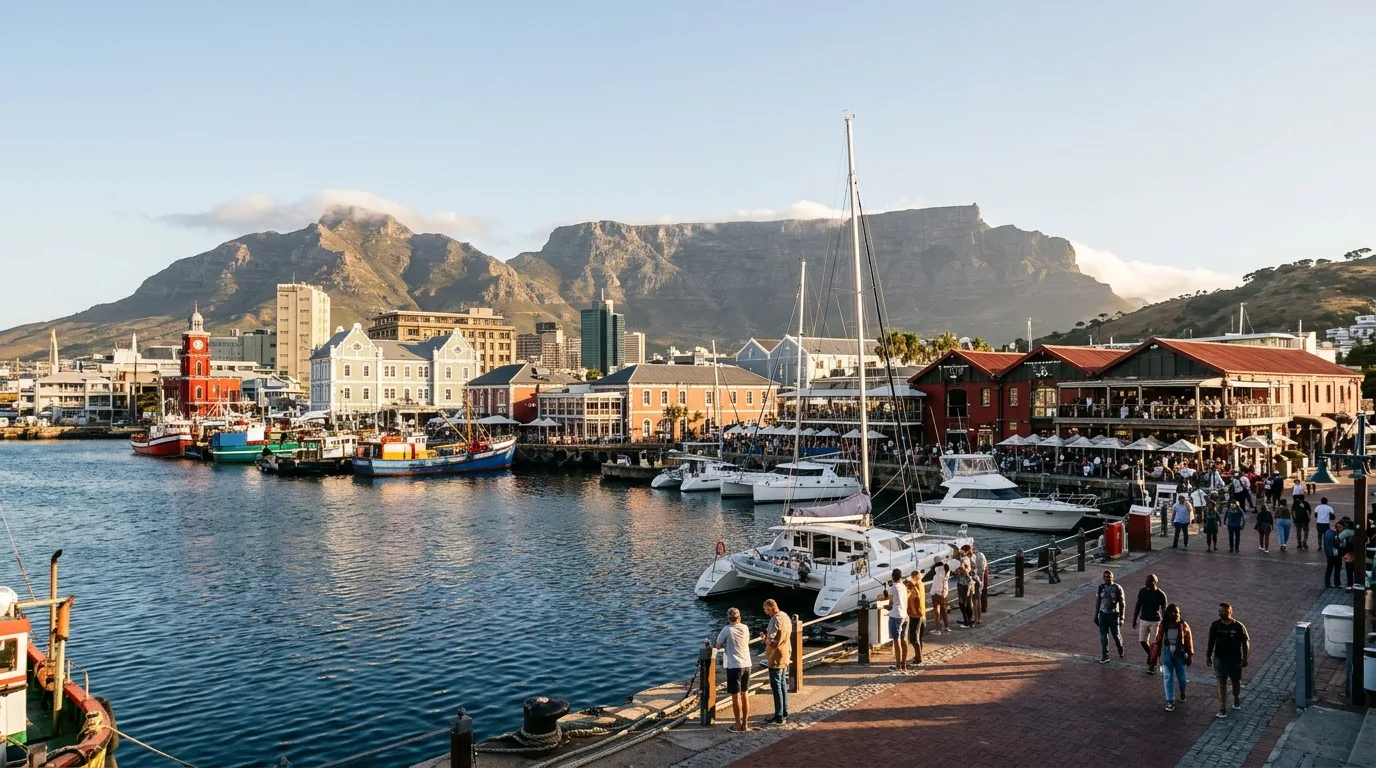
The V&A Waterfront is a shopping, dining, and entertainment district along Cape Town's harbour. It is also the departure point for Robben Island ferry tours.
Why visit:
- Browse shops, boutiques, and local craft stores.
- Visit the Two Oceans Aquarium.
- Enjoy restaurants overlooking the harbour.
- Book a harbour cruise or explore the waterfront promenade.
Visitor information:
- Ticket: Free entry to the waterfront; individual attractions and cruises are charged separately.
- Timings: Shops and restaurants generally remain open into the evening; individual hours vary.
- Visitor tip: Visit in the late afternoon and stay for dinner. Book aquarium visits and cruises in advance during busy periods.
9. Go Wine Tasting in Stellenbosch
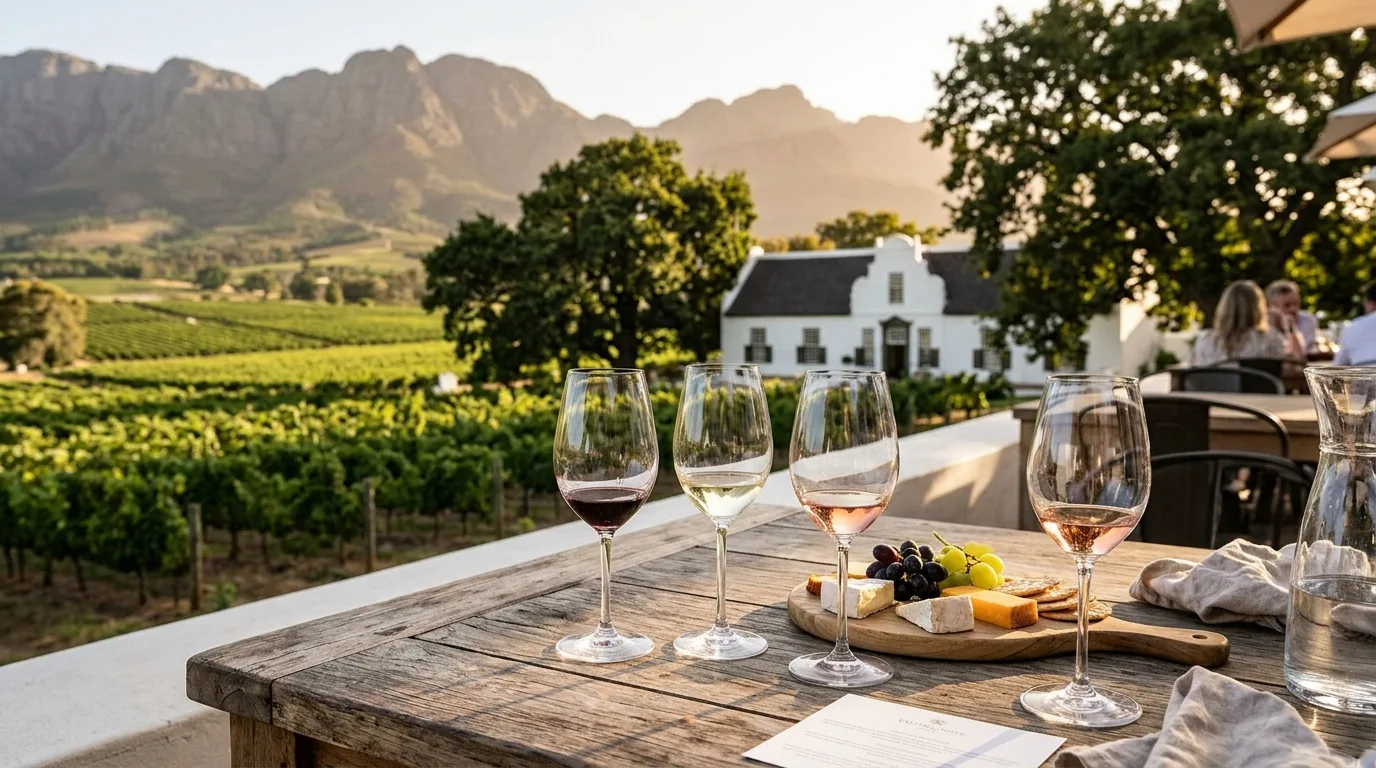
Stellenbosch is one of South Africa's main wine-producing regions, known for its vineyards, historic architecture, and mountain scenery. Wine estates around the town offer tastings, cellar tours, and vineyard restaurants.
Why visit:
- Sample locally produced red and white wines.
- Take guided cellar tours at selected estates.
- Enjoy vineyard lunches and food pairings.
- Explore Stellenbosch's historic town centre.
Visitor information:
- Ticket: Tasting fees vary by wine estate.
- Location: Approximately 50 km from Cape Town.
- Visitor tip: Reserve tasting sessions and restaurant tables in advance. Arrange a designated driver or guided wine tour if sampling wine.
10. Explore Franschhoek and Its Wine Estates
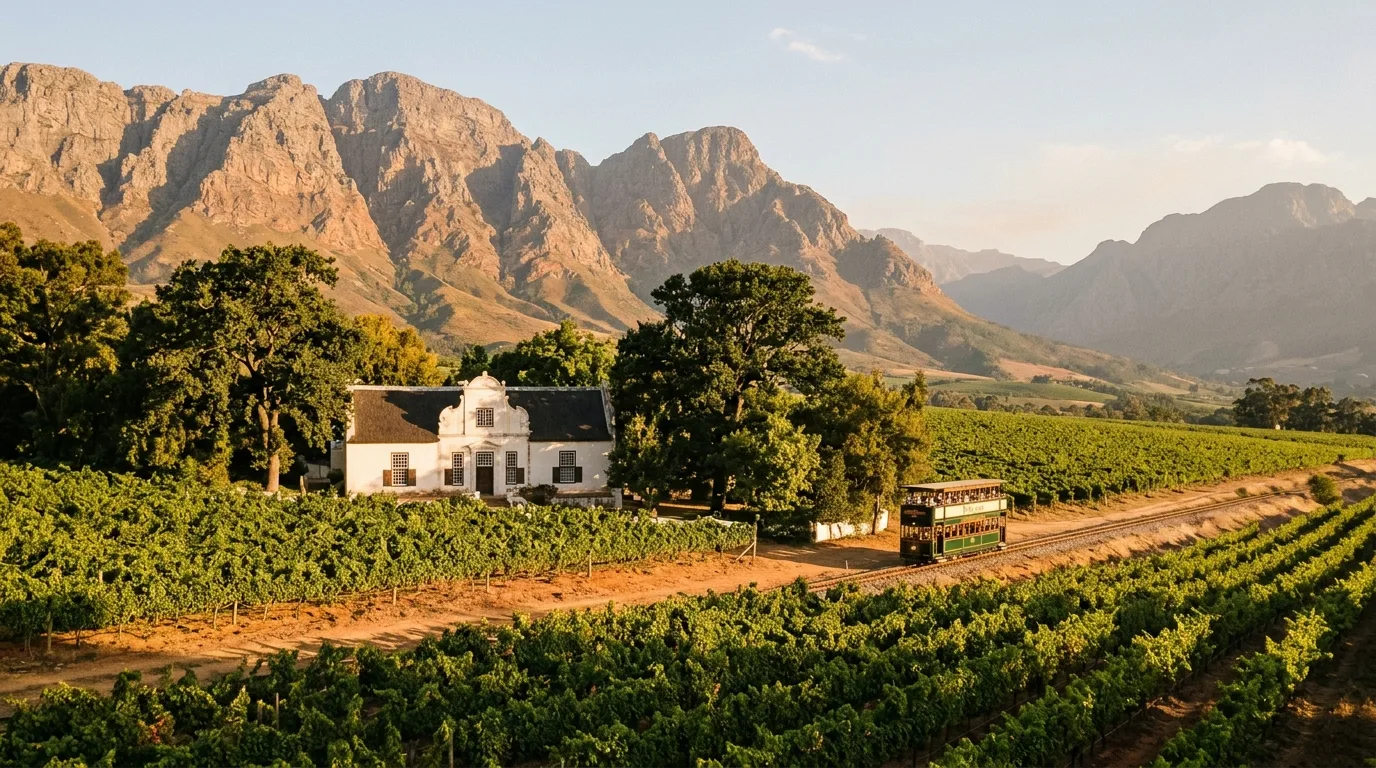
Franschhoek is a wine-producing town surrounded by vineyards and mountains. Its French heritage is reflected in the local food culture, wine estates, and village architecture.
Why visit:
- Visit wine estates for tastings and cellar experiences.
- Take the Franschhoek Wine Tram between selected estates.
- Explore the village's cafes, galleries, and boutiques.
- Enjoy vineyard restaurants and outdoor dining.
Visitor information:
- Ticket: Wine tastings and Wine Tram journeys are charged separately.
- Location: Approximately 75 km from Cape Town.
- Visitor tip: Check Wine Tram routes and departure schedules before booking. Reserve popular tastings and restaurants ahead of time.
11. Go Whale Watching in Hermanus
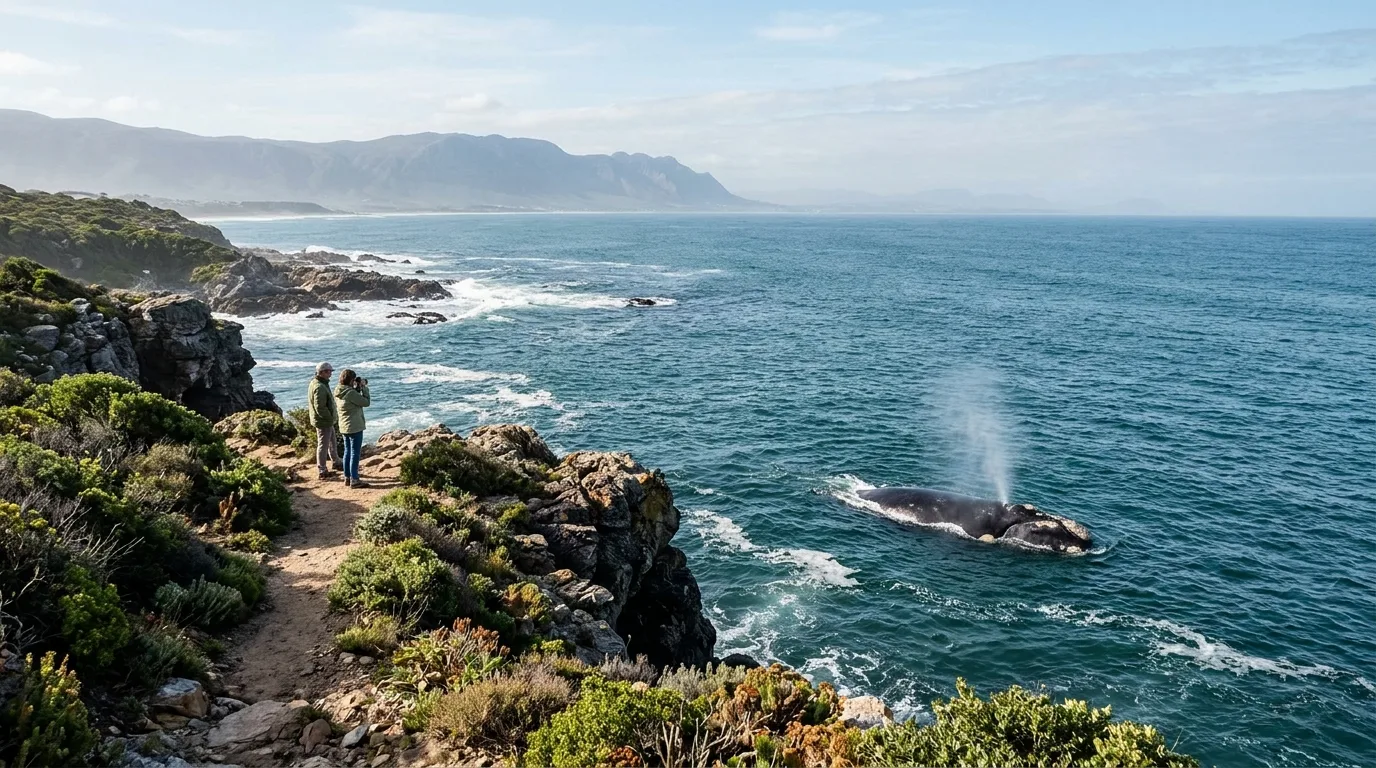
Hermanus overlooks Walker Bay and is one of South Africa's best-known whale-watching destinations. Southern right whales visit the coastline during their annual migration.
Why visit:
- Watch whales from the Hermanus Cliff Path.
- Visit coastal viewpoints overlooking Walker Bay.
- Book a licensed boat-based whale-watching tour.
- Explore the town's waterfront and cafes.
Visitor information:
- Best time: June to November for southern right whale sightings.
- Ticket: The public cliff path is free; boat tours are charged separately.
- Visitor tip: Carry binoculars and check local sightings before visiting. Boat trips depend on weather and sea conditions.
12. Explore the Cango Caves in Oudtshoorn
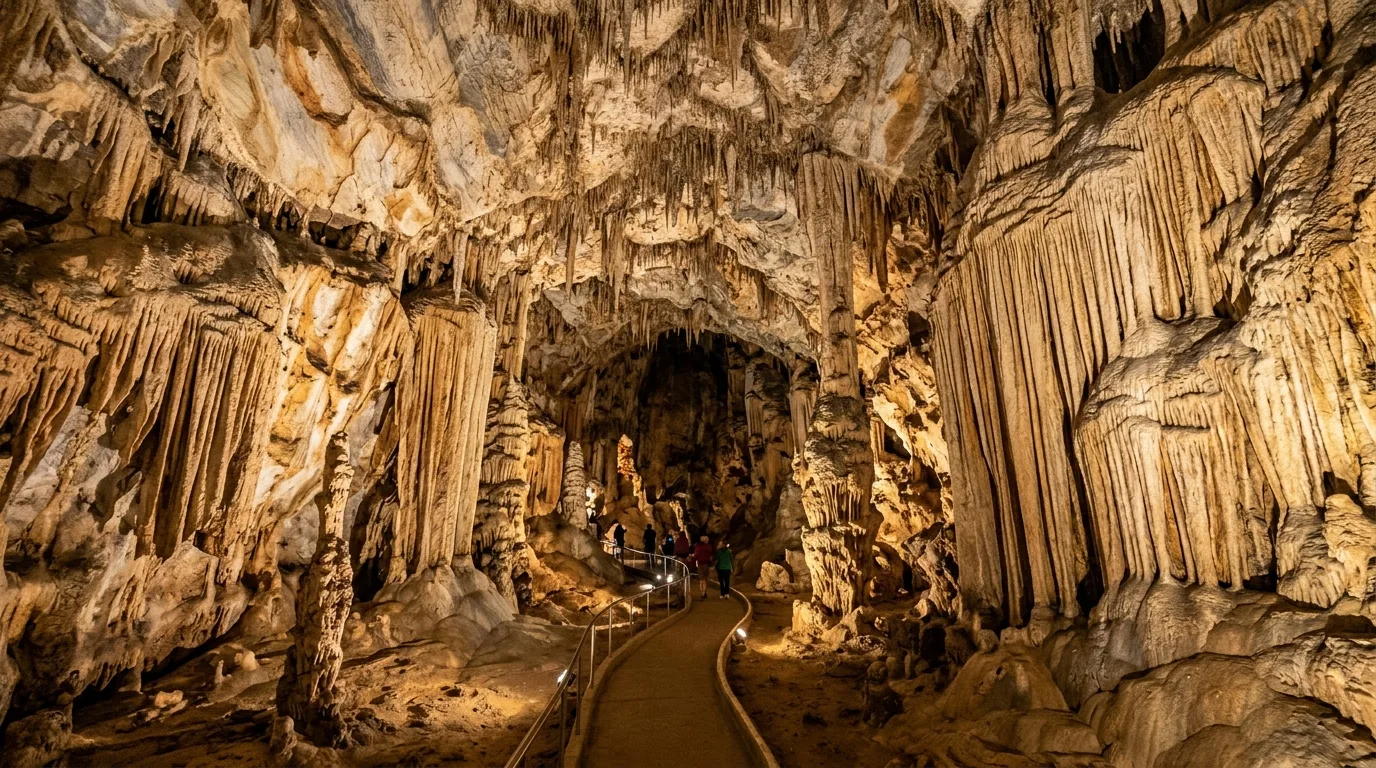
The Cango Caves are a limestone cave system near Oudtshoorn, known for their large chambers, stalactites, stalagmites, and unusual rock formations. Visitors can choose between guided heritage tours and more adventurous routes.
Why visit:
- Explore the large limestone chambers.
- See naturally formed rock structures.
- Learn about the caves' geology and history.
- Choose an adventure tour if comfortable with narrow passages.
Visitor information:
- Ticket: Guided tours are charged separately; prices depend on the tour.
- Location: Approximately 30 km from Oudtshoorn.
- Visitor tip: Book through the official Cango Caves website. Choose the heritage tour if you prefer a less physically demanding experience.
13. See the West Coast Wildflowers
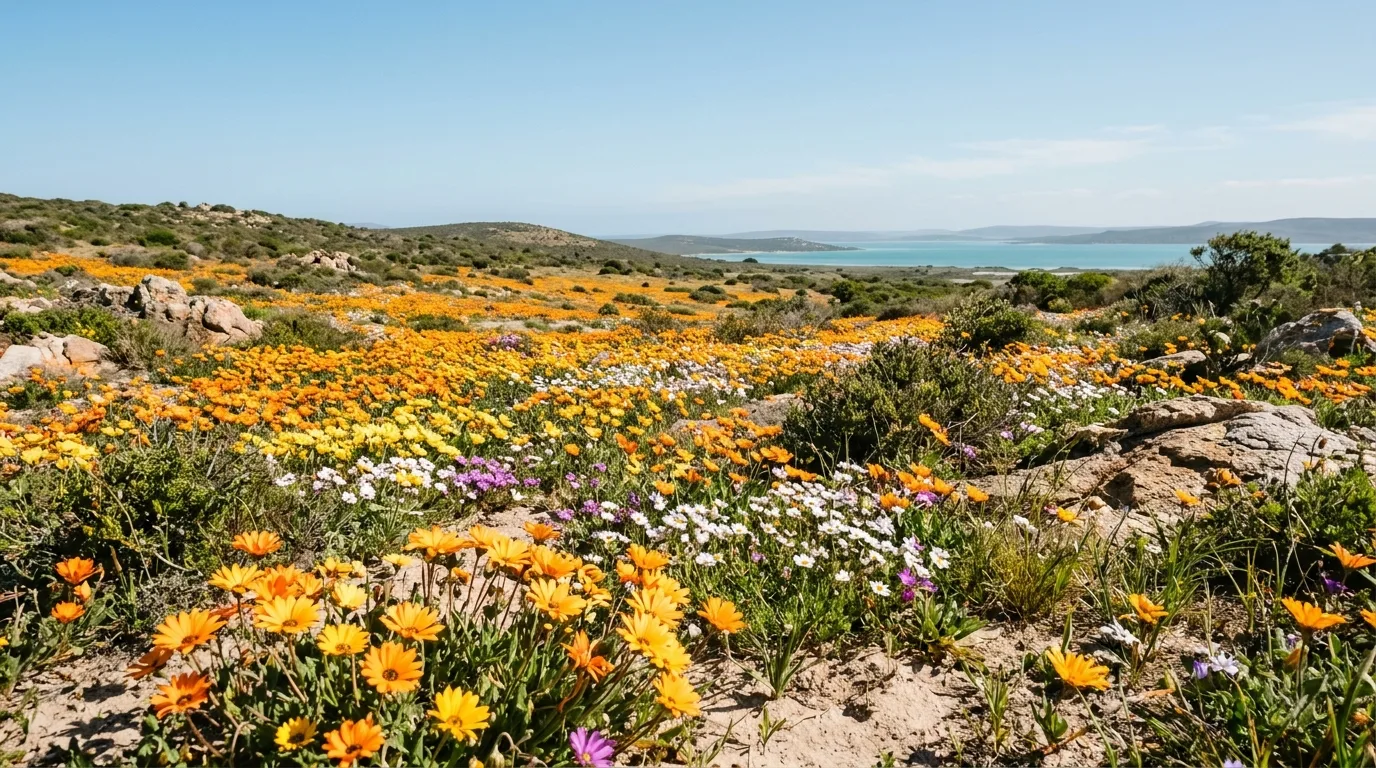
The West Coast becomes a major wildflower destination during spring, when seasonal blooms cover parts of the normally dry landscape. West Coast National Park and areas around Namaqualand are popular viewing locations.
Why visit:
- Photograph seasonal fields of indigenous flowers.
- Explore flower-viewing routes and nature reserves.
- Visit coastal viewpoints and small West Coast towns.
- Spot local birdlife in protected areas.
Visitor information:
- Best time: Usually August and September, depending on rainfall.
- Ticket: West Coast National Park charges a conservation fee.
- Visitor tip: Check seasonal flower reports before travelling. Sunny mornings are generally better because many flowers open in direct sunlight.
Best Things to Do in Mpumalanga and Limpopo
14. Go on a Safari in Kruger National Park
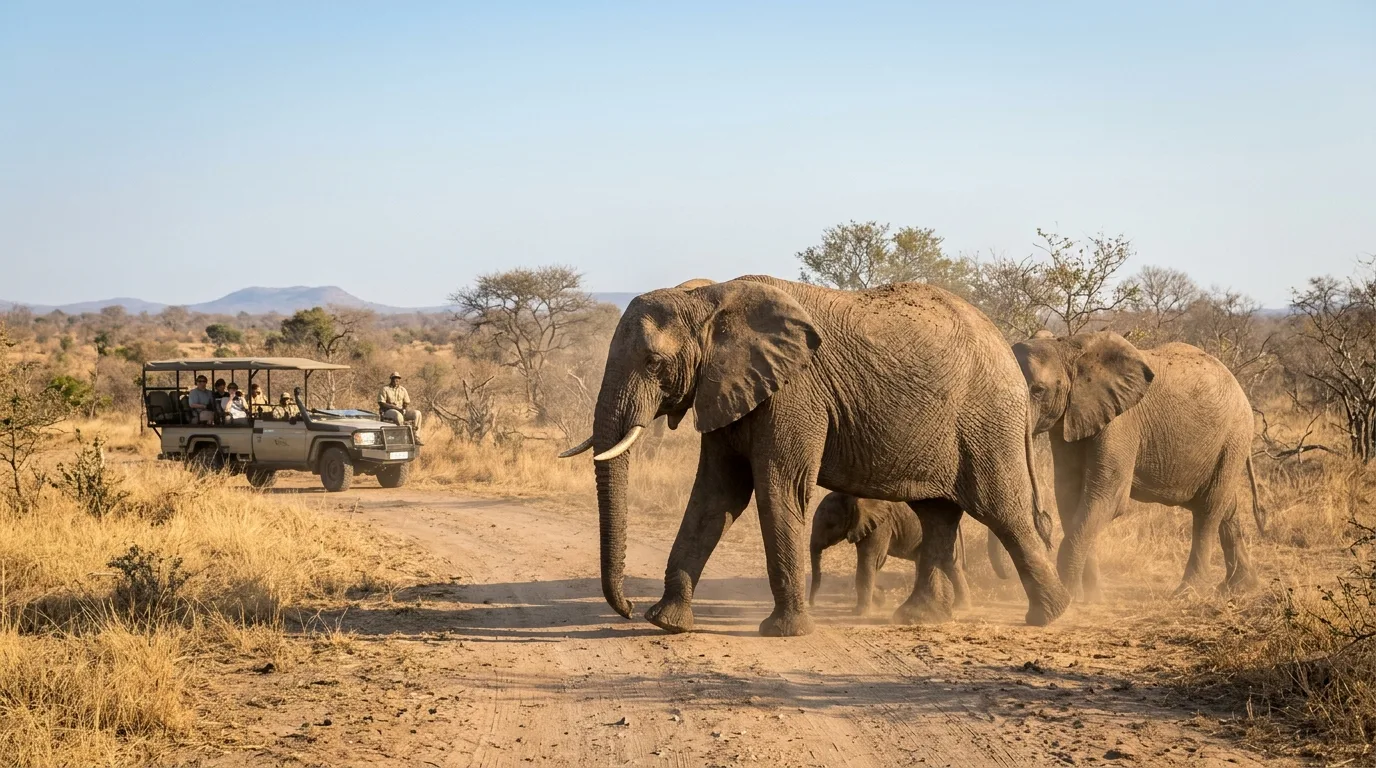
Kruger National Park is one of Africa's largest wildlife reserves and a major destination for Big Five safaris. Its habitats support elephants, lions, leopards, rhinos, buffaloes, giraffes, zebras, and hundreds of bird species.
Why visit:
- Look for the Big Five on guided or self-drive safaris.
- Book morning, afternoon, or night game drives.
- Explore rest camps and designated picnic sites.
- Stay at a SANParks camp or a nearby private safari lodge.
Visitor information:
- Ticket: International adult conservation fee R602 per day under the tariff valid until 31 October 2026.
- Best time: May to September for cooler, drier conditions.
- Visitor tip: Book accommodation and guided drives in advance. Follow park speed limits and remain inside your vehicle in designated areas.
15. Drive Along the Panorama Route
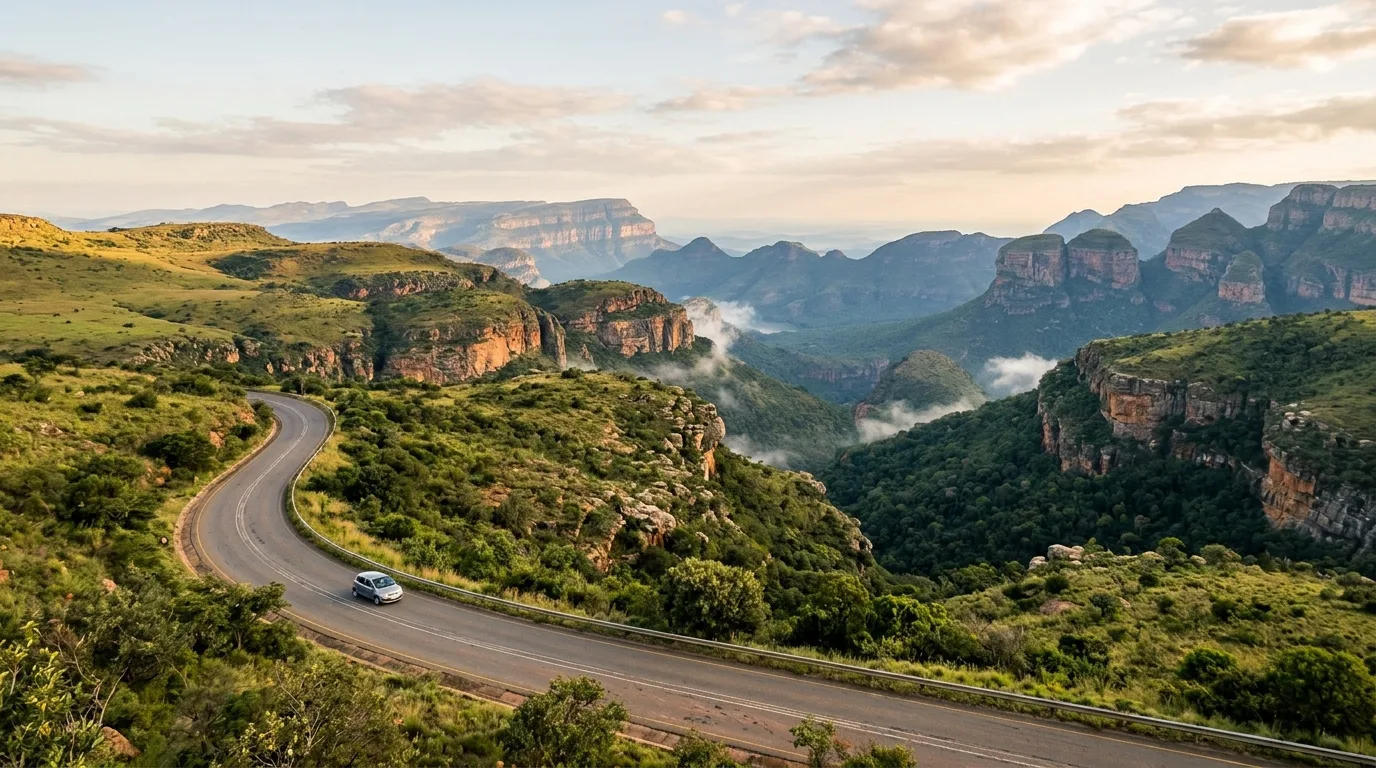
The Panorama Route is a scenic drive through Mpumalanga, connecting mountain viewpoints, waterfalls, forests, and the Blyde River Canyon area.
Why visit:
- Stop at God's Window for escarpment views.
- See the Three Rondavels overlooking Blyde River Canyon.
- Explore the rock formations at Bourke's Luck Potholes.
- Visit Lisbon Falls and Berlin Falls.
Visitor information:
- Ticket: Some viewpoints and reserves charge separate entry fees.
- Location: Around Graskop, Sabie, and Blyde River Canyon.
- Visitor tip: Allow a full day for the main stops. A rental car is the most practical way to explore the route.
16. Admire the Views from God's Window
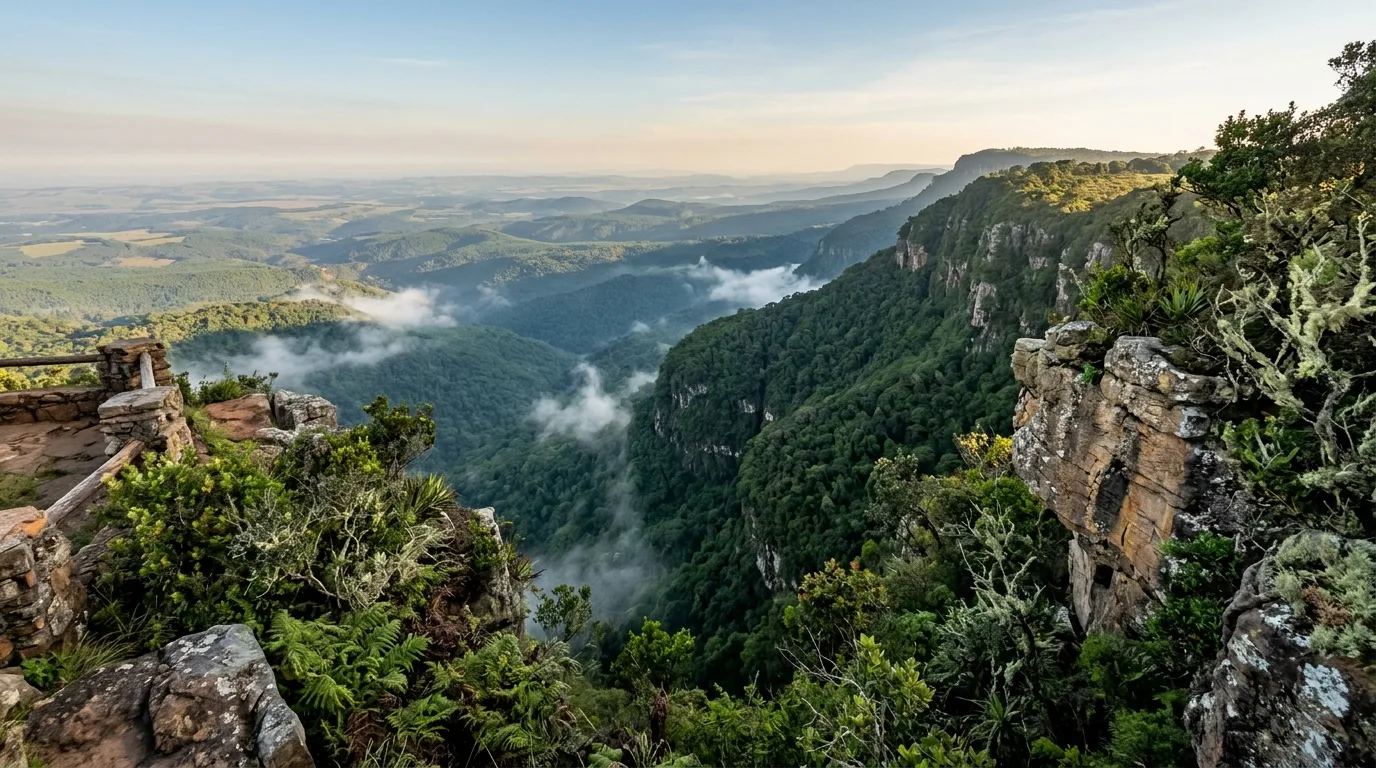
God's Window is a viewpoint along the Panorama Route, overlooking the Lowveld and surrounding forested valleys. On clear days, visitors can see across the escarpment and surrounding mountain landscape.
Why visit:
- Enjoy panoramic views from the escarpment.
- Walk through indigenous mist forest.
- Explore the higher viewpoints along the trail.
- Photograph the surrounding mountain scenery.
Visitor information:
- Ticket: A site entrance fee may apply; confirm the current rate locally.
- Location: Near Graskop, Mpumalanga.
- Visitor tip: Visit early when visibility is often better. Carry a light jacket and wear shoes suitable for uneven paths.
17. Visit the Three Rondavels and Blyde River Canyon
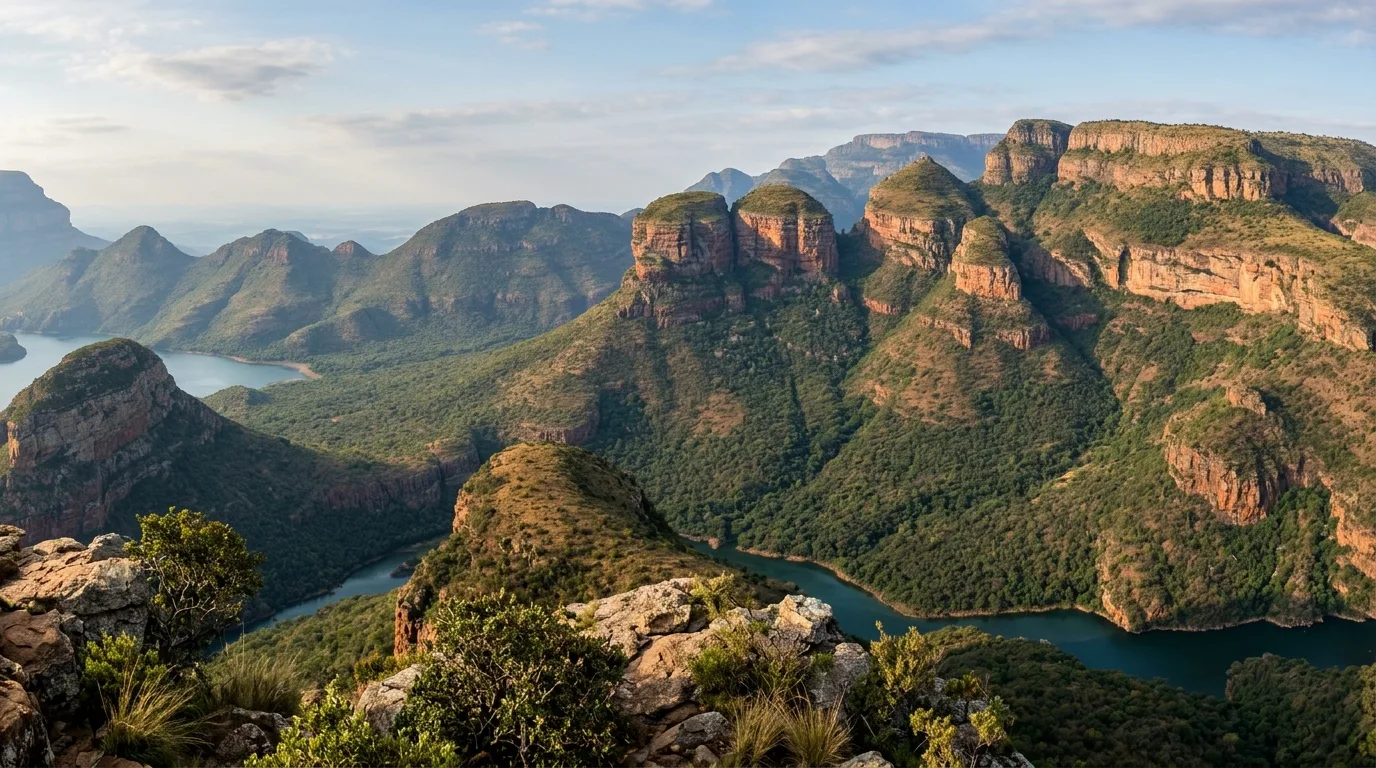
Blyde River Canyon is known for its steep cliffs, green slopes, and winding river. The Three Rondavels are three round mountain peaks that resemble traditional African huts.
Why visit:
- View the Three Rondavels from the designated viewpoint.
- Photograph the canyon and surrounding mountains.
- Explore nearby walking trails and viewpoints.
- Combine the stop with other Panorama Route attractions.
Visitor information:
- Ticket: Fees depend on the viewpoint or reserve being visited.
- Location: Blyde River Canyon Nature Reserve, Mpumalanga.
- Visitor tip: Combine this stop with God's Window and Bourke's Luck Potholes. Check weather conditions before travelling.
18. Explore Bourke's Luck Potholes
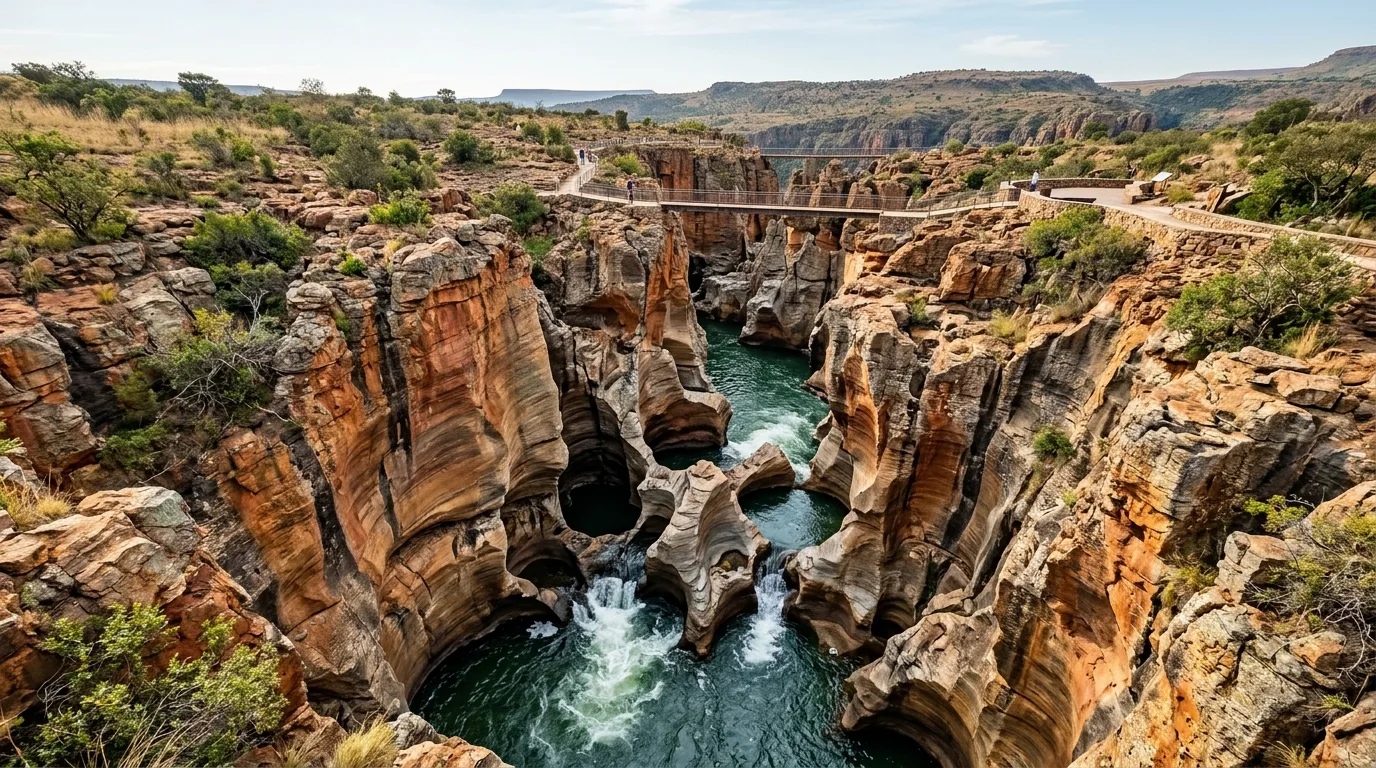
Bourke's Luck Potholes are cylindrical rock formations created by water erosion where the Blyde and Treur rivers meet. Walkways and bridges allow visitors to view the unusual formations and surrounding river channels.
Why visit:
- See the deep circular rock hollows.
- Walk across bridges overlooking the river.
- Photograph the waterfalls and geological formations.
- Learn how water erosion shaped the landscape.
Visitor information:
- Ticket: An entrance fee applies; check the current tariff.
- Location: Along the R532 near Graskop.
- Visitor tip: Wear shoes with good grip because walkways can become slippery. Allow around an hour for the main viewpoints.
19. Go on a Safari at a Private Game Reserve Near Kruger
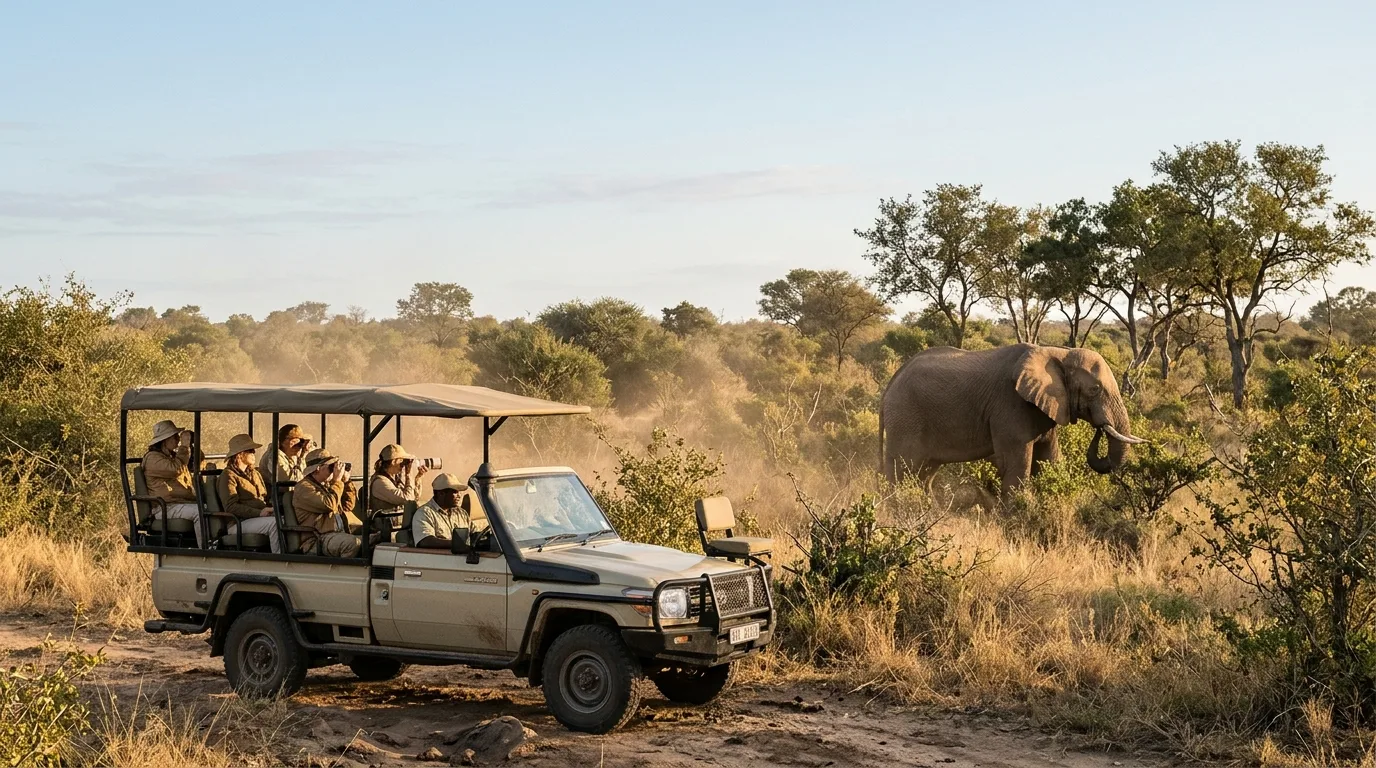
Private game reserves bordering Kruger offer guided safari experiences in large conservation landscapes. Many reserves have open safari vehicles, experienced rangers, and trackers.
Why visit:
- Take guided Big Five game drives.
- Join selected walking safaris.
- Stay at safari lodges with meals and activities.
- Experience wildlife viewing in smaller guided groups.
Visitor information:
- Ticket: Game drives may be included in lodge packages or charged separately.
- Best time: May to September for cooler, drier safari conditions.
- Visitor tip: Check whether accommodation, meals, conservation fees, and game drives are included in the package price.
Best Things to Do Along the Garden Route and Eastern Cape
20. Take a Road Trip Along the Garden Route
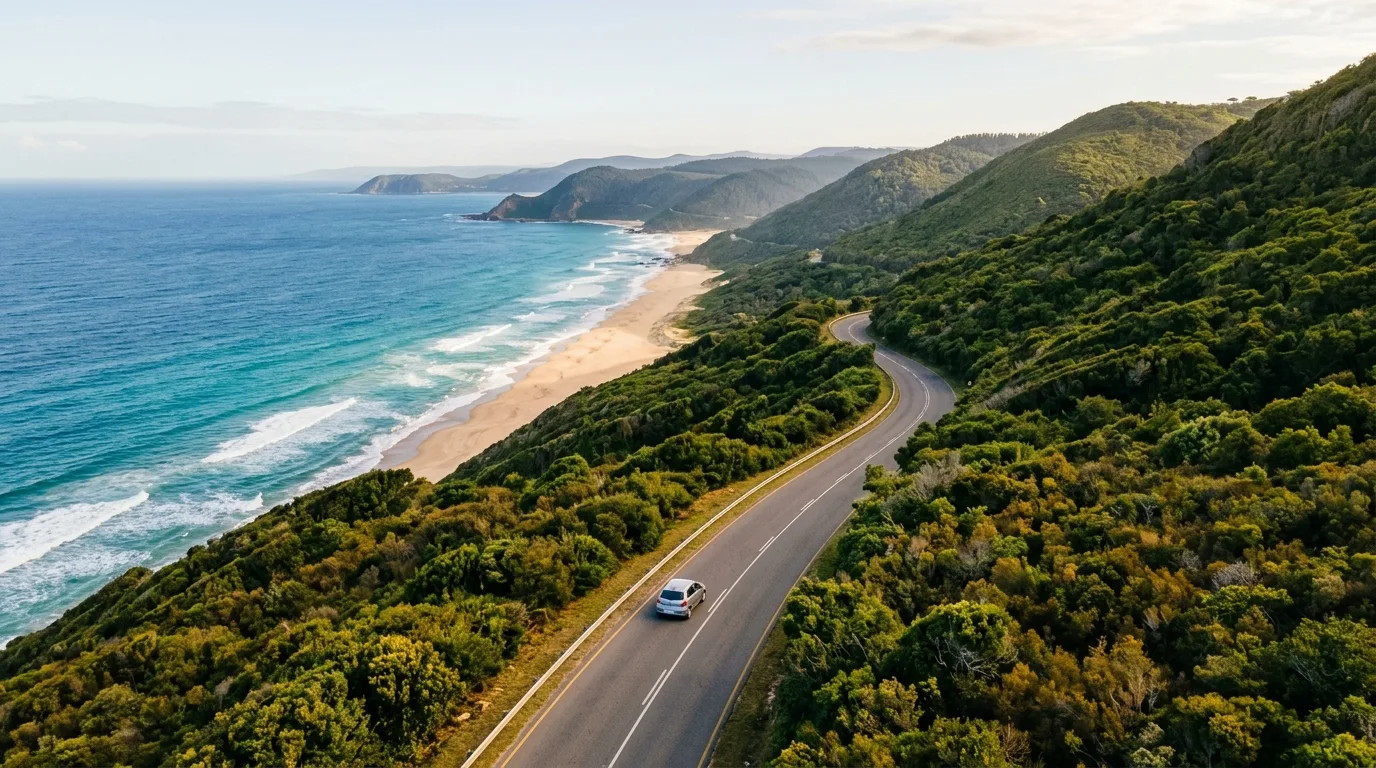
The Garden Route stretches along South Africa's southern coast, connecting coastal towns, forests, lagoons, and nature reserves. Popular stops include Mossel Bay, Wilderness, Knysna, and Plettenberg Bay.
Why visit:
- Explore beaches and lagoons around Knysna.
- Visit the coastal trails at Wilderness.
- Stop at viewpoints and small towns along the route.
- Explore Tsitsikamma National Park and Plettenberg Bay.
Visitor information:
- Ticket: Public road access is free; selected parks and activities charge separate fees.
- Best time: September to April for generally warmer coastal weather.
- Visitor tip: Allow at least three days to explore multiple stops. A rental car offers the most flexibility.
21. Walk Across the Storms River Mouth Suspension Bridge
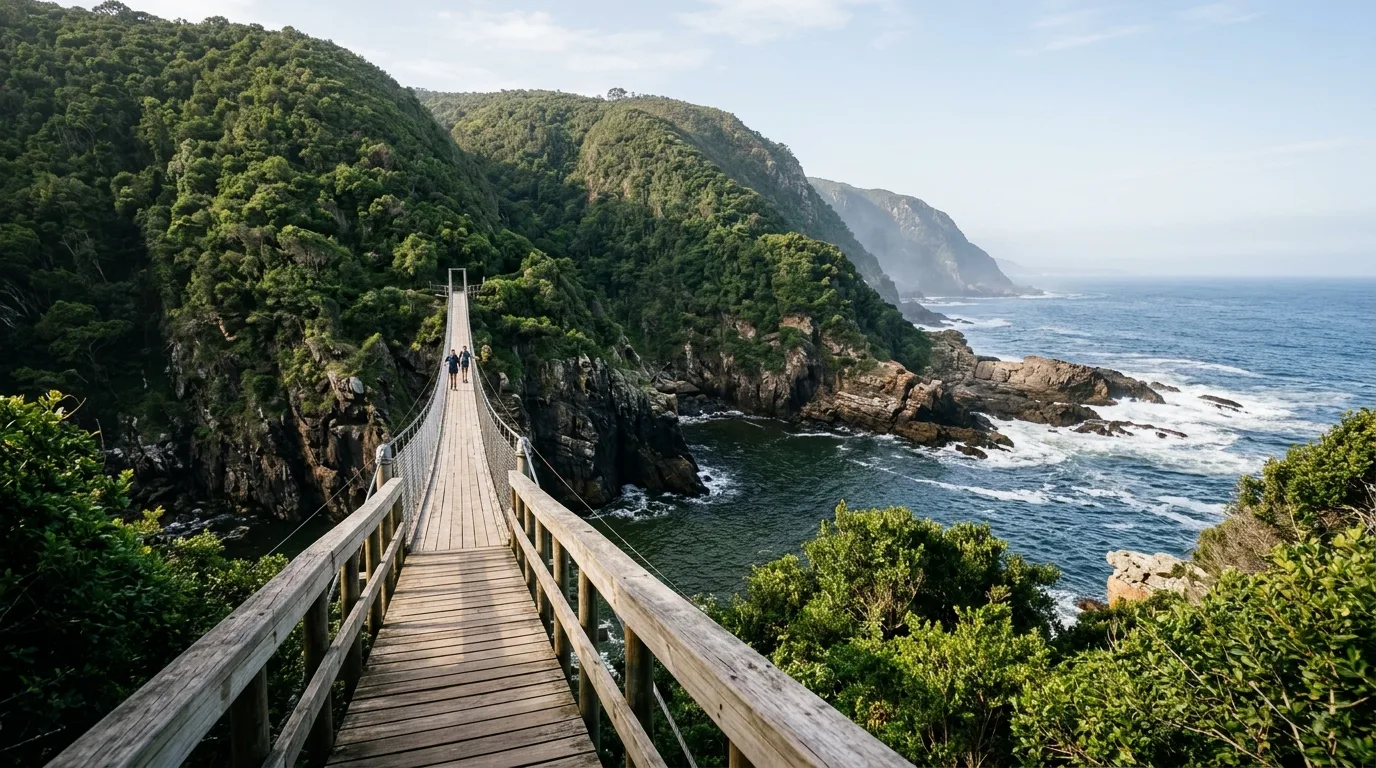
The suspension bridge at Storms River Mouth crosses a river gorge near its meeting point with the Indian Ocean. A forest trail leads visitors from the park entrance towards the bridge.
Why visit:
- Walk through indigenous coastal forest.
- Cross the suspension bridge above the river.
- Photograph the river gorge and ocean views.
- Explore nearby walking trails and viewpoints.
Visitor information:
- Ticket: International adult conservation fee R367 under the SANParks tariff valid until 31 October 2026.
- Location: Tsitsikamma section of Garden Route National Park.
- Visitor tip: Wear comfortable walking shoes and allow a few hours for the walk. Check current park entry fees before travelling.
22. Try the Bloukrans Bridge Bungee Jump
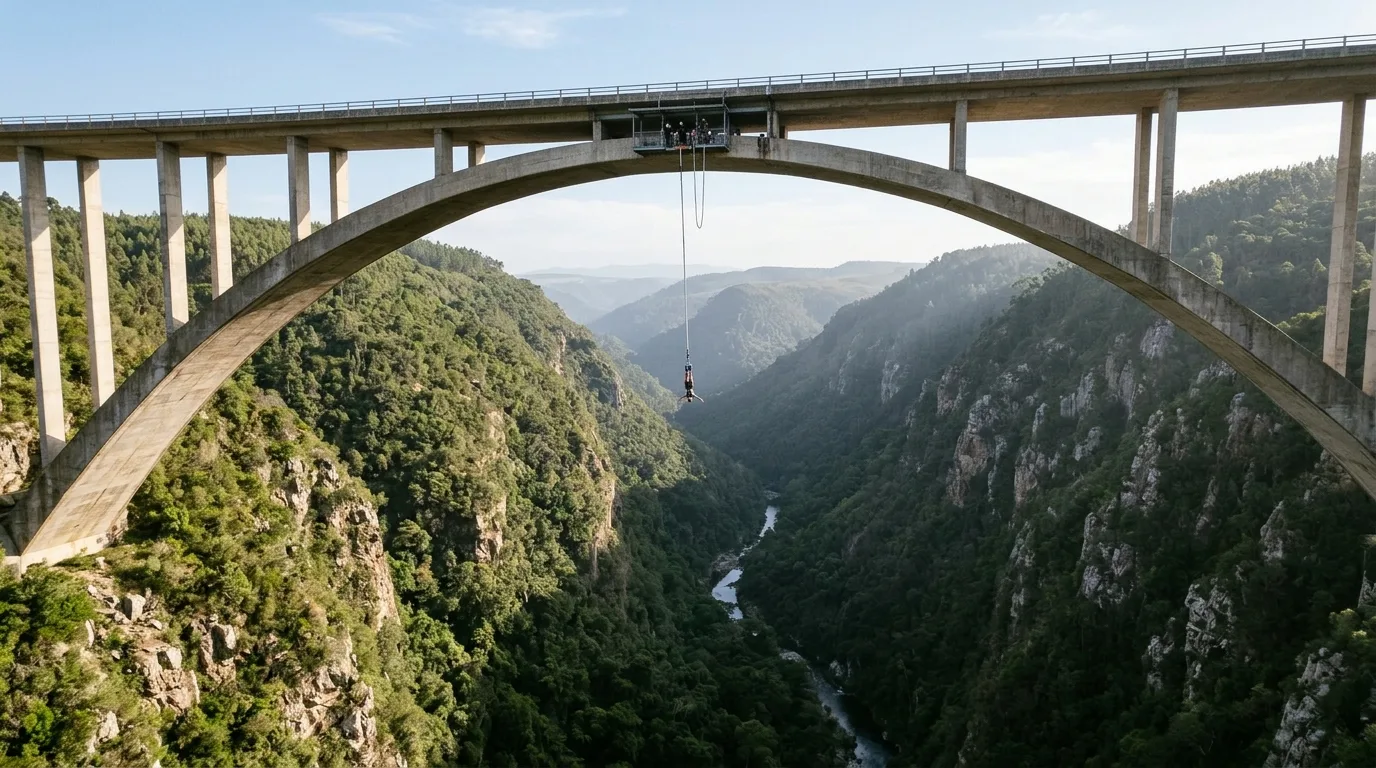
Bloukrans Bridge is a major bungee-jumping destination on the Garden Route. The jump takes place from a platform beneath the bridge, above the Bloukrans River valley.
Why visit:
- Experience a high-adrenaline bridge bungee jump.
- Enjoy views of the river valley from the bridge.
- Book a SkyWalk tour if you prefer to watch rather than jump.
- Visit the viewing area and restaurant.
Visitor information:
- Ticket: Bungee and SkyWalk tickets are charged separately; check the operator's current prices.
- Timings: Daily, generally 9 AM–5 PM.
- Requirements: Bungee participants must be at least 14 years old and weigh between 35 kg and 150 kg.
- Visitor tip: Book with the official operator and arrive at least an hour before your scheduled jump. Weather conditions can affect operations.
23. Explore Knysna's Lagoon and Waterfront
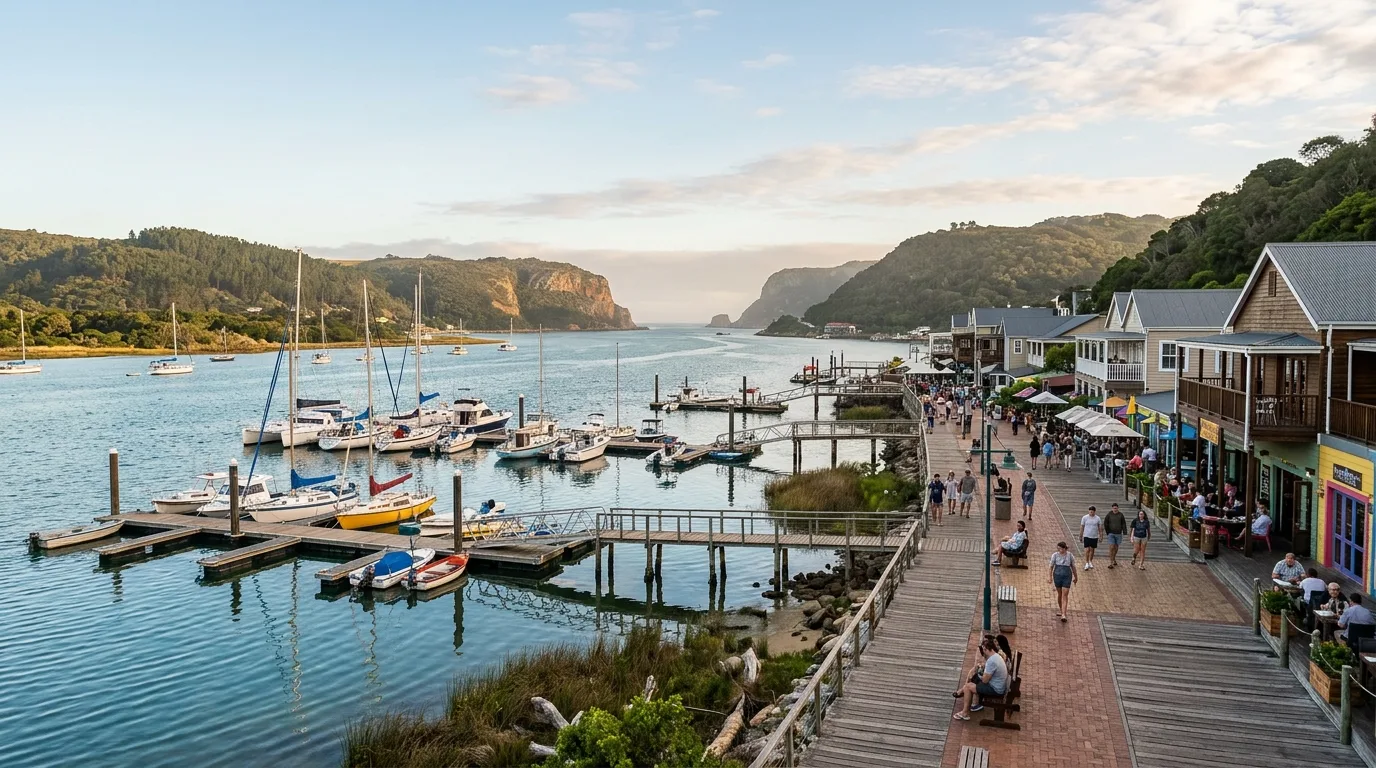
Knysna is a Garden Route town known for its lagoon, waterfront, surrounding forests, and the sandstone cliffs called the Knysna Heads.
Why visit:
- Take a boat cruise across the lagoon.
- Visit the Knysna Heads viewpoints.
- Explore waterfront restaurants and shops.
- Visit nearby beaches and forest trails.
Visitor information:
- Ticket: Public waterfront areas are free; cruises and selected nature reserves charge separately.
- Best time: September to April for warmer coastal conditions.
- Visitor tip: Allow a full day to explore Knysna. Check weather and tide conditions before booking water activities.
24. Spend Time at Plettenberg Bay
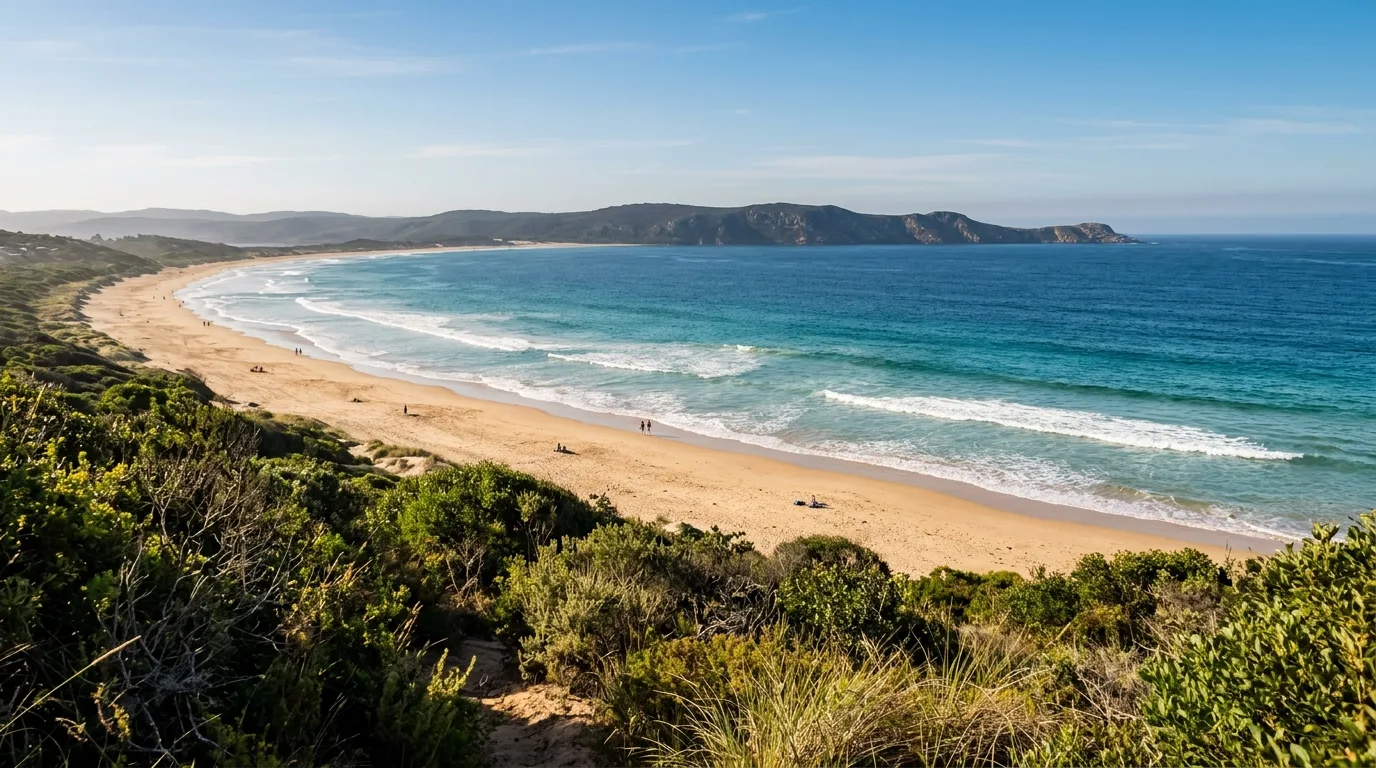
Plettenberg Bay is a coastal destination known for its sandy beaches, marine wildlife, and ocean viewpoints. Central Beach and Lookout Beach are popular places for swimming and coastal walks.
Why visit:
- Relax at Central Beach and Lookout Beach.
- Explore the hiking trails at Robberg Nature Reserve.
- Look for whales and dolphins along the coast.
- Try surfing and other seasonal water activities.
Visitor information:
- Ticket: Public beaches are free; Robberg Nature Reserve and organised activities charge separately.
- Best time: September to April for beach activities.
- Visitor tip: Check sea conditions and swim only in designated safe areas. Carry water if hiking at Robberg.
25. Go on a Safari at Addo Elephant National Park
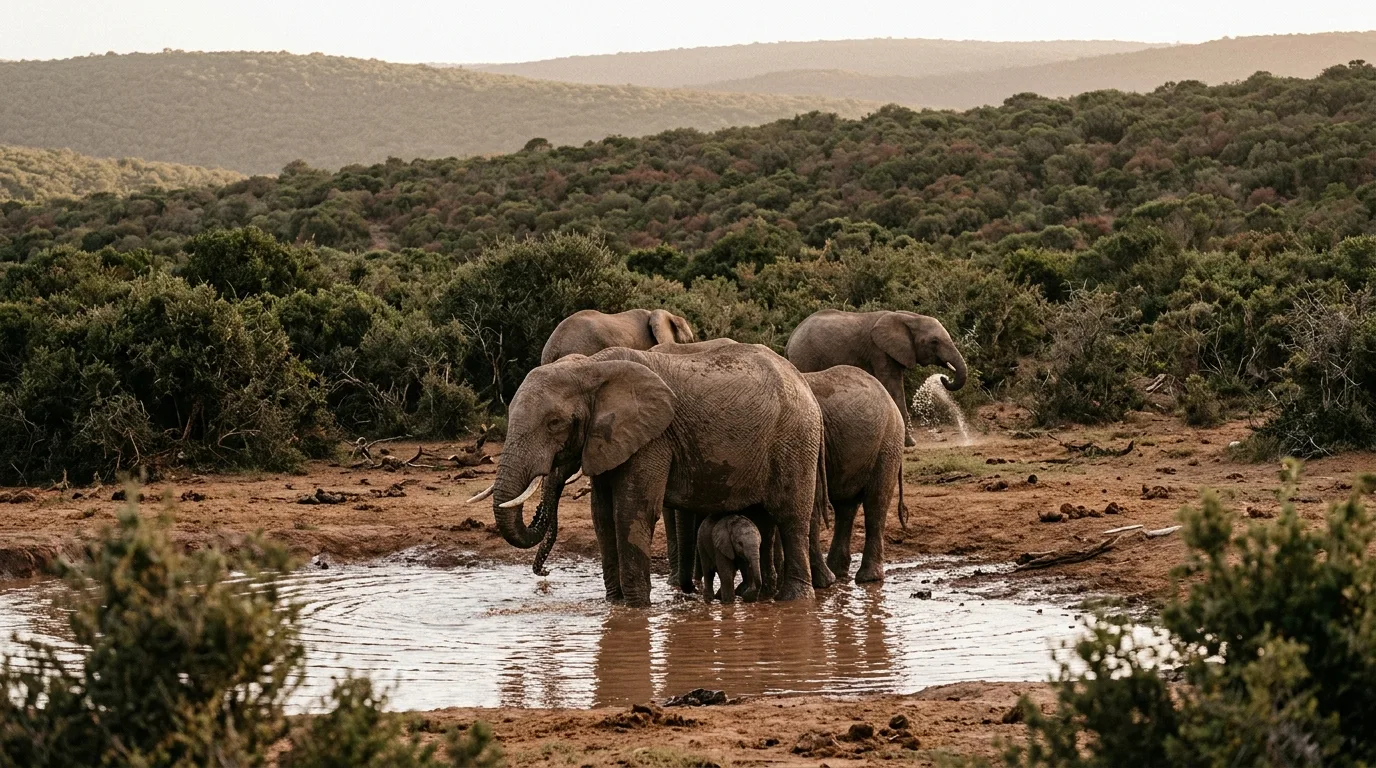
Addo Elephant National Park, near Gqeberha in the Eastern Cape, is known for its elephant population. The park also supports lions, buffaloes, black rhinos, antelope, and diverse birdlife.
Why visit:
- Spot elephants around the park's waterholes.
- Explore self-drive safari routes.
- Book guided game drives through SANParks.
- Look for other wildlife across the park's different habitats.
Visitor information:
- Ticket: International adult conservation fee R492 under the SANParks tariff valid until 31 October 2026.
- Location: Near Gqeberha, Eastern Cape.
- Visitor tip: Start early and allow several hours for wildlife viewing. Check current park fees and accommodation availability before visiting.
26. Explore the Valley of Desolation
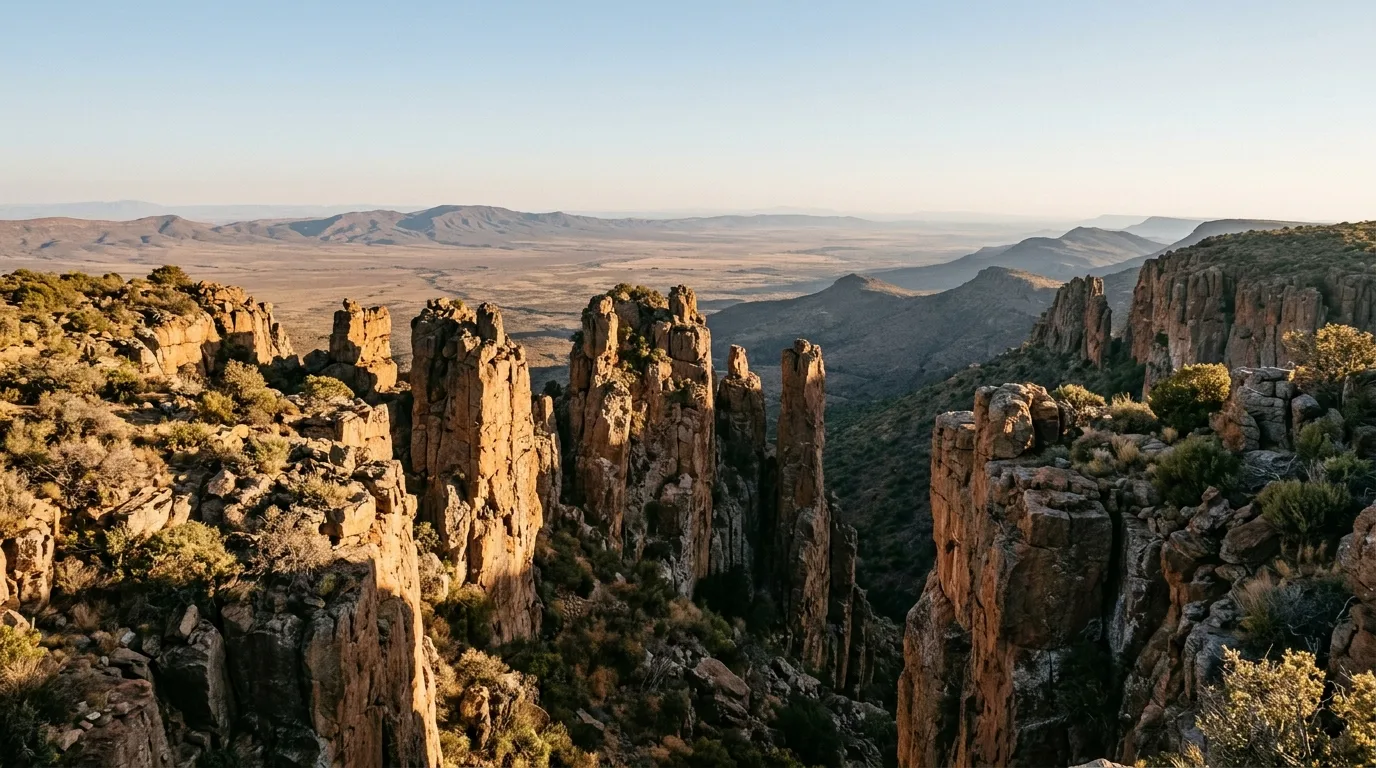
The Valley of Desolation is a geological attraction within Camdeboo National Park, known for its towering dolerite columns and views across the Karoo plains.
Why visit:
- Photograph the tall rock formations.
- Enjoy views across the Karoo landscape.
- Explore designated walking routes.
- Visit the viewpoints during early morning or late afternoon.
Visitor information:
- Ticket: SANParks conservation fees apply.
- Location: Near Graaff-Reinet in the Eastern Cape.
- Visitor tip: Visit during daylight and carry water, sunscreen, and a hat. Check park and road conditions before setting out.
Best Things to Do in KwaZulu-Natal
27. Explore the Drakensberg Mountains
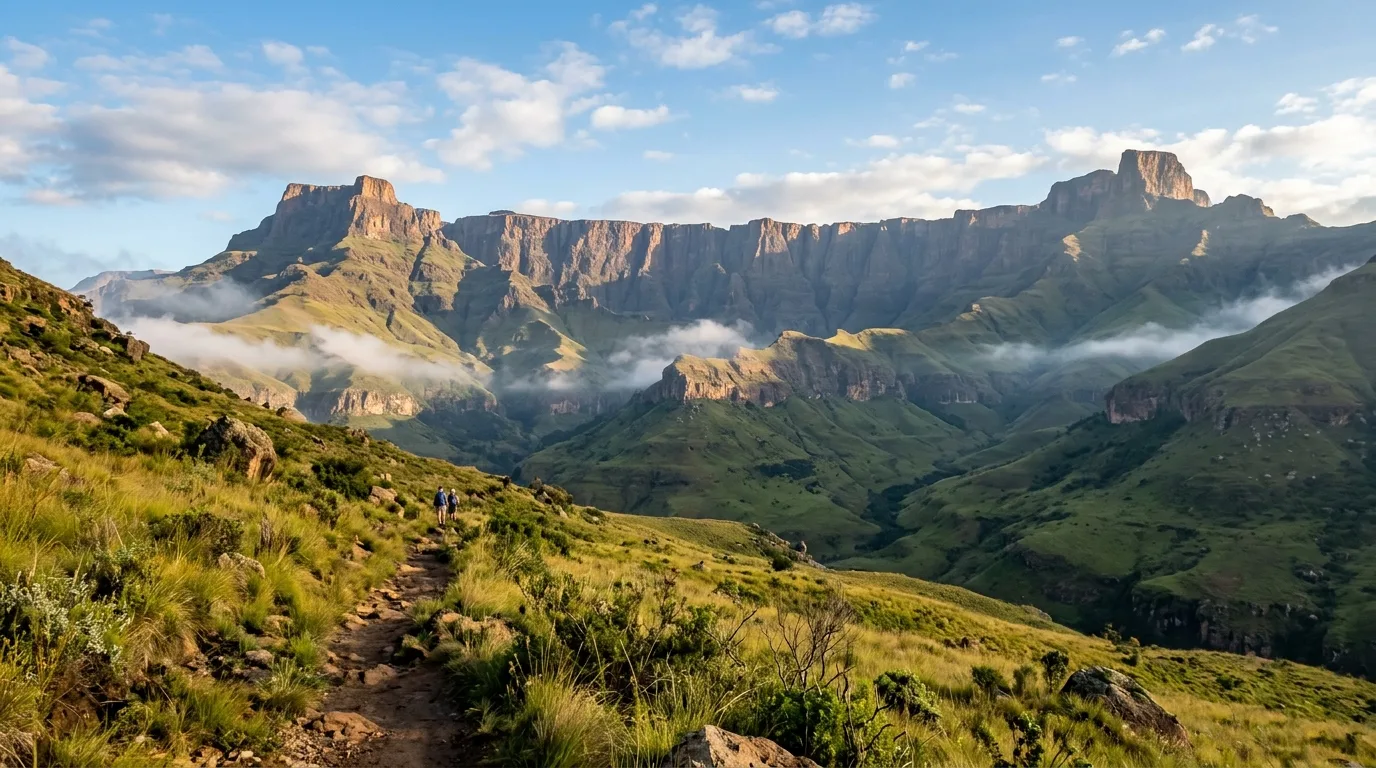
The Drakensberg Mountains are known for their peaks, valleys, waterfalls, and hiking routes. The uKhahlamba-Drakensberg Park is also recognised for its San rock art sites.
Why visit:
- Hike trails around Royal Natal National Park.
- Admire the Amphitheatre mountain escarpment.
- Explore Cathedral Peak and surrounding valleys.
- Visit selected San rock art sites.
Visitor information:
- Ticket: Park and reserve fees vary by location.
- Best time: March to May and September to November for generally pleasant hiking conditions.
- Visitor tip: Choose a trail according to your fitness level. Check weather conditions and carry warm layers, water, and suitable hiking shoes.
28. Take a Boat Safari in iSimangaliso Wetland Park
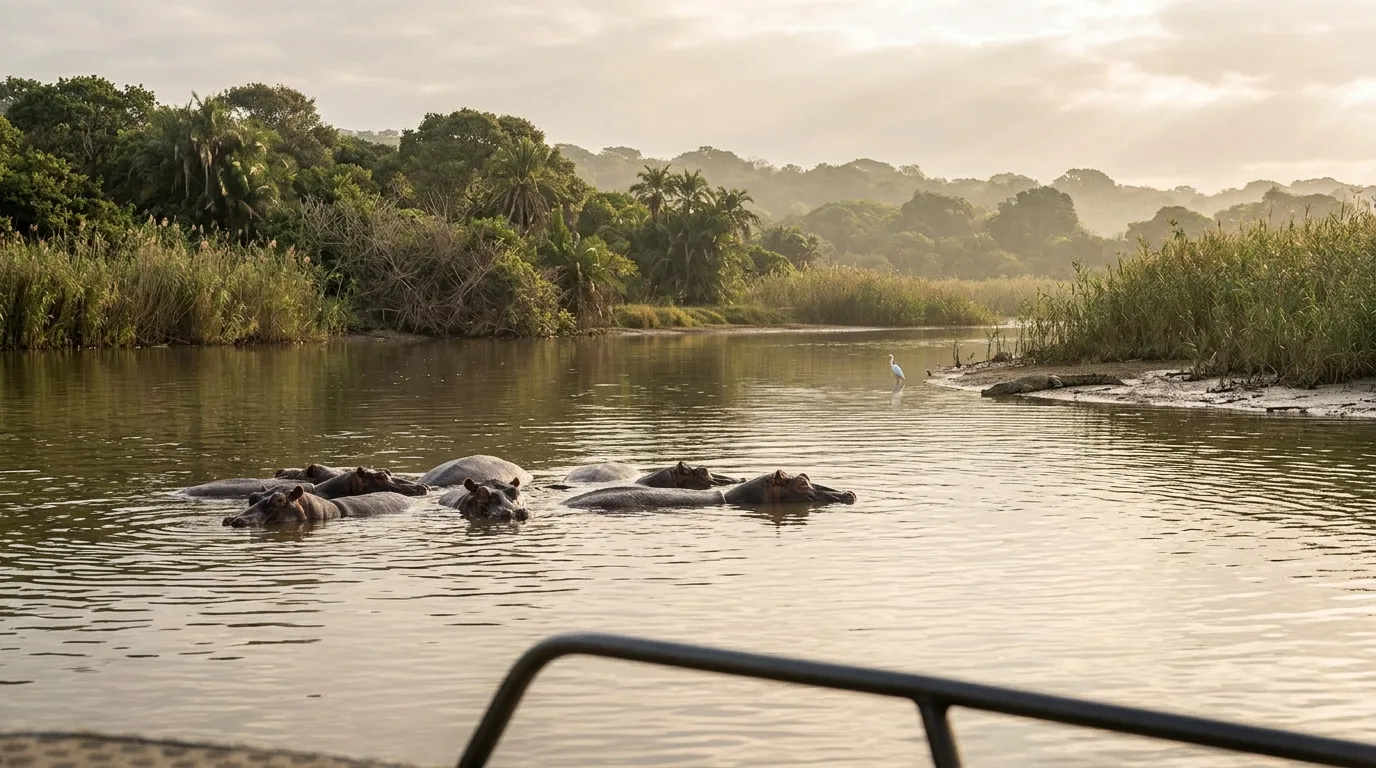
iSimangaliso Wetland Park is a UNESCO World Heritage Site known for its estuaries, lakes, coastal forests, beaches, and wildlife. The St Lucia Estuary is a popular starting point for boat-based wildlife viewing.
Why visit:
- Spot hippos and crocodiles on a boat cruise.
- Look for waterbirds around the estuary.
- Explore the park's beaches and coastal forests.
- Visit the different sections of the protected area.
Visitor information:
- Ticket: Park entry and boat cruises are charged separately.
- Location: St Lucia, KwaZulu-Natal.
- Visitor tip: Book with an authorised boat operator. Follow wildlife-viewing instructions and never approach hippos or crocodiles on foot.
29. Go on a Safari at Hluhluwe–iMfolozi Park
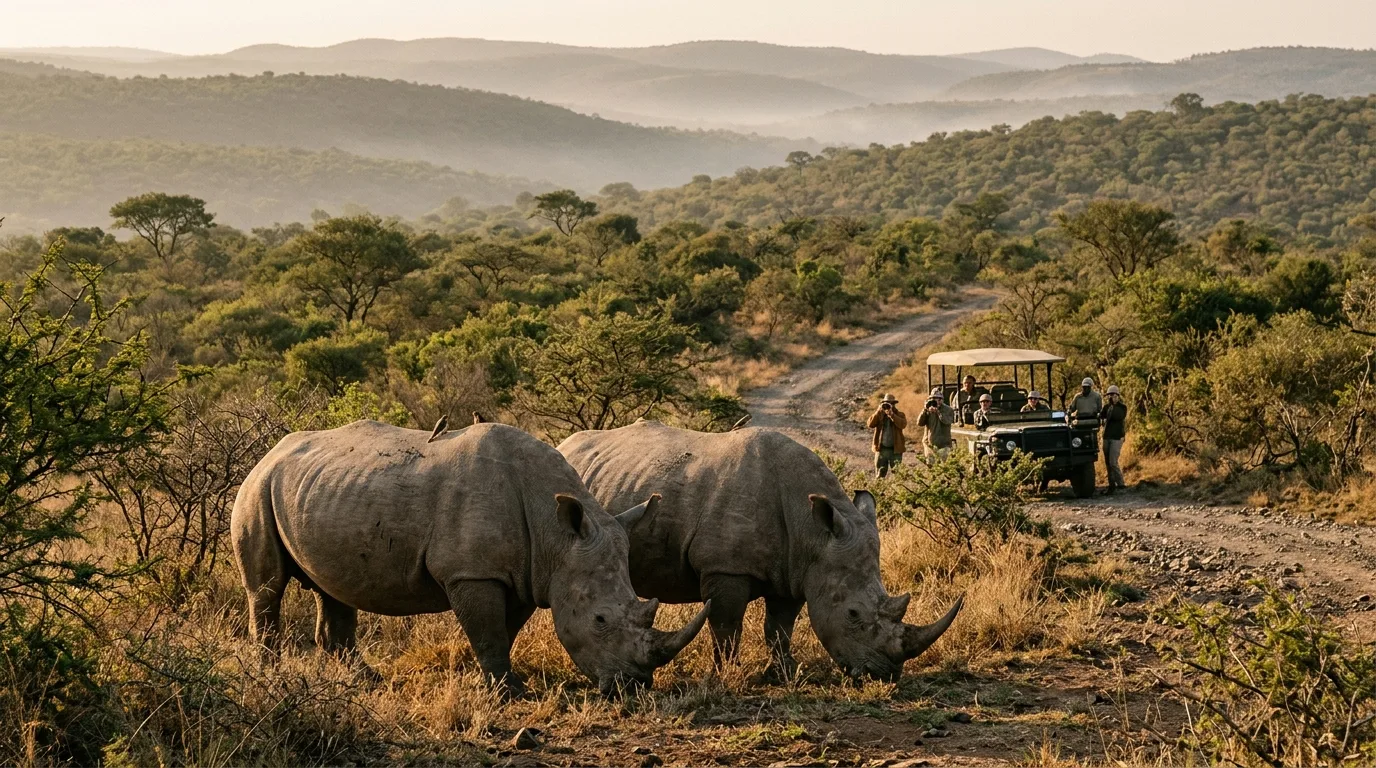
Hluhluwe–iMfolozi Park is a major wildlife reserve in KwaZulu-Natal and an important rhino conservation area. It is home to the Big Five, as well as giraffes, cheetahs, wild dogs, and numerous bird species.
Why visit:
- Look for rhinos, elephants, lions, and buffaloes.
- Explore the park on self-drive routes.
- Book guided game drives.
- Enjoy wildlife viewing across its hilly landscapes.
Visitor information:
- Ticket: Park entry and guided activities are charged separately.
- Location: Northern KwaZulu-Natal, near Hluhluwe.
- Visitor tip: Start early for better wildlife-viewing opportunities. Check Ezemvelo KZN Wildlife's current entry fees before visiting.
30. Spend a Day Along Durban's Golden Mile
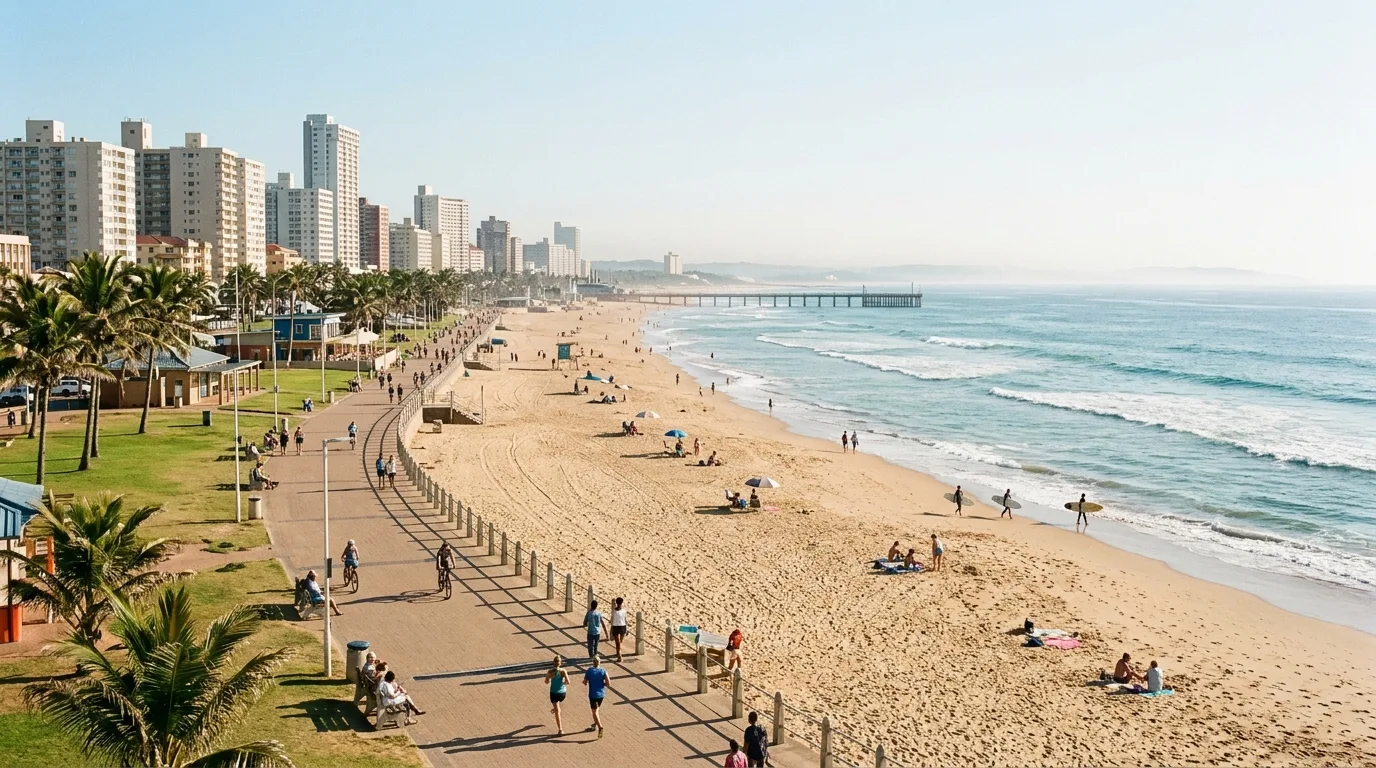
Durban's Golden Mile is a beachfront promenade along the Indian Ocean, with sandy beaches, walking paths, restaurants, and water-sports facilities.
Why visit:
- Walk or cycle along the beachfront promenade.
- Relax at designated swimming beaches.
- Try surfing and other water activities.
- Explore nearby restaurants and beachfront attractions.
Visitor information:
- Ticket: Public promenade access is free; activities may be charged separately.
- Best time: March to May and September to November for generally comfortable weather.
- Visitor tip: Swim only at beaches with lifeguards and follow local warning flags. Keep valuables secure.
31. Explore the Midlands Meander
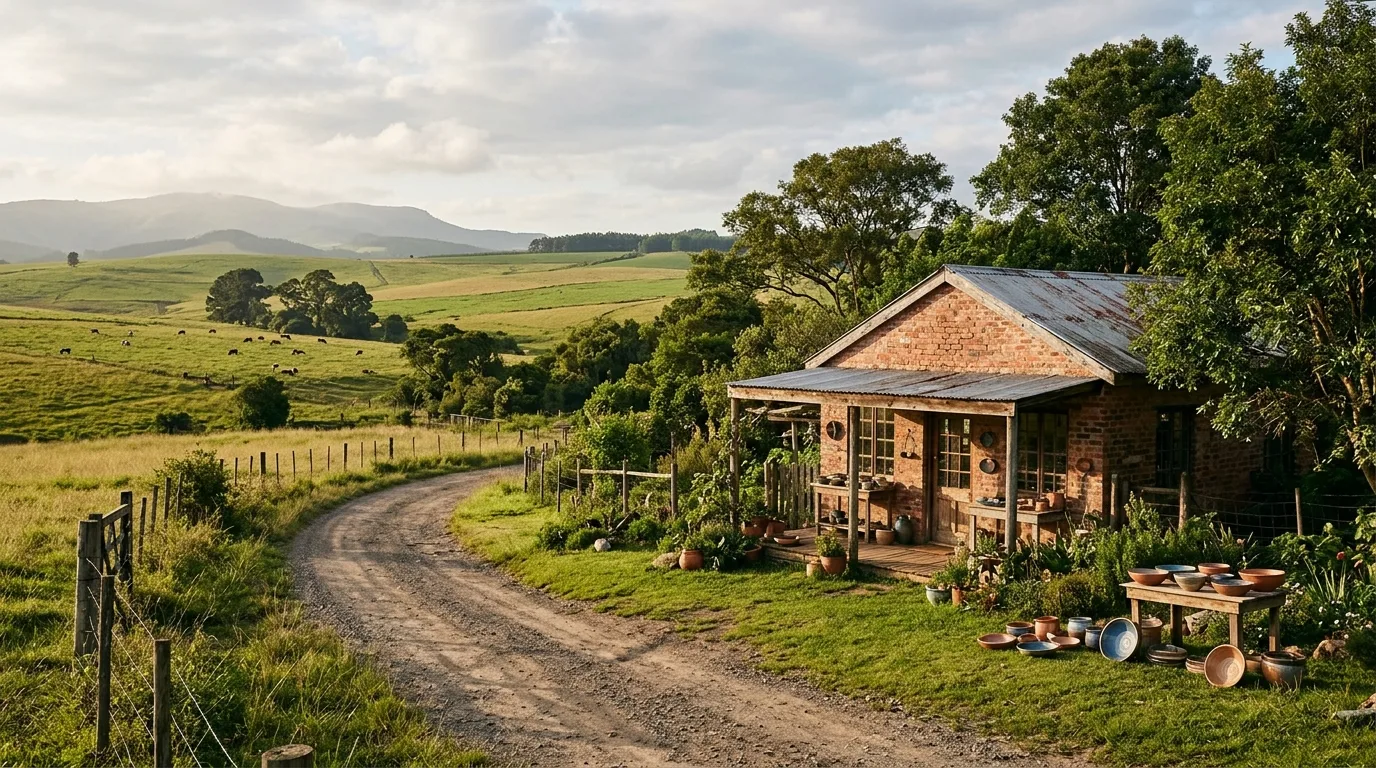
The Midlands Meander is a countryside route in KwaZulu-Natal, known for craft studios, farm shops, restaurants, and small villages. Nottingham Road is one of its popular stops.
Why visit:
- Browse local pottery and craft studios.
- Visit farm shops and cheese producers.
- Stop at countryside cafes and restaurants.
- Explore galleries and independent boutiques.
Visitor information:
- Ticket: The route is free to explore; individual attractions may charge fees.
- Location: Between Hilton and Mooi River, inland from Durban.
- Visitor tip: Plan your stops in advance because attractions are spread across the countryside. Check opening days, especially for smaller studios.
Best Things to Do in Gauteng and North West
32. Take a Guided Heritage Tour of Soweto
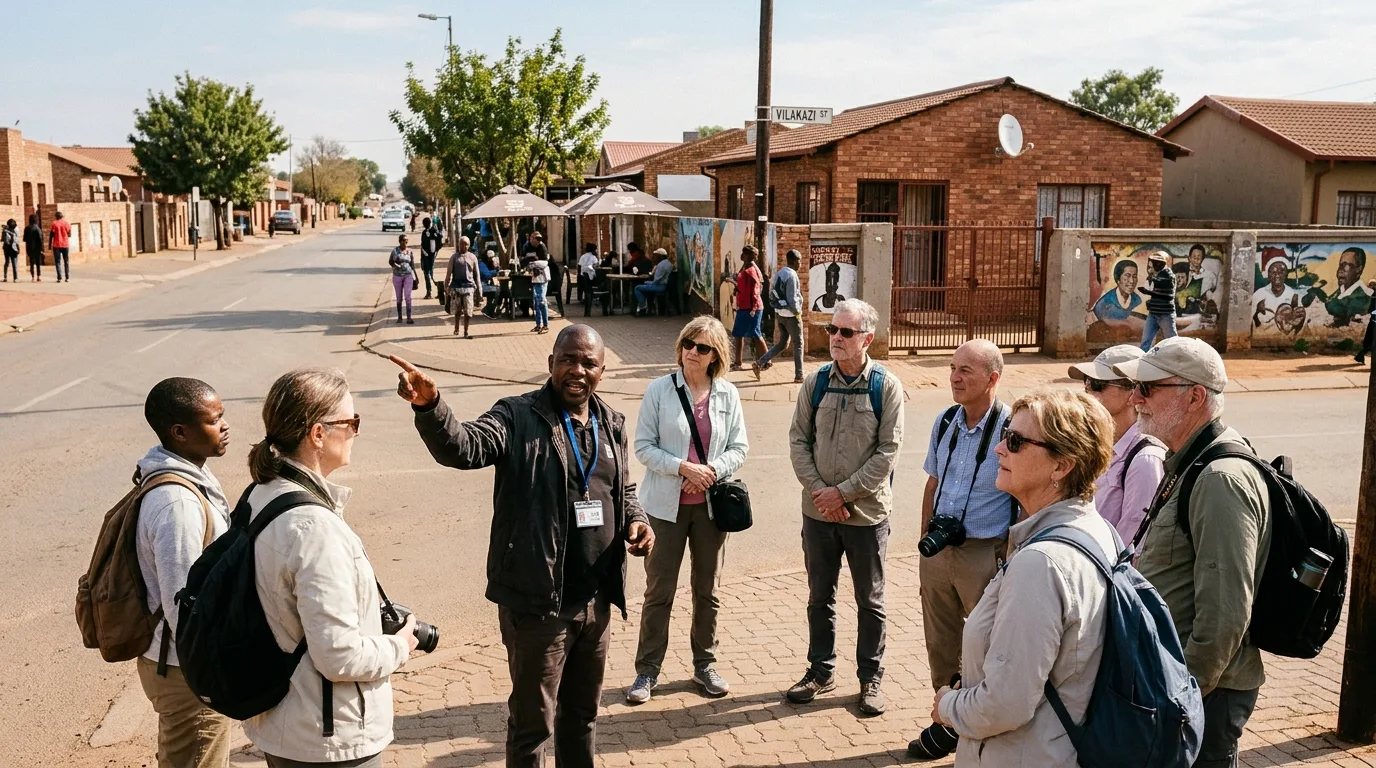
Soweto is one of Johannesburg's most historically significant townships and played an important role in the anti-apartheid movement. Vilakazi Street is particularly well known for its connection to Nelson Mandela and Archbishop Desmond Tutu.
Why visit:
- Explore Vilakazi Street and its historic homes.
- Visit the Hector Pieterson Memorial and Museum.
- Learn about the 1976 Soweto Uprising.
- Discover local food, street art, and neighbourhood culture.
Visitor information:
- Ticket: Street access is free; museums and guided tours are charged separately.
- Location: Southwest of Johannesburg.
- Visitor tip: Choose a reputable local guide. Confirm museum timings before visiting and avoid exploring unfamiliar areas alone after dark.
33. Visit the Apartheid Museum
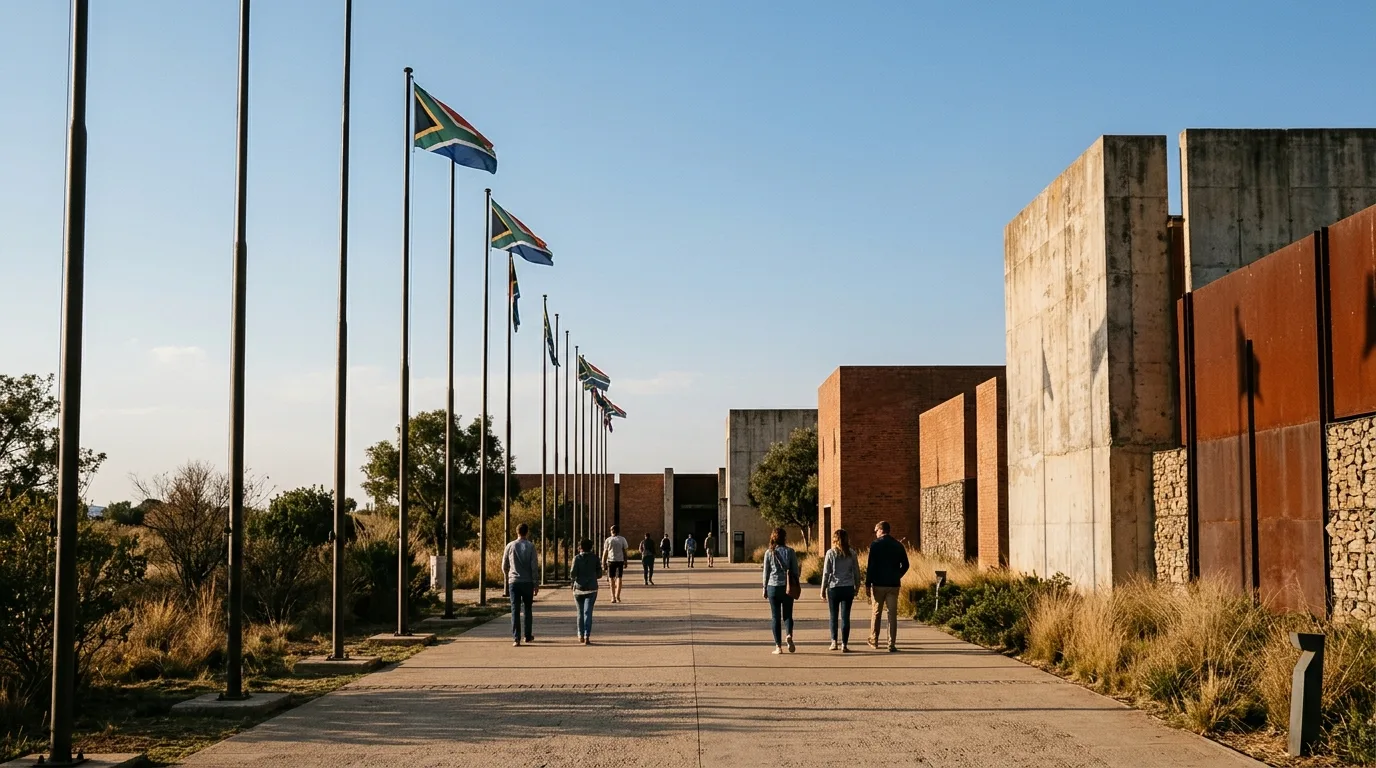
The Apartheid Museum documents South Africa's history of racial segregation and the struggle for democracy. Its exhibitions use photographs, films, documents, and personal accounts to explain the impact of apartheid.
Why visit:
- Explore exhibitions on apartheid and racial segregation.
- Learn about resistance movements and the 1976 uprising.
- Understand Nelson Mandela's role in the country's transition.
- View historical photographs, films, and documents.
Visitor information:
- Ticket: International adult admission, including audio tour, R240 from 1 May 2026.
- Timings: Tuesday to Sunday, 9 AM–5 PM; most public holidays.
- Location: Ormonde, Johannesburg.
- Visitor tip: Allow around two hours. Tickets are available at the door, but check for temporary closures before travelling.
34. Explore the Cradle of Humankind
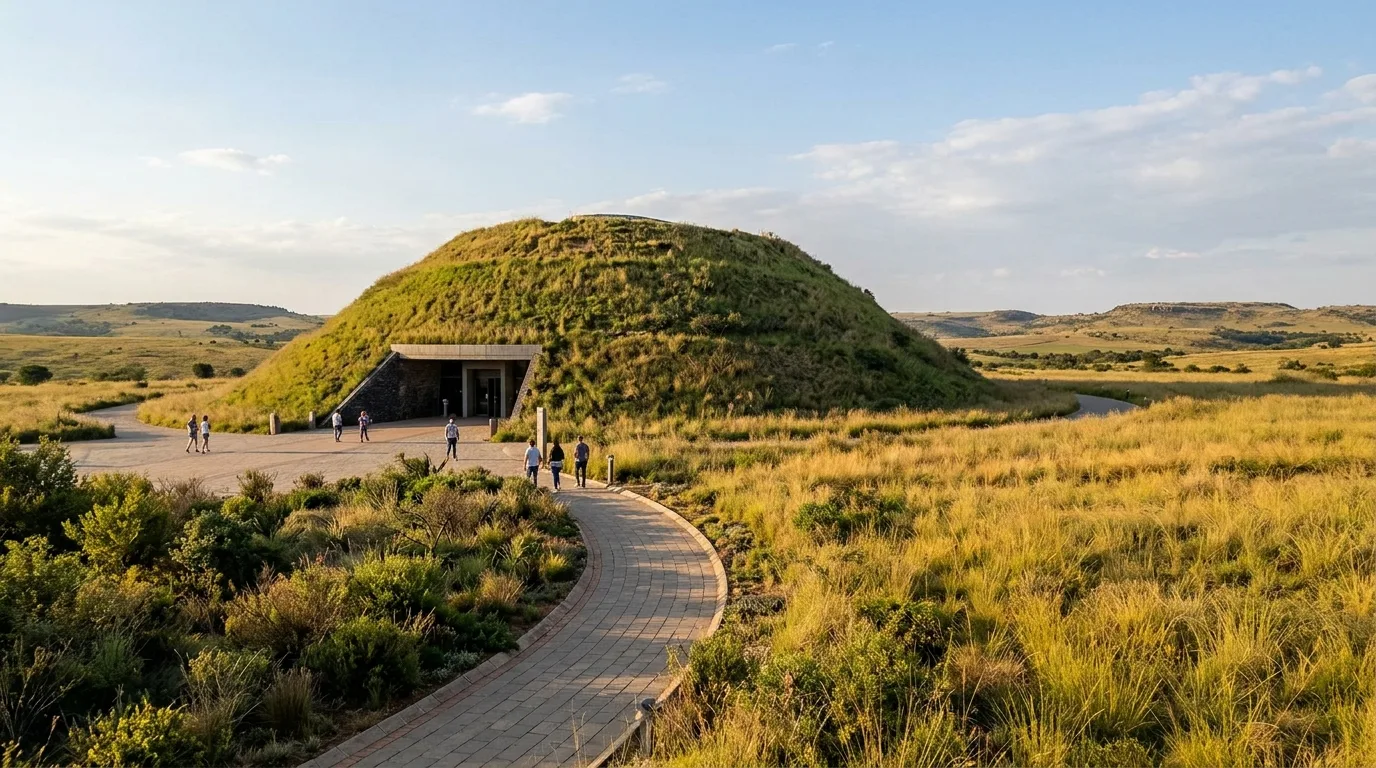
The Cradle of Humankind is a UNESCO World Heritage Site known for fossil discoveries that have contributed to research on human evolution. The Maropeng Visitor Centre explains the region's archaeological and scientific importance.
Why visit:
- Explore interactive exhibitions at Maropeng.
- Learn about human origins and fossil discoveries.
- Understand the region's importance to palaeoanthropology.
- Visit other accessible heritage attractions in the area.
Visitor information:
- Ticket: Prices depend on the attraction and tour selected.
- Location: Northwest of Johannesburg.
- Visitor tip: Check official visitor updates before travelling. Access to individual fossil sites and caves may change due to conservation work.
35. Go on a Safari at Pilanesberg National Park
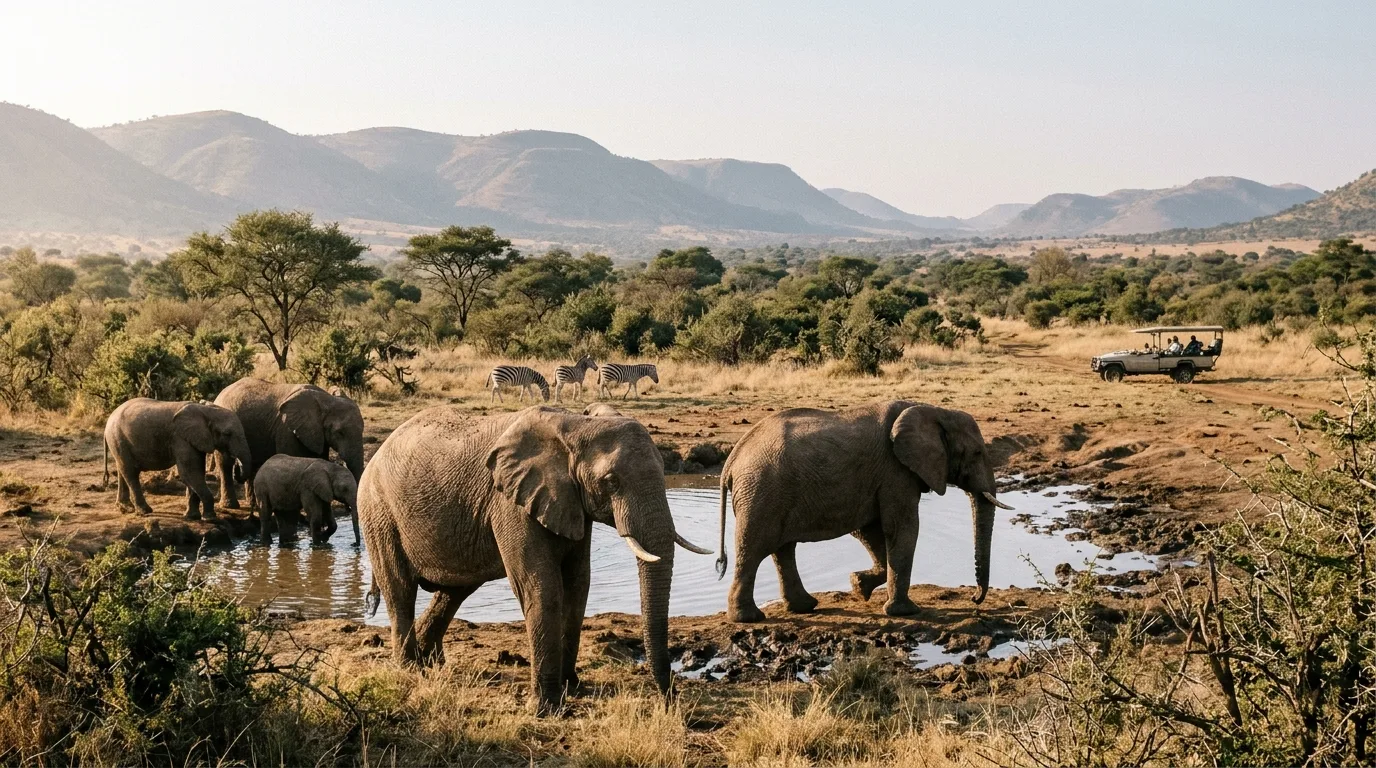
Pilanesberg National Park is located within an ancient volcanic crater in North West province. Its wildlife includes the Big Five, giraffes, zebras, antelope, and numerous bird species.
Why visit:
- Look for the Big Five on self-drive routes.
- Book guided morning or afternoon game drives.
- Explore the park's waterholes and viewpoints.
- Combine the visit with a stay at nearby Sun City.
Visitor information:
- Ticket: Conservation fees and guided safari rates vary.
- Location: Near Sun City, approximately 2.5–3 hours by road from Johannesburg, depending on traffic.
- Visitor tip: Start early for wildlife viewing and check current park entry fees before travelling.
36. Spend a Day at Sun City Resort
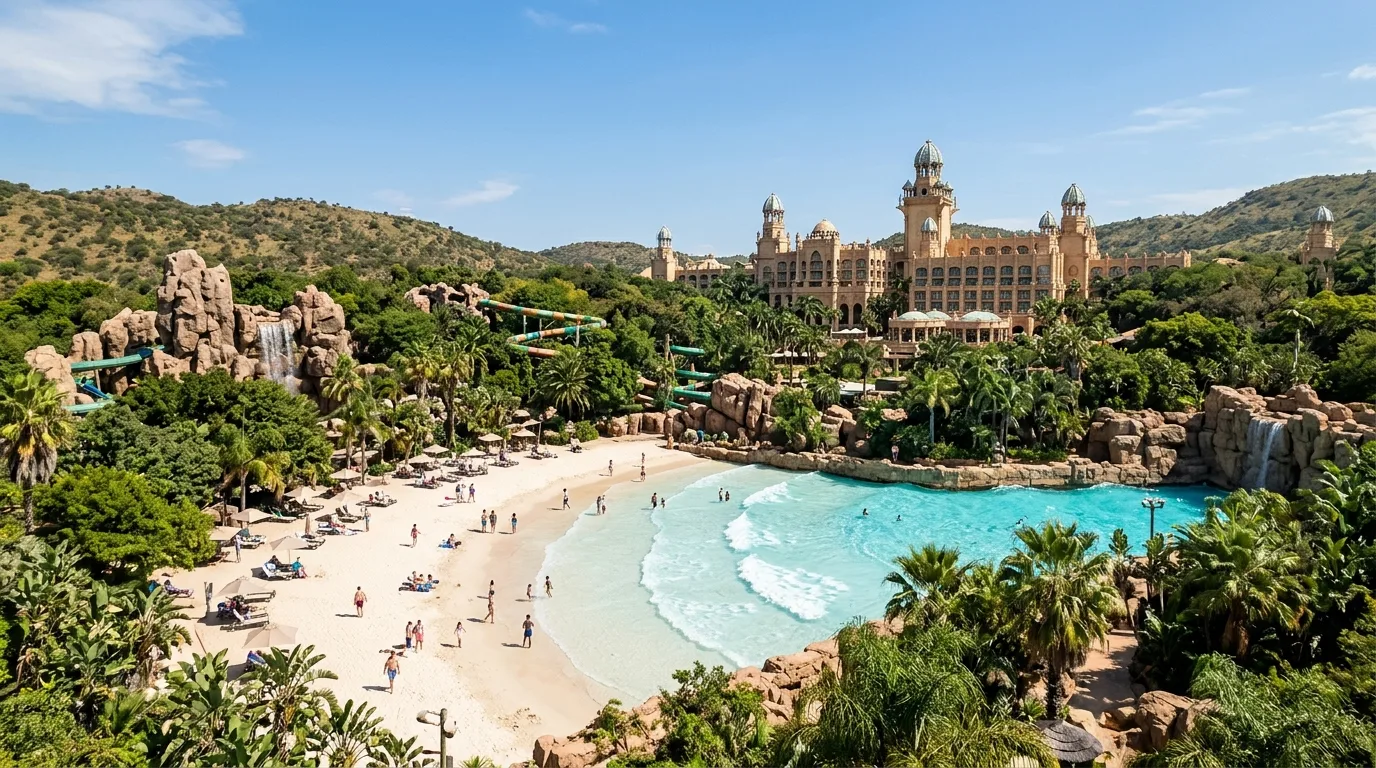
Sun City is a resort destination in North West province with hotels, restaurants, golf courses, entertainment facilities, and water activities. The Valley of Waves is one of its main attractions.
Why visit:
- Enjoy the wave pool and water slides at Valley of Waves.
- Try selected adventure and recreational activities.
- Visit restaurants and entertainment venues.
- Play golf or relax at the resort facilities.
Visitor information:
- Ticket: Day access and activity prices depend on the package and date.
- Location: Near Pilanesberg National Park.
- Visitor tip: Check the official Sun City website for day-visitor access, Valley of Waves operating dates, and activity availability.
Best Things to Do in Northern Cape and Free State
37. Explore Kgalagadi Transfrontier Park
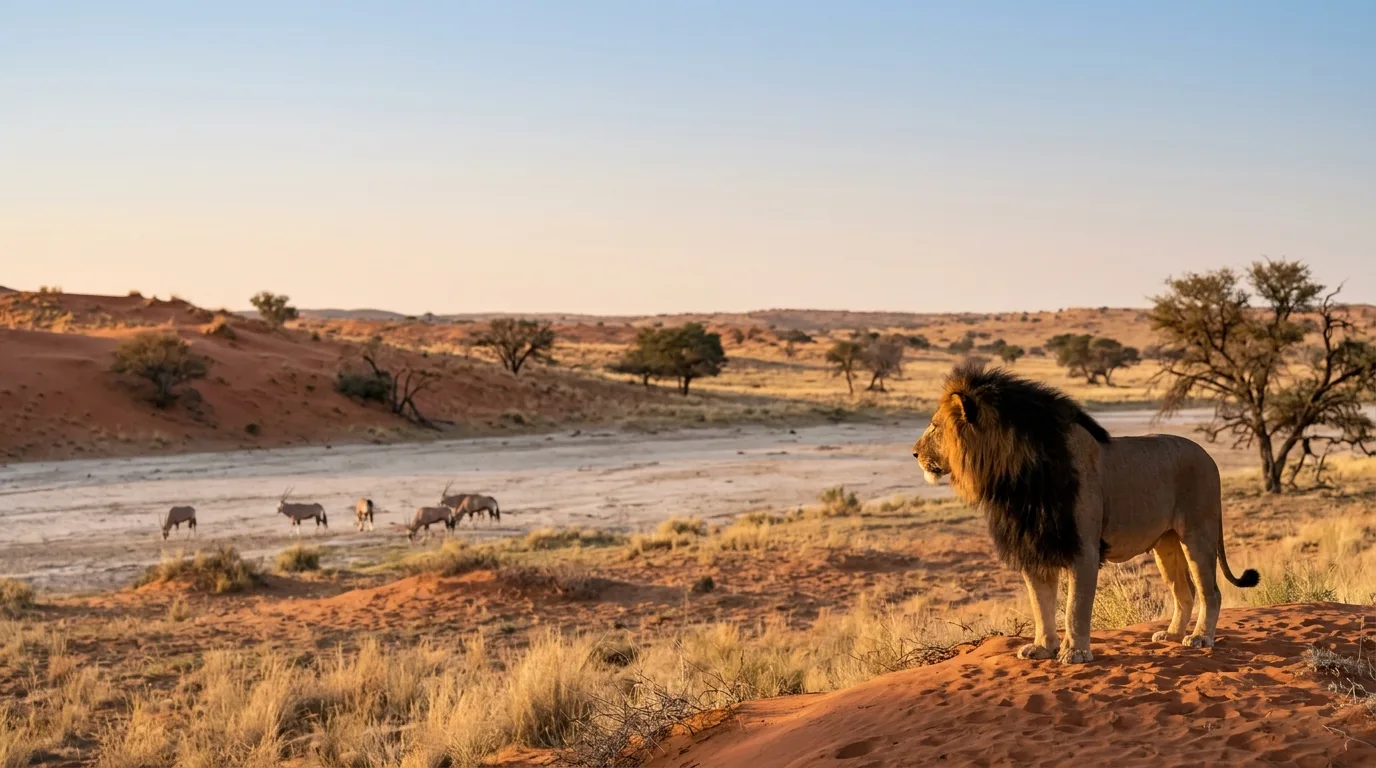
Kgalagadi Transfrontier Park is known for its red sand dunes, dry riverbeds, and desert wildlife. It spans parts of South Africa and Botswana and offers a different safari landscape from Kruger.
Why visit:
- Look for black-maned Kalahari lions.
- Spot gemsbok, springbok, and wildebeest.
- Explore the park on self-drive routes.
- Photograph the red dunes and desert landscapes.
Visitor information:
- Ticket: SANParks conservation fees apply.
- Location: Northern Cape; Upington is a major gateway.
- Visitor tip: Plan fuel, water, and accommodation carefully. Distances are long and facilities are limited in some areas.
38. Visit Augrabies Falls National Park
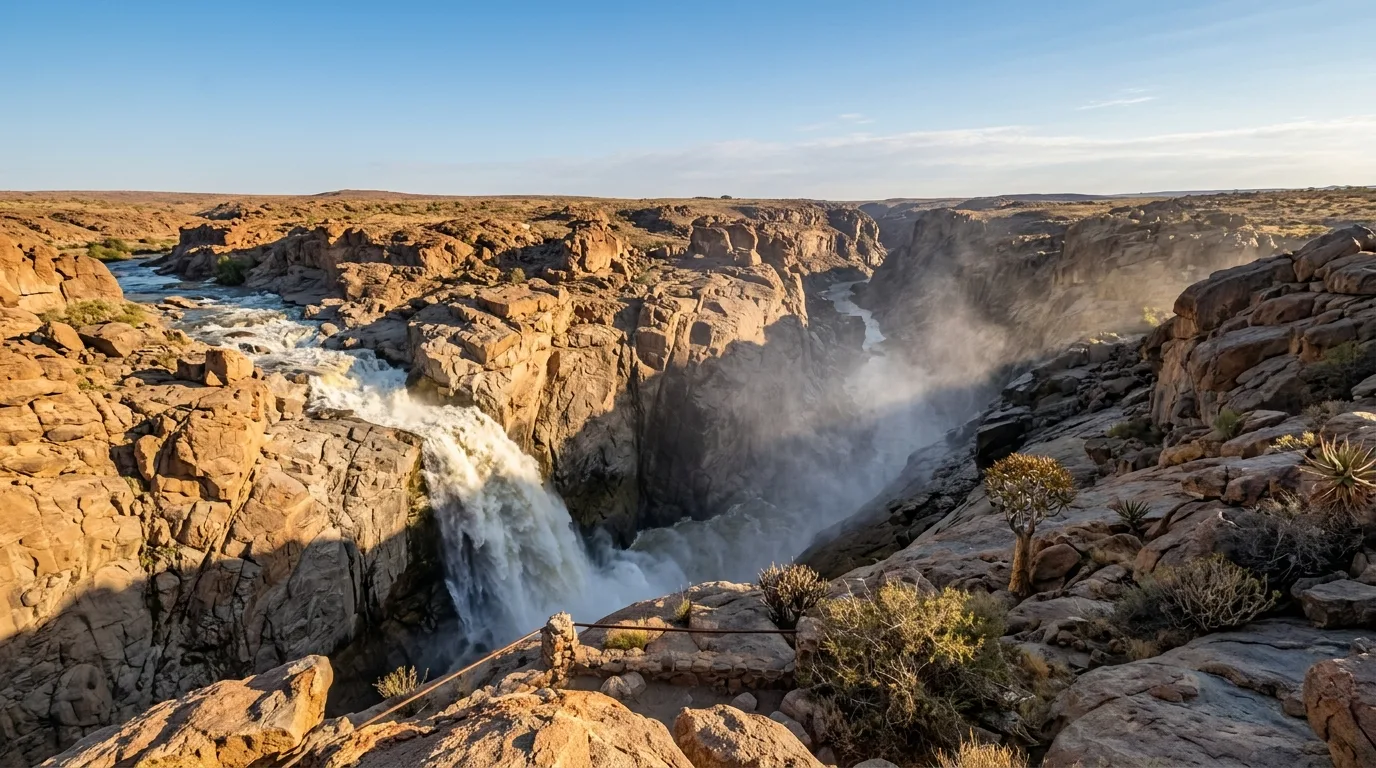
Augrabies Falls is where the Orange River plunges through a rocky gorge, creating a powerful waterfall. The surrounding national park has viewpoints, walking trails, and semi-arid landscapes.
Why visit:
- View Augrabies Falls from designated platforms.
- Explore the surrounding gorge and rock formations.
- Walk selected nature trails.
- Look for local birdlife and wildlife.
Visitor information:
- Ticket: SANParks conservation fees apply.
- Location: Near Kakamas, approximately 120 km from Upington.
- Visitor tip: Visit during daylight and stay behind safety barriers. Summer temperatures can be high, so carry water and sun protection.
39. See the Namaqualand Wildflowers
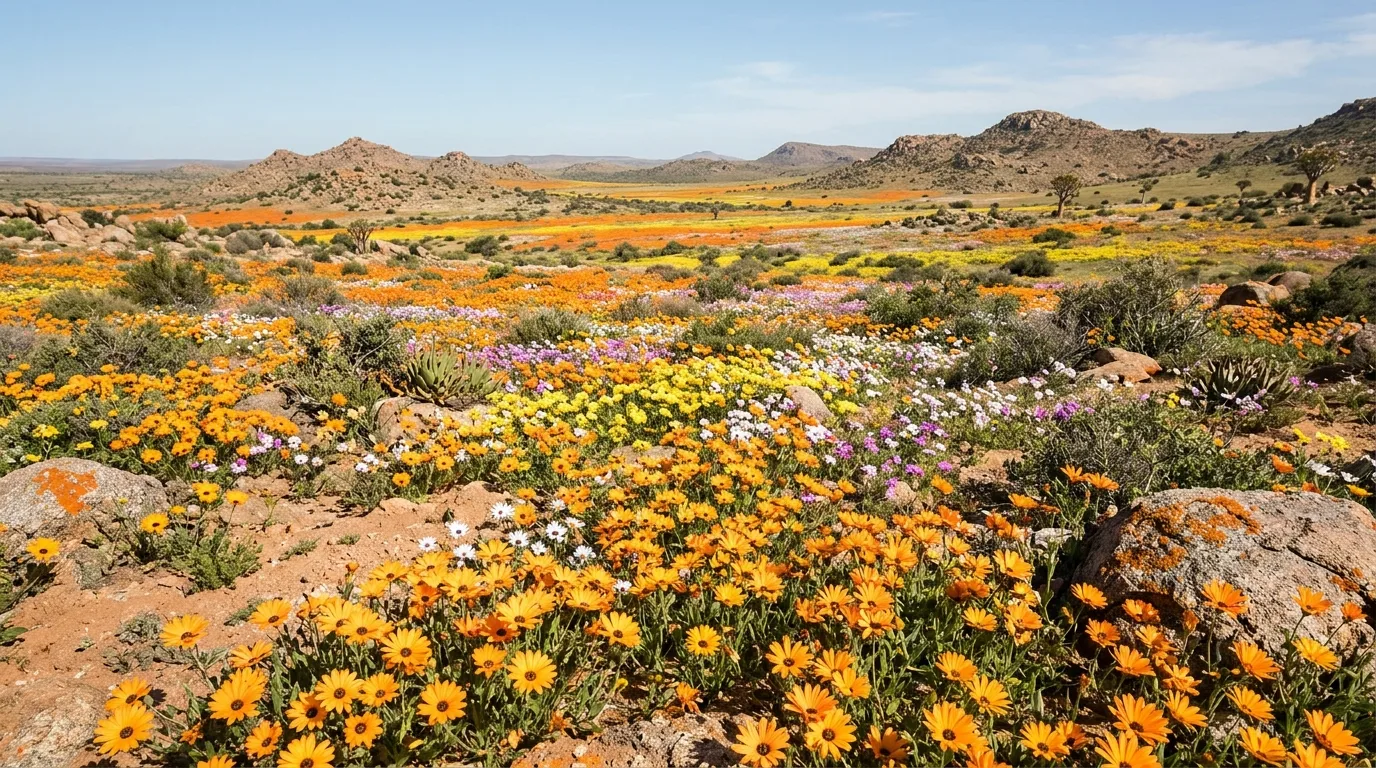
Namaqualand is known for its seasonal wildflower displays, when spring blooms cover parts of the region. The flowering season depends heavily on winter rainfall and weather conditions.
Why visit:
- Photograph fields of seasonal wildflowers.
- Explore designated flower-viewing routes.
- Visit nature reserves and small towns.
- Discover indigenous plant species across the region.
Visitor information:
- Best time: Usually August and September, depending on the season.
- Ticket: Some reserves and protected areas charge entrance fees.
- Visitor tip: Check local flower reports before travelling. Sunny mornings are generally best for viewing flowers.
40. Explore Golden Gate Highlands National Park
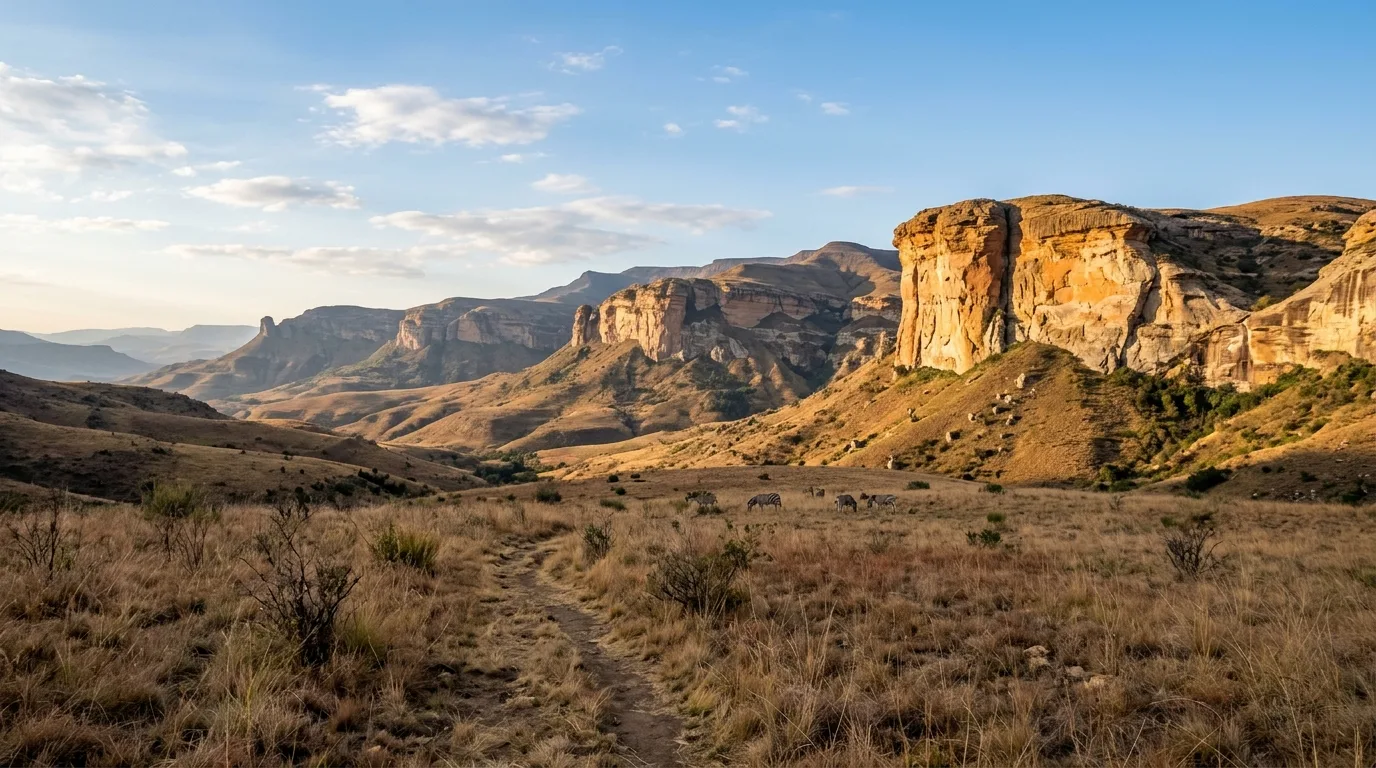
Golden Gate Highlands National Park is known for sandstone cliffs, rolling grasslands, and golden-coloured rock formations. The park has scenic drives, walking routes, and wildlife-viewing opportunities.
Why visit:
- Photograph the sandstone formations.
- Explore walking trails and viewpoints.
- Look for eland, zebra, and other wildlife.
- Combine the visit with a trip to the nearby town of Clarens.
Visitor information:
- Ticket: SANParks conservation fees apply.
- Location: Near Clarens in the Free State.
- Visitor tip: Carry warm clothing, particularly during winter. Allow time to explore both the park and Clarens.
South Africa Travel Tips for First-Time Visitors
Getting Around South Africa
- Use domestic flights for longer distances between Cape Town, Johannesburg, Durban, and the Kruger region.
- Uber and other ride-hailing services are convenient in major cities.
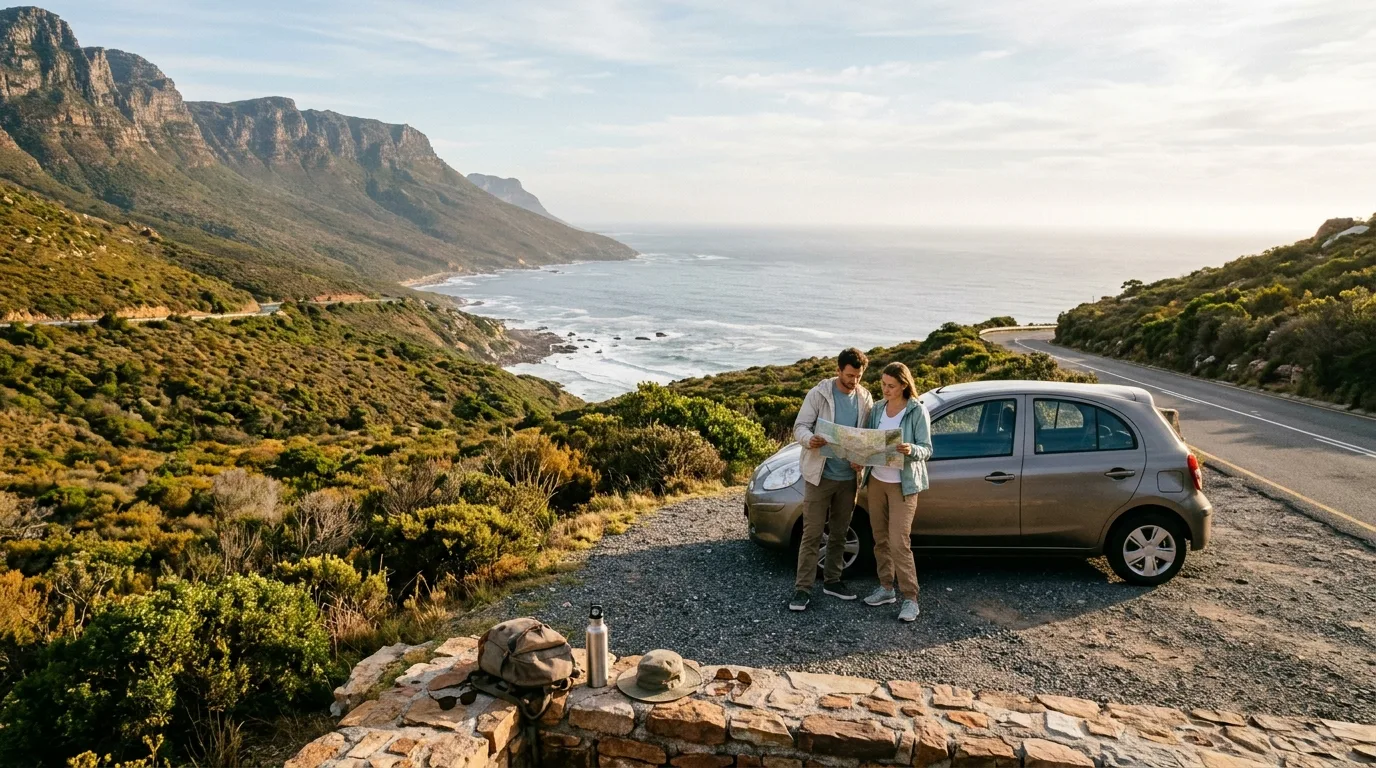
- Rent a car for the Garden Route, Cape Peninsula, and Panorama Route.
- Avoid unfamiliar long-distance drives after dark.
Currency and Payments
- South Africa uses the South African Rand (ZAR or R).
- Cards are widely accepted in hotels, restaurants, and established shops.
- Carry some cash for smaller shops and local markets.
- Keep a working debit or credit card for attractions with cash-free entry systems.
Safety While Exploring
- Use registered transport and ride-hailing services.
- Keep valuables out of sight in vehicles.
- Avoid displaying expensive cameras, phones, and jewellery in unfamiliar areas.
- Follow local safety instructions at beaches, national parks, and hiking trails.
Book Popular Attractions in Advance
- Reserve Robben Island tours, safari accommodation, and guided game drives early.
- Book popular wine tastings and adventure activities ahead of time.
- Check operating status for weather-dependent attractions such as Table Mountain Cableway.
- Verify current park tariffs before visiting national parks.
How Many Days to Spend in South Africa
- 5 days: Explore Cape Town and nearby attractions.
- 7 days: Combine Cape Town with a Kruger safari.
- 10 days: Add the Garden Route or spend more time on safari.
- 14 days or more: Explore additional regions such as KwaZulu-Natal, the Panorama Route, or the Northern Cape.
Conclusion
South Africa offers experiences across wildlife reserves, coastal towns, historic landmarks, vineyards, and mountain landscapes. For a first visit, combine Cape Town with a safari and the Garden Route. With more time, explore KwaZulu-Natal, the Panorama Route, and the country's northern regions.
FAQs About Things to Do in South Africa
1. What are the best things to do in South Africa for first-time visitors?
Some of the most popular experiences include taking the cable car to Table Mountain, going on a Kruger safari, visiting Boulders Beach, exploring Robben Island, wine tasting in Stellenbosch, and driving along the Garden Route.
2. What are the best outdoor activities in South Africa?
Popular outdoor activities include wildlife safaris, hiking in the Drakensberg, walking across the Storms River Suspension Bridge, whale watching in Hermanus, bungee jumping at Bloukrans Bridge, and exploring the Garden Route beaches.
3. What are the best things to do in South Africa with family?
Families can visit Boulders Beach to see African penguins, take the Table Mountain Cableway, enjoy wildlife safaris, explore the V&A Waterfront, visit Sun City, and spend time at the beaches along the Garden Route.
4. How many days are enough to explore South Africa?
Five to seven days are suitable for Cape Town and a safari. Ten to fourteen days allow visitors to combine Cape Town, the Garden Route, and additional wildlife or coastal destinations.
5. What is the best time to visit South Africa?
May to September is generally good for wildlife viewing in Kruger National Park. September to April is popular for Cape Town and coastal holidays, while June to November is the main whale-watching season along the Western Cape.
Want this trip planned and booked for you? Tell Cura where and when, and a person will send you a plan with real prices.
 Next in this guideSouth Africa Trip from IndiaRead →